In this area
The Milan issue
Navigli, Milan: canals, aperitivo and the city after dark
Milan’s canal district is loud, sociable and just scruffy enough to feel alive — a place where aperitivo, antiques and late-night cocktails share the same towpath.

By Silvia BrambillaMilan by its showrooms and studios

Two canals and one old port are enough to give a district a personality in Milan, which is saying something. In Navigli, the water does most of the talking: the Naviglio Grande, dug from 1179 to haul goods and marble down from Lake Maggiore; the Naviglio Pavese, heading south toward Pavia; and the Darsena, where they meet in a restored inland harbour that now behaves like a promenade with better people-watching than most piazzas. By late afternoon the neighbourhood loosens its collar. By 6.30pm it is entirely itself: glasses clink, buffet plates appear, and the towpaths of the Alzaia Naviglio Grande and Ripa di Porta Ticinese fill shoulder to shoulder with Milanese twenty-somethings, students, out-of-towners and the occasional fashion-week refugee still wearing a badge from somewhere else. Navigli is the city at full volume, and it knows it.
What Navigli is known for
The name tells you the story before the first spritz lands on a table: Navigli means canals, and this district is built around them. The Grande arrived first, the Pavese later, and the whole system was refined — not invented — by Leonardo da Vinci, who gets a local halo for work done two centuries after the digging began. That is Milan in miniature: practical, ambitious, and very happy to credit a genius when the engineering is already doing the heavy lifting.
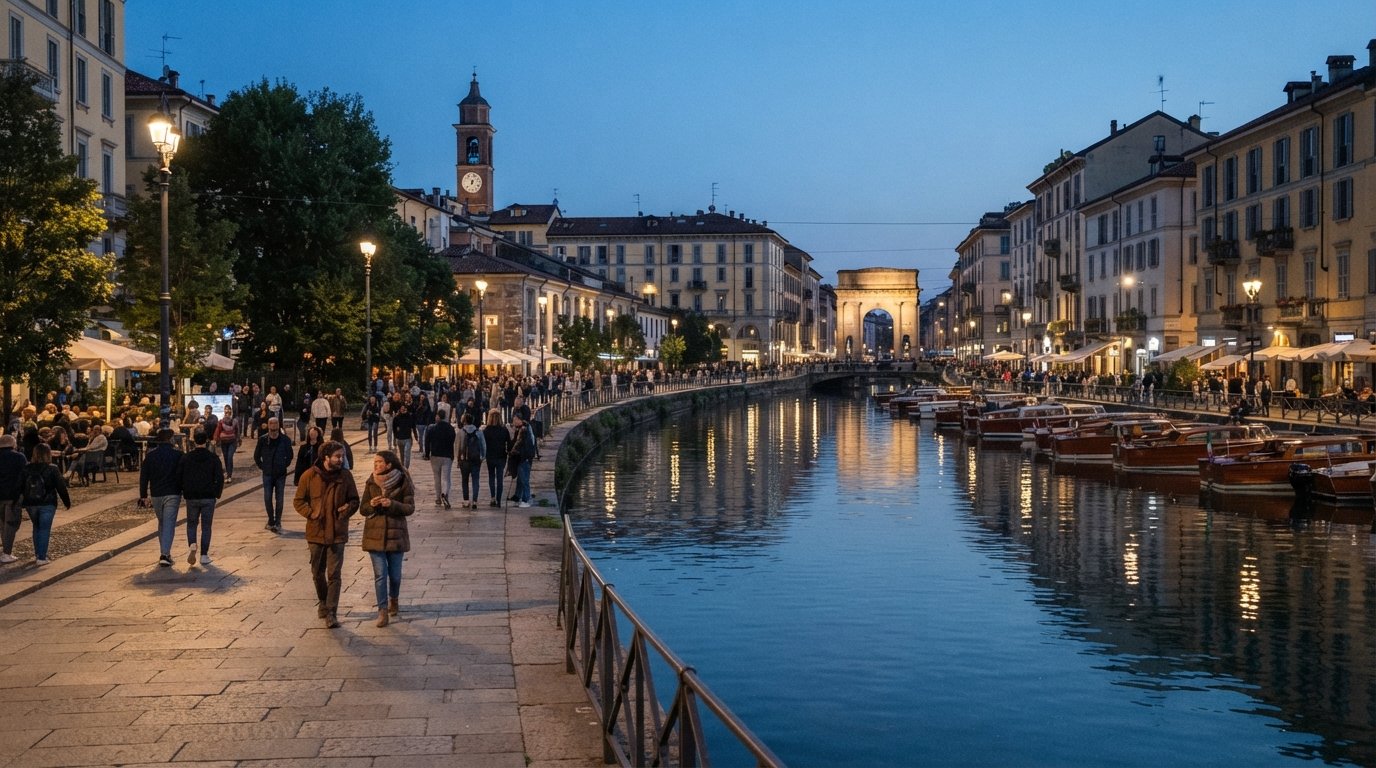
The Darsena is the hinge. Once Milan’s old inland port, built in the early 1600s, left to rot for decades, it was brought back to life as a waterfront promenade after the 2015 Expo overhaul. Today it is where the canals meet, where the evening walk starts, and where the neighbourhood changes character by the hour. Come in the morning and you catch a quieter district, a little scruffy around the edges, with shuttered bars and a few tourists taking photographs of the water. Come after work and the whole place tips sideways.
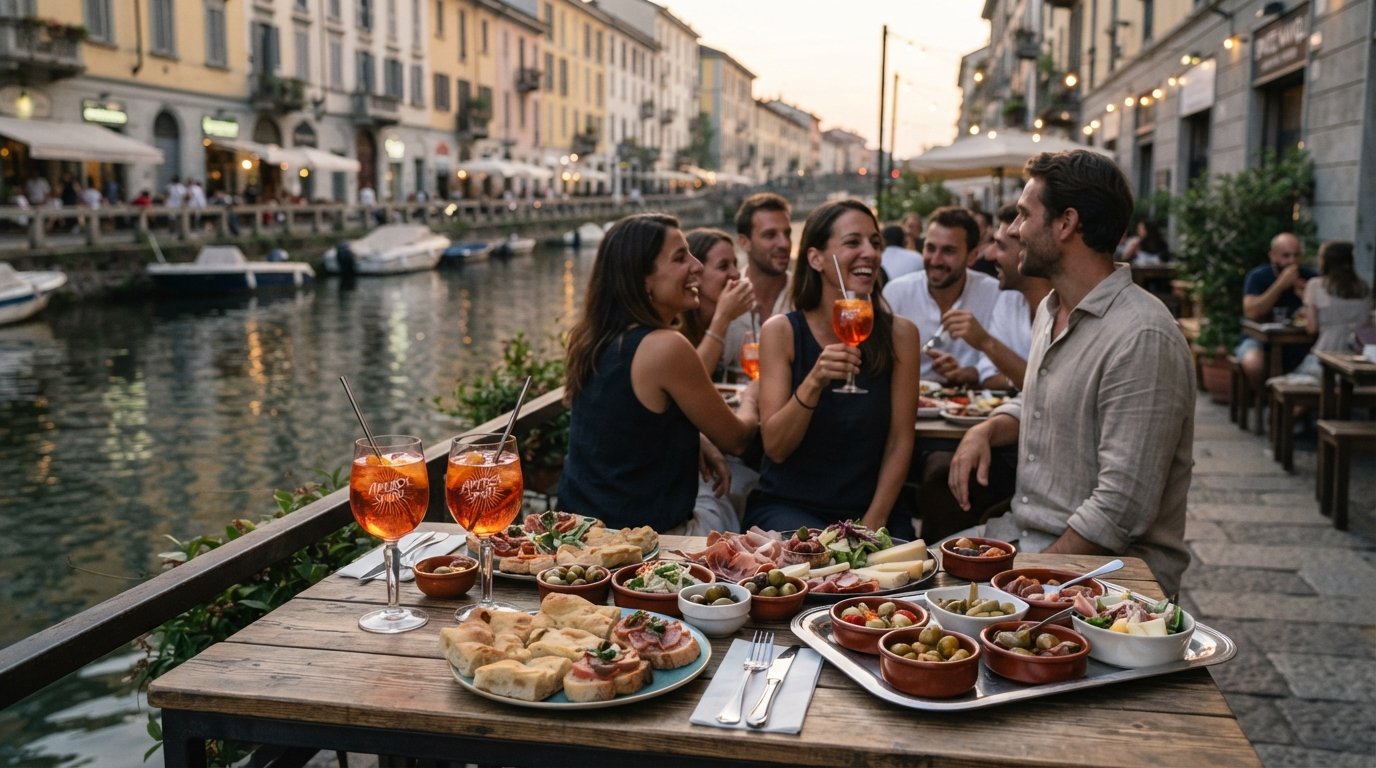
What made Navigli famous, though, was not the engineering. It was aperitivo. This is the district that turned Milan’s drink-plus-buffet ritual into a destination, and it still does it better than anywhere else in the city. The ritual is simple enough: a fixed-price drink, usually around €8–10 at the classic spots, and access to a buffet that can range from useful to frankly generous. The canal-front bars are often touristy, yes, but the crowd is real, the noise is real, and the appetite is real too. Milan has many polished surfaces; Navigli prefers a little grease under the nails.
Step one street back from the water and the mood changes again. This is where the neighbourhood keeps its older self: artisan workshops in courtyards, vintage shops, small galleries, and the preserved corner of the Vicolo dei Lavandai, a 19th-century washing alley where washermen once scrubbed linen on stone slabs. It is one of those Milan places that feels almost embarrassed by its own charm, which is usually the sign that it is genuine.
Plan your Milan trip
Live prices from our booking partners.
Guests & rooms
Free cancellation on many rooms. We may earn a commission when you book.
Where to eat & drink
The canal-front is thick with buffet bars and places that know exactly what a first-time visitor wants to hear. But the serious eating in Navigli is usually a street or two back, where the neighbourhood stops performing and starts cooking.
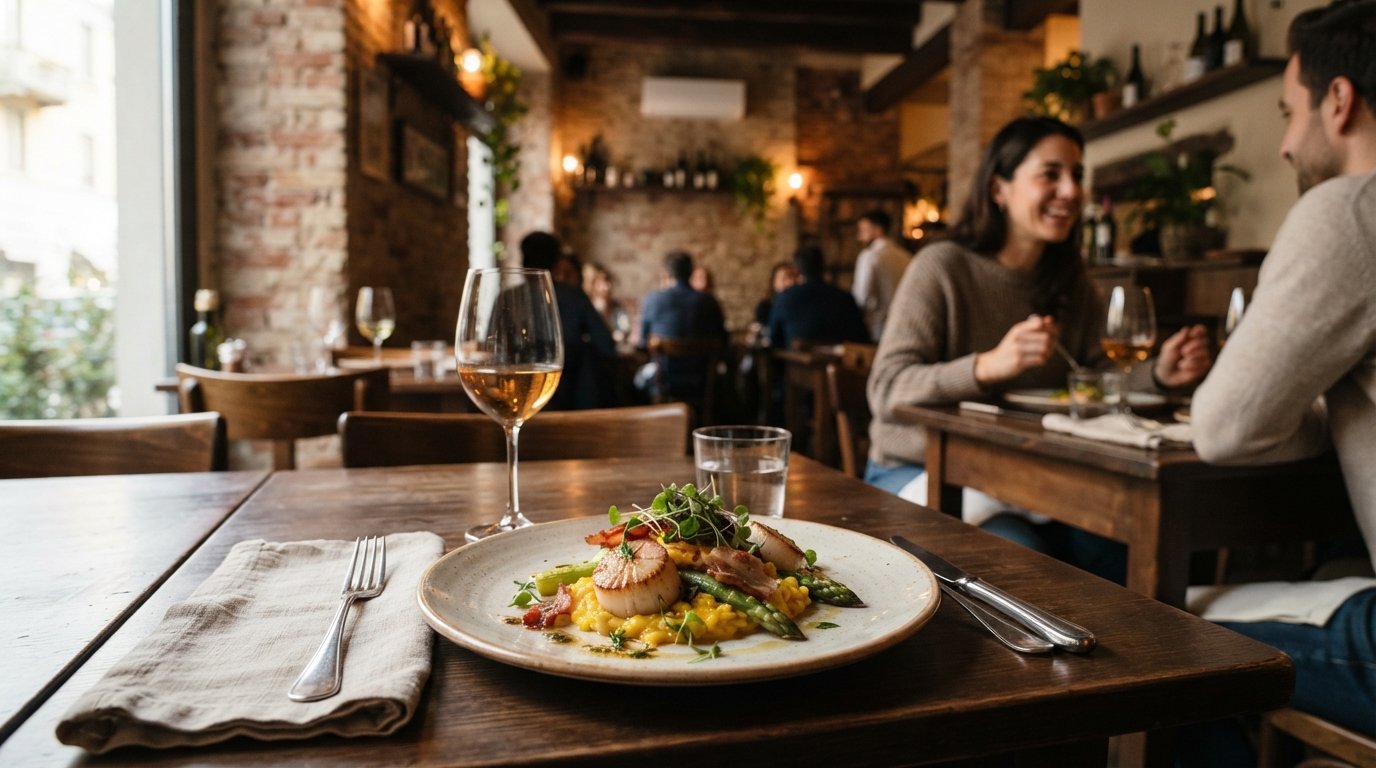
The standout is 28 Posti on Via Corsico, a 28-seat room that does 5-, 8- and 10-course tasting menus built around no-waste, technique-driven Mediterranean cooking. The wine list is roughly 80% natural and biodynamic, which tells you a lot about the room’s priorities: thoughtfulness over bluster, and a certain refusal to do things the lazy way. It is Michelin-listed, but not in the sort of way that makes the place feel embalmed. This is still Navigli, after all; the room is intimate, not precious.
For the neo-trattoria wave that has changed Milan’s dining habits, Nebbia on Via Torricelli is the one to know. Handmade pasta, seasonal Lombard plates and a tight list of small natural producers give it the sort of confidence that comes from knowing exactly what it is. No theatrics, no culinary cosplay. Just a kitchen that understands the region and is not afraid to modernise it.
If you want the traditional side, El Brellin is the obvious and correct move. It sits right on the Vicolo dei Lavandai in an 18th-century building over the old wash-house channel, and it does the Milan classics with the kind of plain-speaking authority that is increasingly rare. Order the risotto alla milanese, the saffron one; the ossobuco; the cotoletta. In warm weather, the garden opens, and the place becomes exactly what a canal-side Milanese restaurant should be: a little theatrical, a little old-fashioned, and entirely happy with its own traditions.
For something simpler, Fabbrica on the Alzaia Naviglio Grande is a dependable canal-front pizzeria. Reliable is not a glamorous word, but in a district where many things are trying too hard, reliability has a sort of grace.
And then there is aperitivo, which here is less a pre-dinner habit than a civic weather system. Spritz Navigli on Ripa di Porta Ticinese is the archetype: a fixed-price cocktail, roughly €8–10, and a long buffet from about 5pm. It is loud, generous and exactly what people mean when they say “aperitivo on the Navigli.” No mystery. No irony. Just the thing itself.
Going out
If the canal bars are the neighbourhood in broad daylight, the cocktail bars are its memory of being clever before it became crowded. Navigli’s drinking scene has real pedigree, and it started well before the tourist wave flattened the edges.
Rita on Via Angelo Fumagalli opened in 2002, back when fresh-ingredient, no-artificial-syrup cocktails were still a novelty in Italy rather than a marketing line. That alone earns it respect. The list is still built around rotating house infusions, and bartenders around the city still talk about it with the tone reserved for places that quietly changed the rules.
A short walk away, MAG Cafè on Ripa di Porta Ticinese is one of those places that looks as though it has been assembled from a very stylish attic: velvet armchairs, curiosities on every shelf, a cocktail list that changes every few months. It is the sort of room that rewards an early arrival. Get there by 6.30pm if you want a seat, which is also a useful rule for the whole district if you dislike standing in a crowd with a warm glass.
For something more polished, Ugo on Via Corsico is a salon-style cocktail bar and bistrot, open since 2013. It has the plushness that makes a place feel like a decision rather than an accident. Some nights that is exactly what you want.
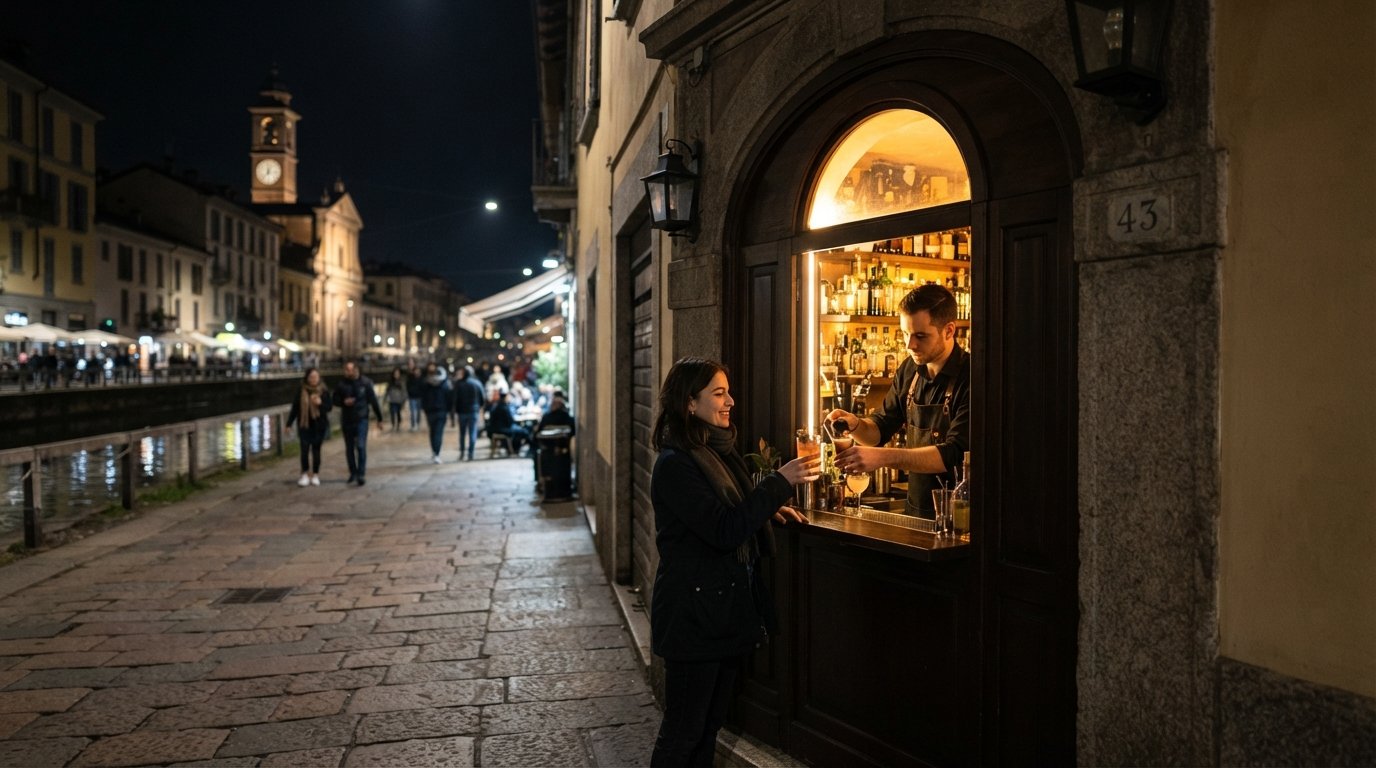
Then there is Backdoor 43, the neighbourhood’s cult address and, yes, the world’s smallest bar. Four square metres, a handful of stools, a password, and bookable by the hour on Ripa di Porta Ticinese. When it is not serving those tiny private sessions, it hands out takeaway cocktails through a hatch. The joke could have worn thin years ago; instead, it remains deliciously absurd.
If you prefer live music to mixology, Nidaba Theatre on Via Emilio Gola has been running an intimate programme of jazz, blues, soul and folk since 1996, usually with no cover. It is red-lit and small, which is exactly how a live-music room should feel when it knows its own size. On a district map full of bars, it gives Navigli a little backbone.
One honest warning, because honesty is useful in neighbourhood writing and in life: Friday and Saturday nights can be a crush, and the towpaths get loud, packed and messy after midnight. Navigli is not pretending to be a library. It is a place where the evening arrives with some force and stays until the small hours.
Things to do / what to see
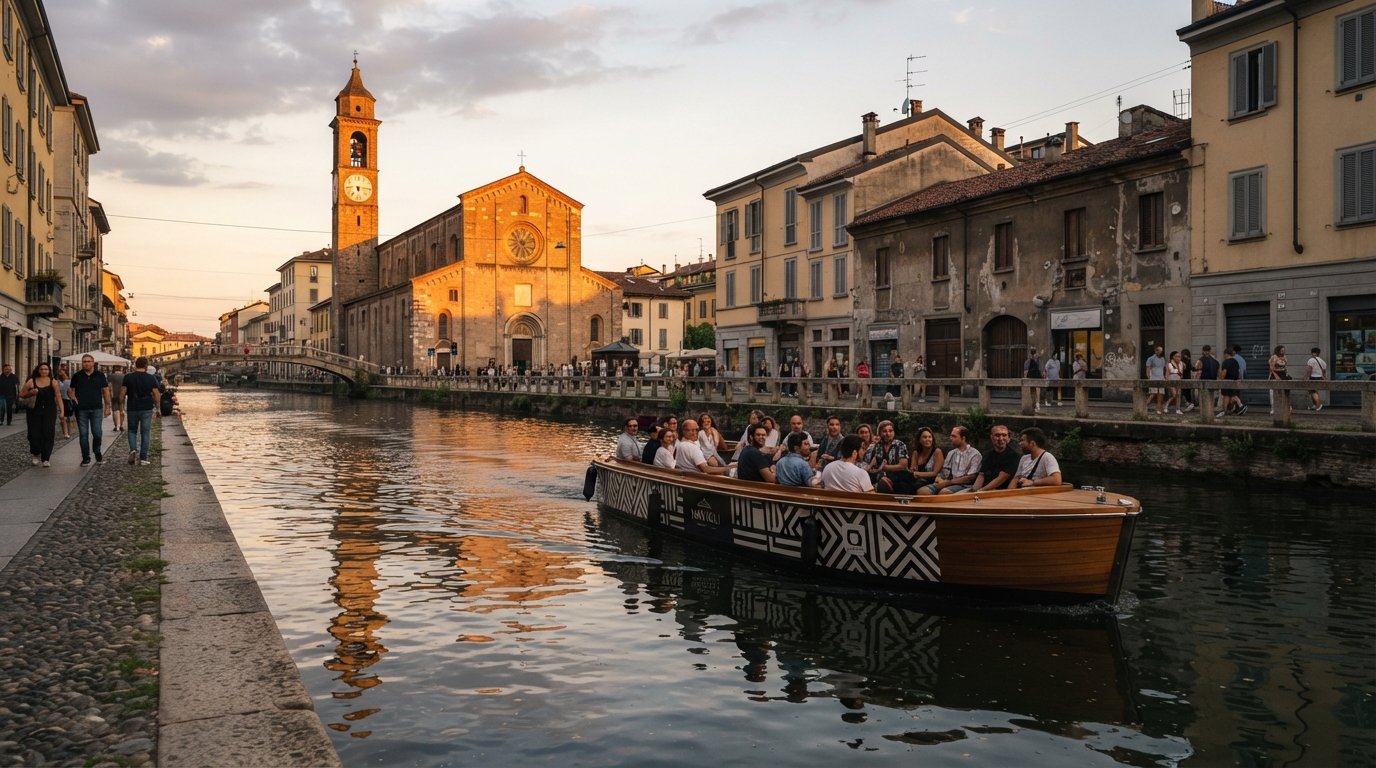
The water is the obvious attraction, but it is not a passive one. The easiest way to understand Navigli is on a one-hour canal cruise, which loops out along the Naviglio Grande and back through the Darsena on electric boats. It passes the 13th-century Church of San Cristoforo sul Naviglio, the old rowing club and the Vicolo dei Lavandai from the angle it was built to be seen. Book an evening or sunset departure and you can fold it neatly into aperitivo, which is the sort of practical elegance Milan appreciates.
On foot, the classic Navigli walk runs from the Darsena down the towpaths, no ticket required. It is one of those city walks that works because the setting does half the work and the rest is people-watching. The canal edge gives you the district in sequence: bars, bridges, shopfronts, a few quieter side streets, then the return of the water again. Duck into the Vicolo dei Lavandai and you get the preserved washing stalls and the little water channel, el fossett, still running off the canal. It is a small place, but it changes the scale of the neighbourhood. Suddenly the party district remembers it was once a working district.
If your visit lands on the last Sunday of the month, the Mercatone dell’Antiquariato is essential. It stretches nearly two kilometres along the canal from the early morning, with several hundred exhibitors laying out furniture, prints, watches, silver, jewellery, books, vinyl and bric-a-brac. This is not a rummage pile and not a car-boot free-for-all; it is a fixed-price, no-haggling market, and serious browsers arrive early. That alone tells you something about Milan: even the antiques market likes rules.
The Darsena square is also where weekend markets and seasonal food events turn up, and it is a natural place to pause with a gelato and watch the neighbourhood move from day to night. The trick with Navigli is not to rush it. The district reveals itself in layers, and the most rewarding one is often the quieter one.
Don’t miss in Navigli
The historic washhouse, Vicolo dei Lavandai.
The monthly antique market along the Naviglio Grande.
Aperitivo bars lining the water.
Shopping & markets
Navigli is not here to compete with the Quadrilatero d’Oro or Corso Buenos Aires, and it would be foolish to ask it to. Fashion shopping is not the point. Browsing is.
The side streets and internal courtyards off the Naviglio Grande still hide artisan workshops, framers, vintage-clothing and design shops, and small galleries — a survival of the neighbourhood’s old craft economy. This is where Navigli feels less like a nightlife district and more like a working urban fabric that has found a second life without fully surrendering the first.
The set-piece is the monthly Mercatone dell’Antiquariato, held the last Sunday of every month along the first stretch of the Naviglio Grande from Viale Gorizia toward Via Valenza. Several hundred vetted dealers lay out furniture, prints, watches, silver, jewellery, books, vinyl and bric-a-brac. It is fixed-price, no haggling, which saves everyone a bit of time and a lot of theatre. If you are serious, arrive early; if you are merely curious, arrive anyway.
On other weekends, the Darsena square regularly hosts smaller artisan, food and seasonal markets, and those are worth a look whenever you are passing. The pleasure here is not in conquest but in drift. Navigli is a district that rewards wandering with a little attention and a decent pair of shoes.
Where to stay in Navigli
Navigli suits travellers who want to be in the middle of the nightlife and do not mind a metro ride to the historic centre. That is the trade-off, and it is non-negotiable: canal-front rooms over the Alzaia Naviglio Grande or Ripa di Porta Ticinese sit above the busiest bars in Milan, and at weekends that means noise until 2am or later. If you book on the canal, ask for a courtyard-facing room or a higher floor. You keep the location and lose most of the racket.
For a calmer base with the district still on your doorstep, look one grid back toward Porta Genova and Corso Genova to the north, or the quieter residential stretches around Via Torricelli and the Naviglio Pavese. They trade the canal view for sleep, which is sometimes the more luxurious exchange. The area is mid-range rather than glossy: boutique guesthouses, small four-stars and a good spread of apartments, with prices climbing sharply during fashion weeks and the big design and furniture fairs in spring.
Hotels in Navigli
Our best-rated stays in this neighbourhood. Prices are approximate “from” rates — confirmed at the provider when you continue. We may earn a commission if you book through our partners — at no extra cost to you.
In this area
In this area
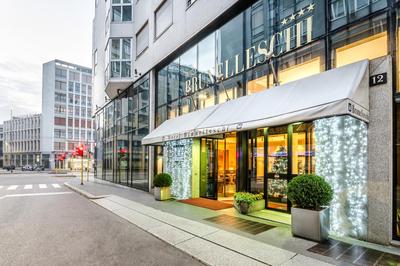
In this area
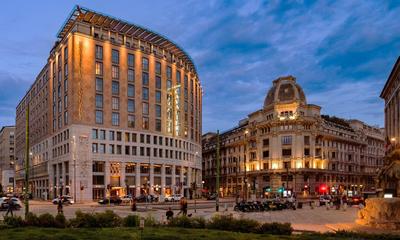
In this area
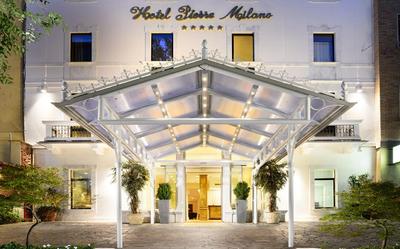
In this area
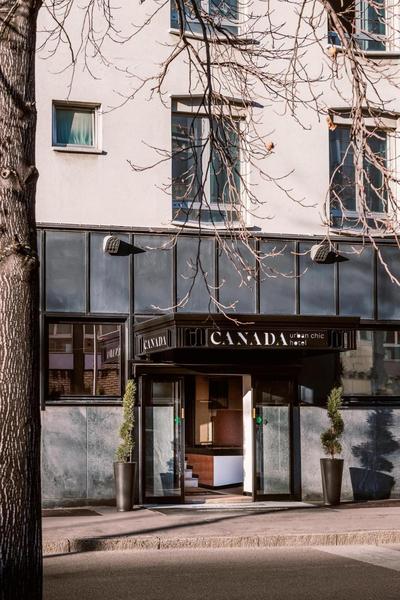
In this area
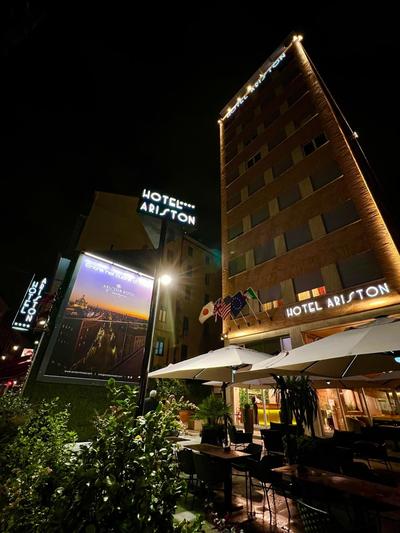
In this area
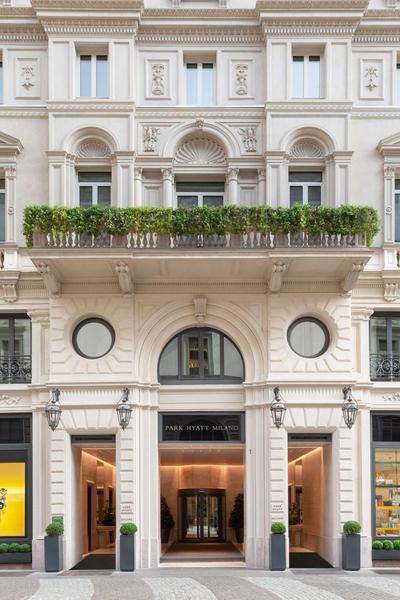
In this area
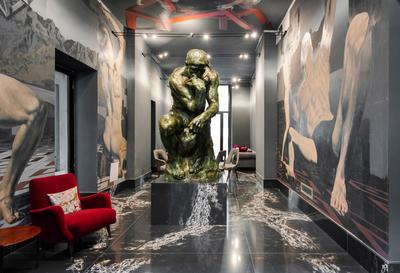
Navigli
Galleria Vik Milano - Townhouse Galleria - Small Luxury Hotels of the World
8.4· 829 reviews
approx. from£388 / nightSee prices
In this area
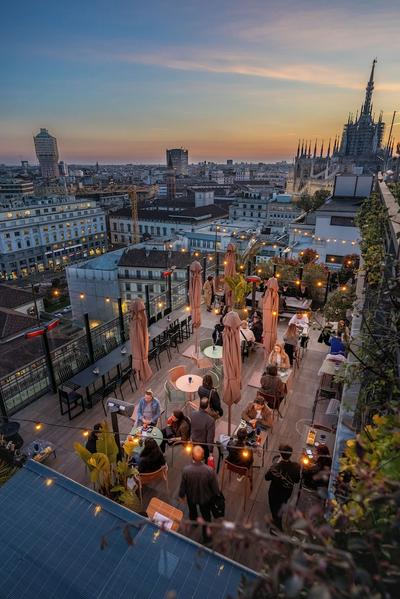
In this area
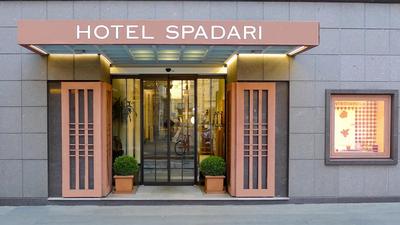
In this area
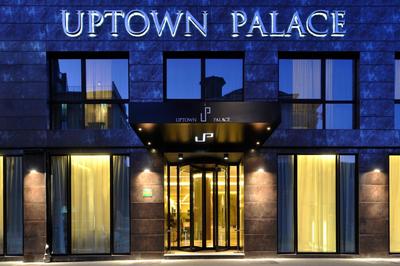
Getting around
The gateway station is Porta Genova on the M2 green line, a five- to ten-minute walk north of the Naviglio Grande down Via Vigevano or Via Corsico. From the Duomo, the M2 or a tram gets you here in under 20 minutes; tram 2 and tram 9/10 run down toward the canals and are the more scenic option, dropping you around Corso Colombo and the Darsena. Romolo, also on the M2, is the handiest stop for the southern end of the Naviglio Pavese.
Once you are here, Navigli is flat and completely walkable. The two towpaths and the Darsena form a compact triangle you can cover on foot, and it is an easy stroll to the Colonne di San Lorenzo and Porta Ticinese to the northeast. For Malpensa airport, the simplest route is the Malpensa Express from Milano Cadorna, about three stops away on the M2, taking roughly 40–50 minutes door to door. Linate is quicker, reachable by the M4 metro with a change, in around 30–40 minutes.
Final word
Navigli is Milan with the volume turned up and the cuffs rolled back. It is where the city comes to drink, to browse, to linger by water that was dug for work and now serves leisure with no complaint at all. Come for aperitivo, stay for the side streets, and do not make the mistake of thinking the canal-front is the whole story. The best of Navigli is often one turn away from the crowd, where the laundry alley, the old wash-house, the natural-wine list or the small live-music room remind you that this is still a neighbourhood, not just a stage set.
Gallery
Navigli in pictures
Navigli — your questions
Is Navigli a good area to stay in Milan?
Yes, if you want nightlife, canal atmosphere and easy aperitivo on your doorstep, and you do not mind being a short metro ride from the historic centre. The catch is noise: canal-front rooms can be loud well past 2am at weekends, so a courtyard-facing or higher room is the smarter choice.
When is the best time to experience Navigli?
Aperitivo hour, roughly 6.30 to 9pm, is the full Navigli experience, when the towpaths fill and the classic bars put out their buffets. For a calmer, more characterful visit, come by day for the side streets and the Vicolo dei Lavandai, or time it for the last Sunday of the month to catch the antiques market.
Is Navigli safe at night?
Broadly yes. It is one of Milan’s busiest and most well-patrolled nightlife areas, and it stays crowded late. The main caution is petty theft in the weekend crush and packed bars, so keep an eye on your phone and wallet and stick to the lit towpaths after 2am.
What is Navigli best known for?
Its canals, aperitivo culture and nightlife. The district is built around the Naviglio Grande, the Naviglio Pavese and the Darsena, but it is the evening ritual of drink and buffet — plus the monthly antiques market — that most people come for.