
Milan hides its best rooms behind facades that give nothing away — a university gate on a traffic-choked street, a brick wall behind a basilica, a courtyard door that looks like every other courtyard door in the centro storico. This is a walking guide to thirteen of them: cloisters, gardens, and cortili that most people visiting for the Duomo and the Last Supper walk straight past, grouped into clusters you can actually string into an afternoon. None of it needs a ticket to admire from the threshold, and only a few need booking ahead — but book those ones properly, because Milan does not do standing-room courtyard tourism.
Around the Duomo: a working Renaissance masterpiece
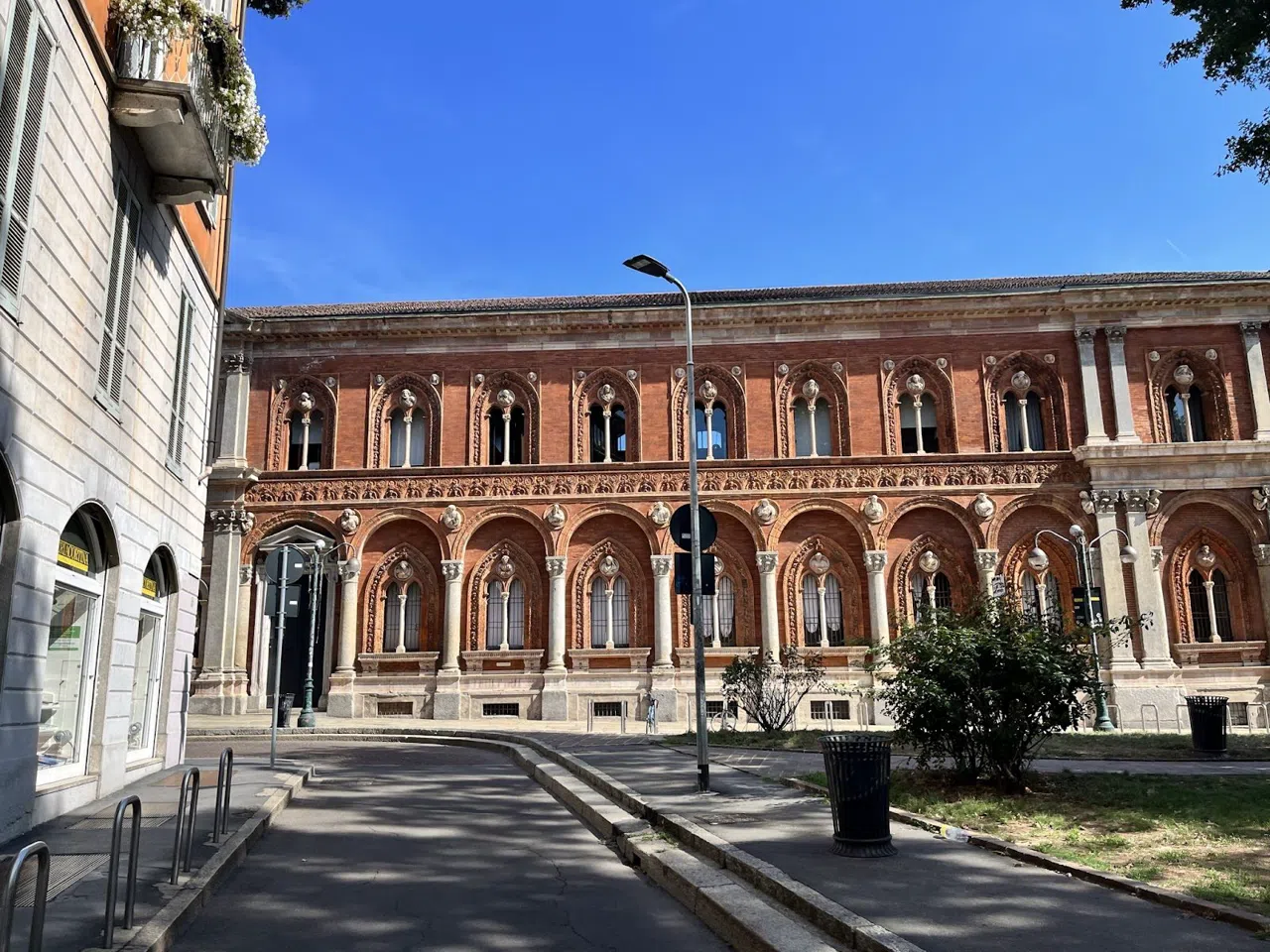
Start close to the cathedral, because the biggest surprise is the one nobody detours for. Ca' Granda (Università degli Studi di Milano, Via Festa del Perdono) is a full Renaissance hospital complex turned university, its two great courtyards ringed by porticoes and brick loggias that most tourists never register exists — it's ten minutes' walk from the Duomo and looks, from the street, like nothing at all. Filippo Sforza commissioned it in the 1450s as a single unified hospital to replace Milan's scattered medieval charity wards, and the architect Antonio Filarete gave it the double-courtyard logic — one grand, one utilitarian — that the university has never needed to alter, which is part of why walking through still feels like stepping into a functioning fifteenth-century institution rather than a preserved one. It's free and self-guided during university opening hours, with eleven information totems doing the explaining, so you can simply walk in during term time and wander both cortili at your own pace. Bookable guided group visits run Saturdays 9:00-16:30, which is the better option if you're travelling with more than three or four people and want the history properly unpacked rather than read off a totem. Go on a weekday morning if you want it near-empty; university corridors mean it's genuinely a working building, not a museum, so keep voices down.
The Brera cluster: a courtyard, a walled garden, and a cloister nobody finds
Brera rewards a slow morning more than anywhere else on this list, because three of the thirteen sit within four minutes of each other.
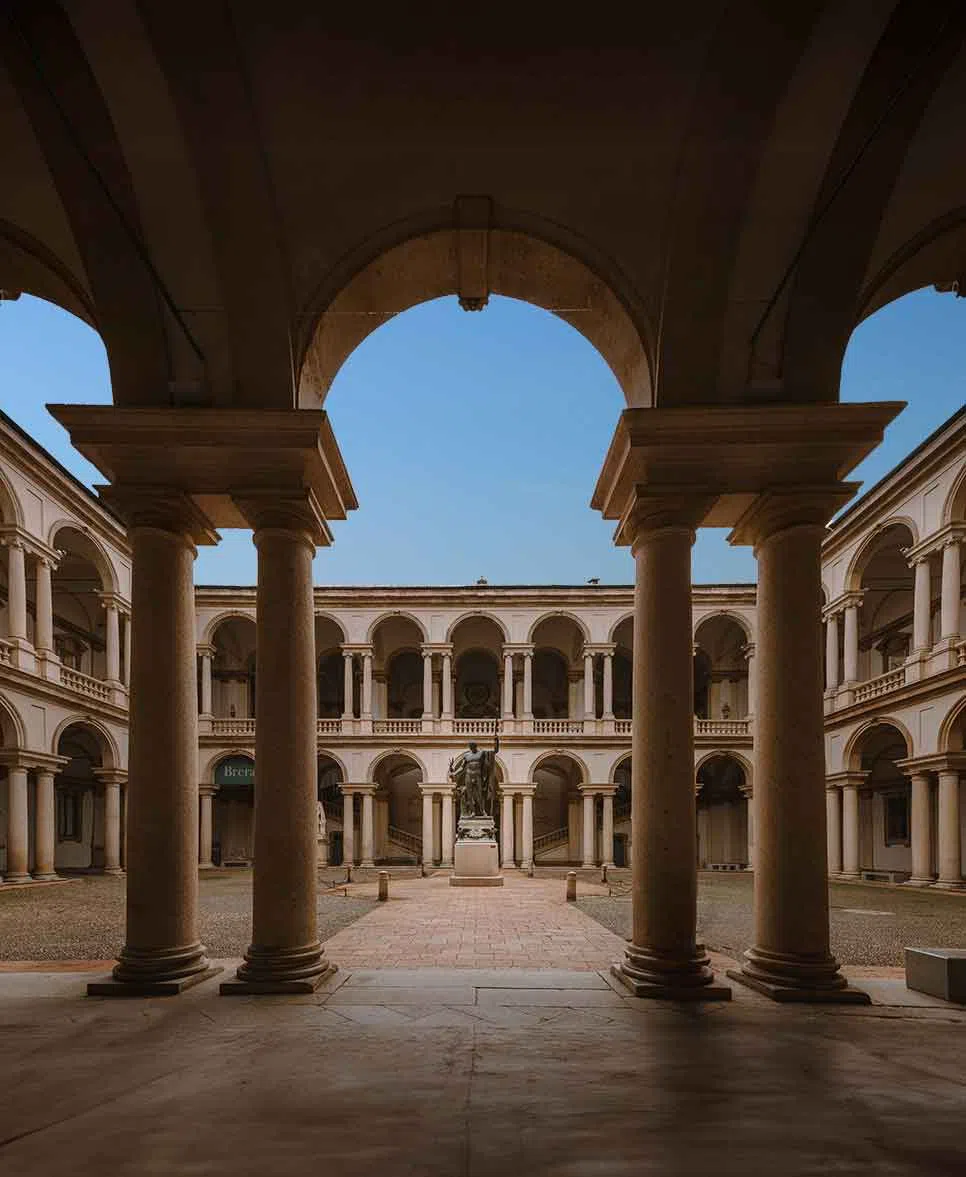
Everyone who visits the Pinacoteca di Brera walks through Palazzo di Brera Cortile d'Onore (Via Brera) without registering it as a destination in its own right — it's the courtyard you cross to reach the ticket desk, presided over by Canova's nude statue of Napoleon. The palazzo itself began life as a Jesuit college before Maria Theresa of Austria repurposed it in the 1770s for the academy, observatory, and library that still share the building, and the two-tiered arcaded courtyard around the statue is the clearest surviving piece of that 18th-century civic ambition. The good news is you don't need a Pinacoteca ticket to stand in it: the courtyard is freely walkable, so even if the paintings aren't on your list, the architecture and the statue are worth the detour on their own. The museum proper runs around €20; the courtyard costs nothing.
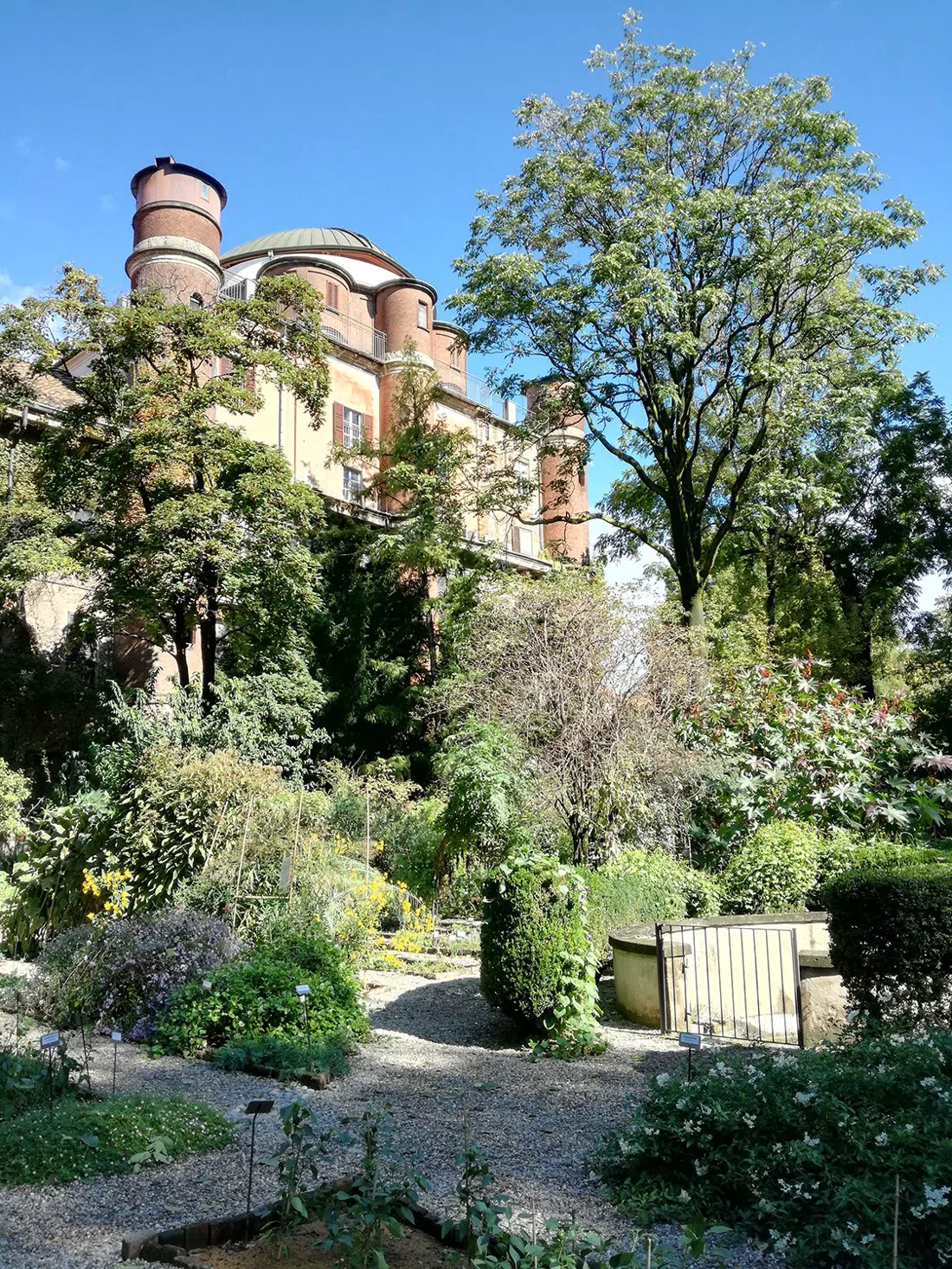
What most people miss entirely is what's behind it. The Orto Botanico di Brera (Via Brera) is an 18th-century walled garden tucked behind the palazzo, invisible from the street and skipped by nearly everyone who's just spent an hour with the paintings. It's free, groups are welcome, and guided tours run if you want the planting explained rather than just enjoyed — otherwise it's simply a quiet, green, unexpectedly large space to sit in after a gallery crawl.
A short walk north, the Chiostro delle Due Colonne at the Basilica di San Simpliciano (Piazza San Simpliciano) is one of four basilicas founded by Sant'Ambrogio himself, and its cloister sees a fraction of Brera's foot traffic despite sitting a few streets away. Free entry daily, groups fine outside service times — this is the one to add almost for free if you're already in the neighbourhood.
Corso Magenta to Sant'Ambrogio: cloisters worth booking around the crowds
This stretch of the city is famous for one queue — the Last Supper — and almost nobody in that queue knows what's a few steps away.
The Chiostro del Bramante at Santa Maria delle Grazie (Corso Magenta) is Bramante's serene, arcaded cloister, standing literally steps from where people are lined up for Leonardo's fresco, and almost nobody detours to see it. Bramante worked on the wider Santa Maria delle Grazie complex in the 1490s, the same years Leonardo was painting the refectory wall a few metres away, and the cloister's cool, mathematically even proportions are the calmest possible antidote to the crowd-management logic of the fresco visit next door. Access is deliberately limited — guided tours run only the 1st and 3rd Saturday of the month, and booking is mandatory — so this is not a walk-up. If your Milan dates line up with one of those Saturdays, build your itinerary around it; the tour itself is €5. It's an easy add-on directly before or after a Last Supper reservation, since you're standing in the same block anyway.
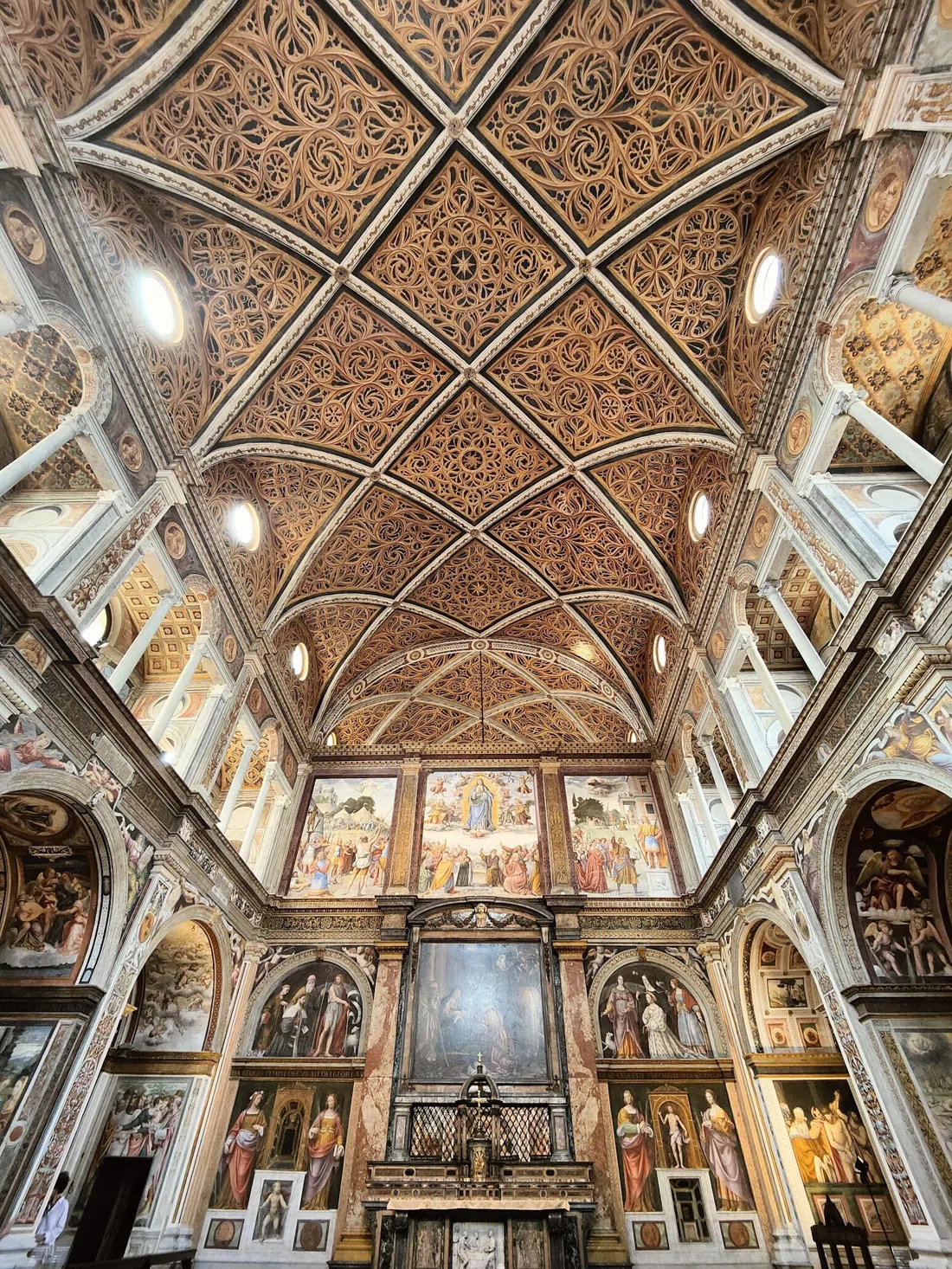
A few minutes further along, the Cloisters of San Maurizio al Monastero Maggiore (Corso Magenta, inside the Museo Archeologico) splice actual fragments of the Roman city walls into a convent garden behind Milan's most heavily frescoed "hidden" church — most visitors go in for the frescoes and never notice the layered Roman-into-convent architecture around the back. Guided cloister and tower visits run on fixed time slots between 10:00 and 16:15, bookable in advance for groups; combined entry with the guided tour runs around €15 (€5 museum plus €10 for the cloister/tower tour).
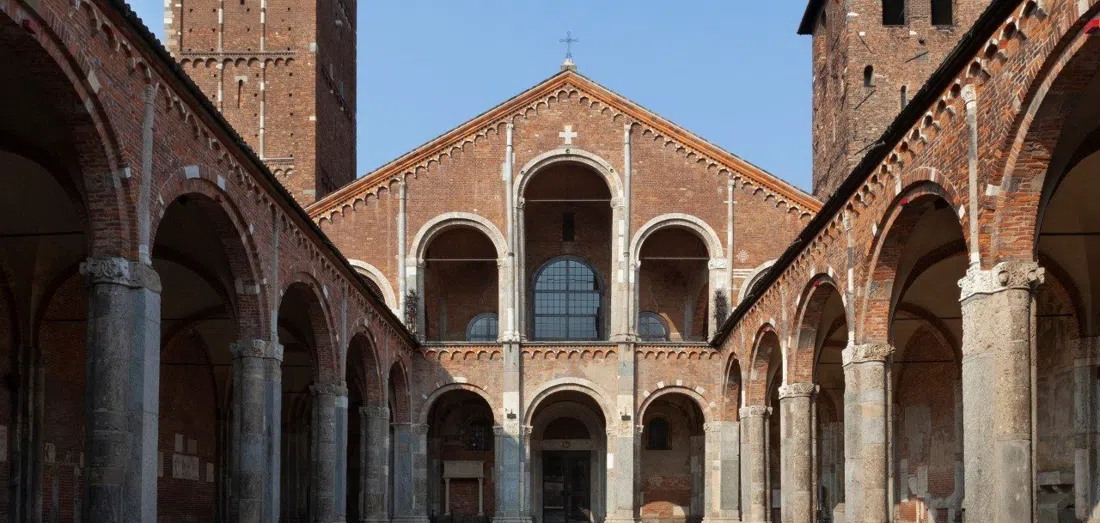
Round out the area at the Sant'Ambrogio Quadriportico (Piazza Sant'Ambrogio), the 9th-century atrium where medieval Milanese gathered for the bishop's blessing — a working church courtyard hiding in full public view a short walk from both of the above. It's free, groups are fine outside Mass times, and there's an official guided tour on Sundays at 15:30 if you want the history from someone who knows it rather than a guidebook.
Ticinese: a medieval cloister behind the crowds at Sant'Eustorgio
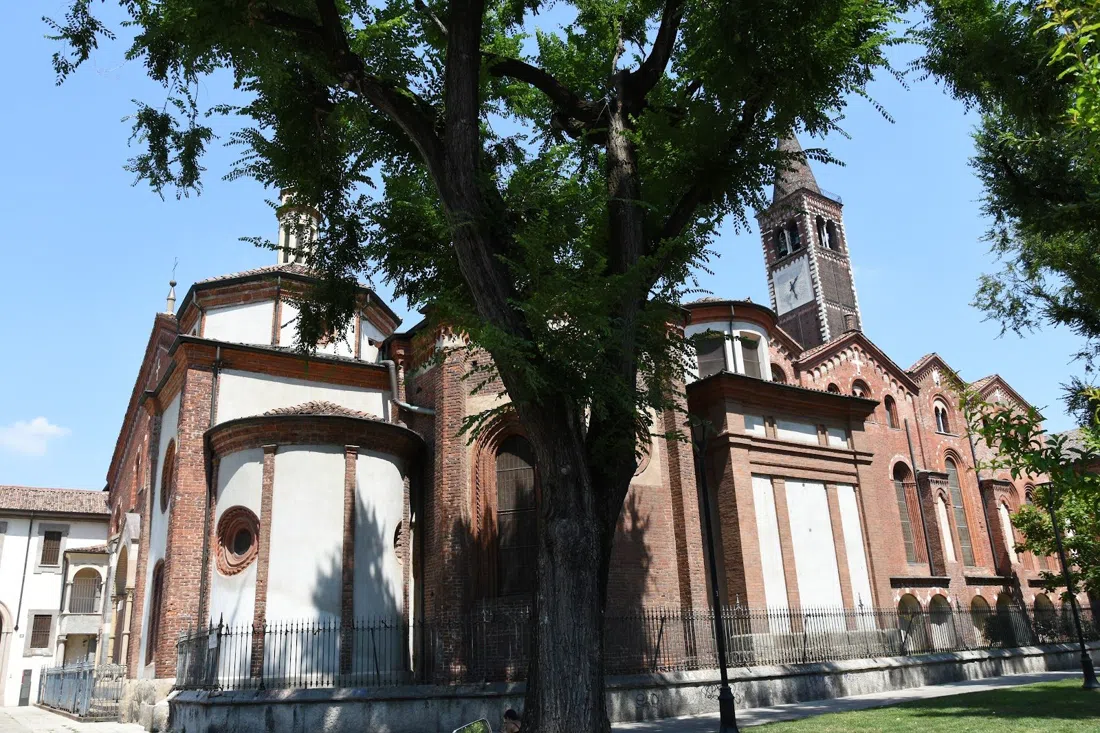
South of the centre, Chiostri di Sant'Eustorgio (Corso di Porta Ticinese) sits tucked behind the basilica everyone photographs for its bell tower and Portinari Chapel, and the cloisters themselves — one of the city's most overlooked medieval green spaces — get a fraction of that attention. Full entry is €9, with a reduced group rate of €7, and school and oratory groups are explicitly welcomed with advance notice. There's an on-site bistrot, which makes this a genuinely good lunch stop rather than a five-minute detour: budget an hour if you want to eat there too.
Porta Romana: a plague garden, a working farm, and a theatre pool
This cluster is the most varied on the list, and the one best suited to an evening rather than a morning.
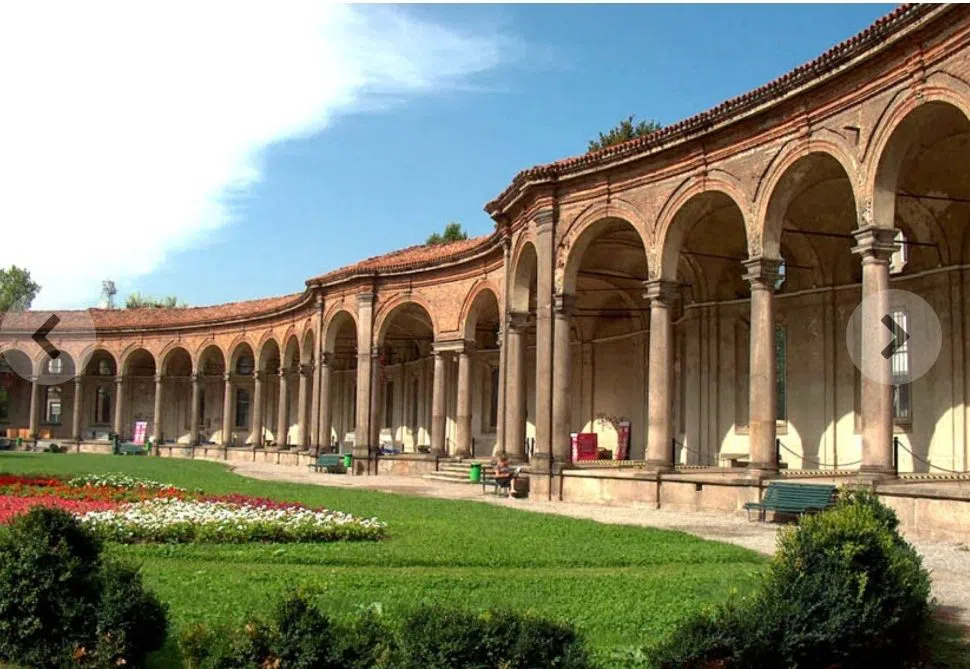
The Giardino della Rotonda di Via Besana (Via Enrico Besana) is a former 17th-century plague cemetery, now a perfectly circular sunken garden that most visitors to nearby Porta Romana never notice is there — it's a genuinely strange, quiet piece of urban design hiding behind unremarkable railings. It's a free public garden, fully open to groups, and it also hosts ticketed evening garden-party events if you want to see it dressed up rather than empty.
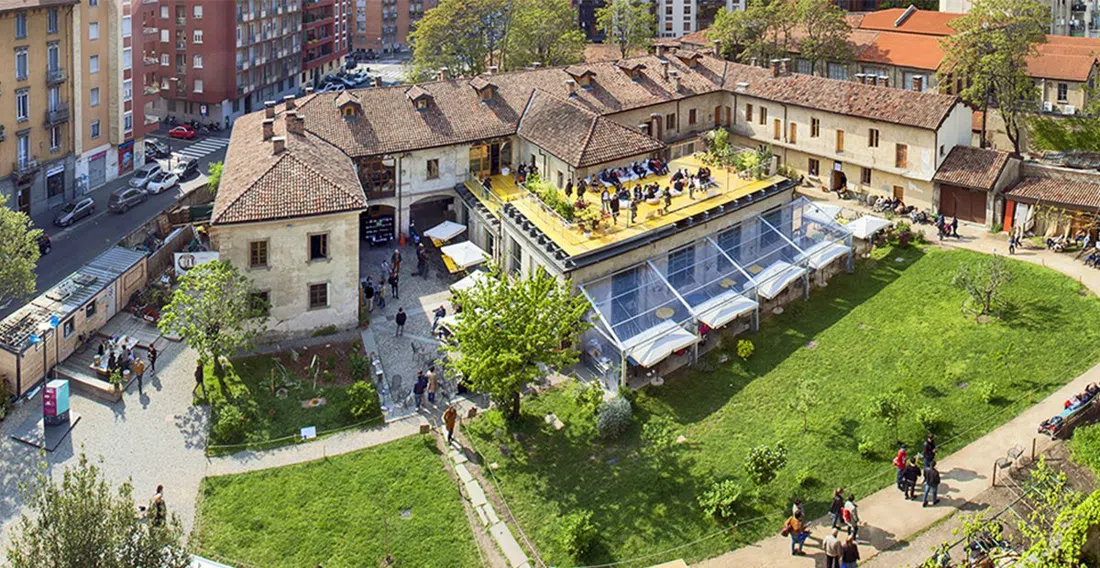
A ten-minute walk away, Cascina Cuccagna (Via Cuccagna) is a working 17th-century farmstead — a cascina — hidden a block off a busy street, which still farms its own courtyard and runs a weekly Tuesday market inside it. Entry to the courtyard is free; the food and market stalls cost extra. It's the most community-run, group-friendly stop on this list, hosting markets, workshops, and communal dining, so it's the one to bring a larger, less architecture-focused group to — nobody has to whisper here.
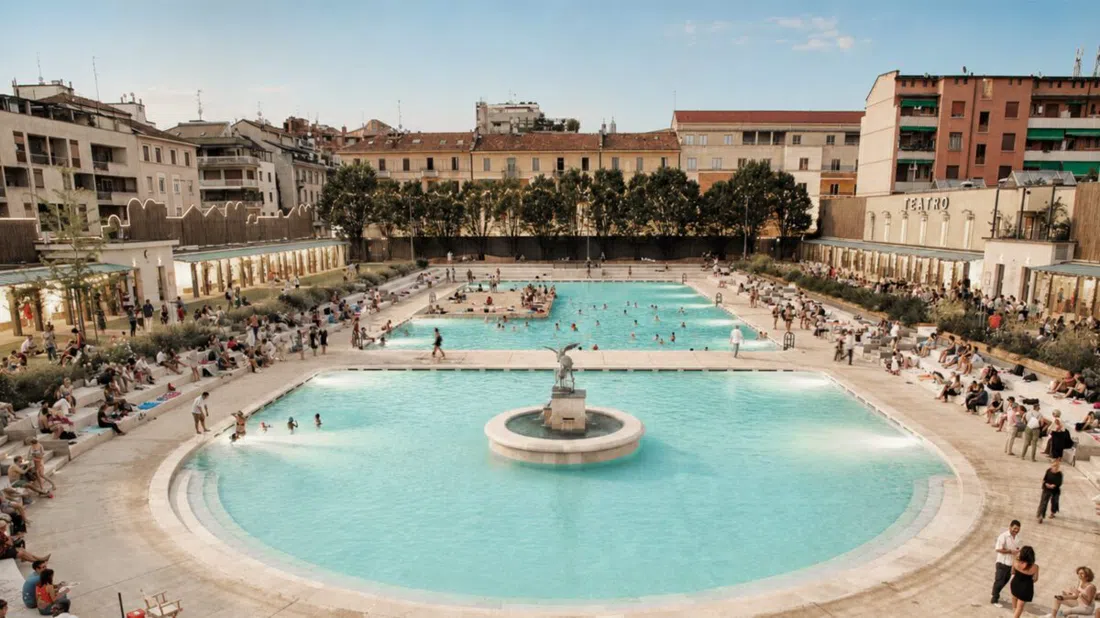
For an evening finish, Bagni Misteriosi (Via Fezzan, at the Teatro Franco Parenti) is a derelict 1930s bathhouse reborn as a theatre-run pool-bar courtyard — pure Milanese secret-garden theatre, with the 2026 season running daily from June 1st. It takes groups and private bookings for evening aperitivo sessions poolside, and given how theatrically specific the setting is, contacting ahead for a party is worth doing rather than turning up and hoping. Entry per slot runs €15-25.
San Babila to Porta Venezia: two courtyards you can book into for free
Two last stops sit east of the centre, both surprisingly easy to arrange and both free.
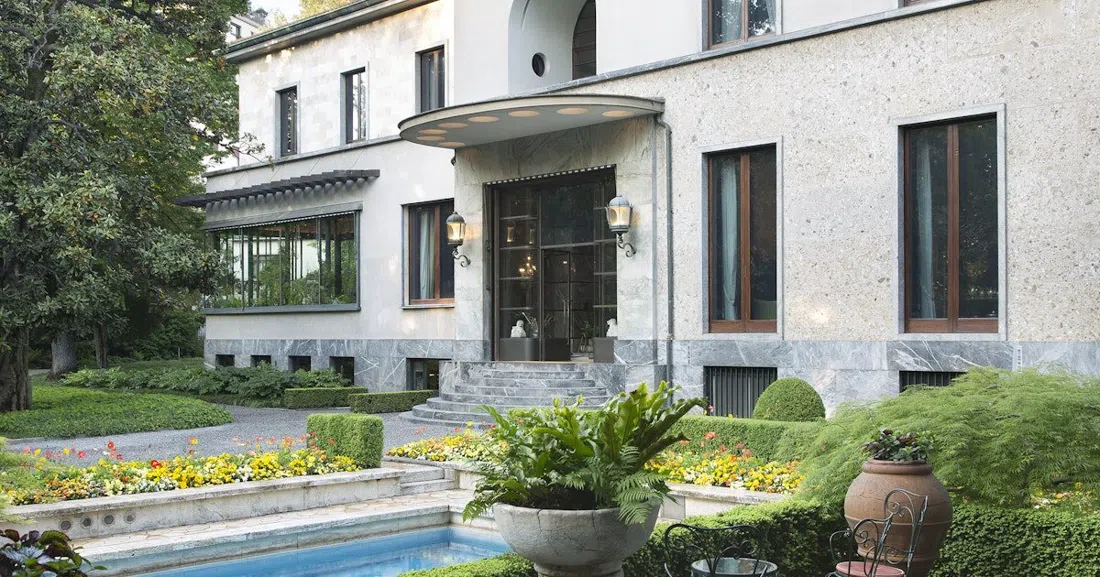
Villa Necchi Campiglio Garden (Via Mozart, San Babila) is a walled Art Deco garden two minutes from San Babila's shop windows, attached to a house museum most tourists never realise is open to the public — it was a filming location for I Am Love, and the house itself is worth the ticket even before you reach the garden. Architect Piero Portaluppi built the villa in the early 1930s for the Necchi and Campiglio families, and the clean rationalist lines of the house extend straight into the garden's geometry — clipped lawns, a swimming pool that was one of the first private pools in the city, and hedges laid out with the same discipline as the floor plan inside. It's FAI-run, with group tours bookable in advance; full entry is €15, reduced €9.
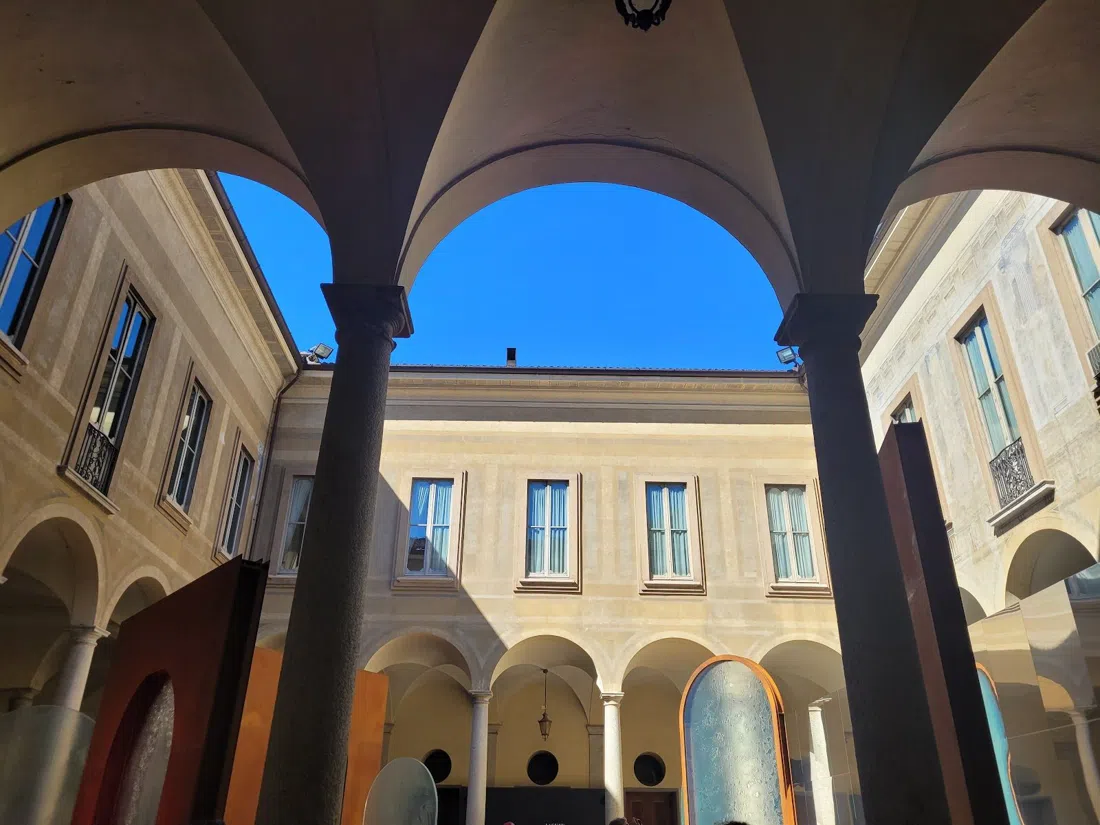
Further east, Palazzo Isimbardi (Corso Monforte) is Milan's metropolitan government headquarters, and it conceals a Tiepolo-frescoed courtyard and an English garden that almost no visitor knows they can simply book into — for free. Guided tours run by reservation, small parties of up to around five are standard, and larger groups can arrange access through the public-relations office. This is the most bureaucratic-sounding stop on the list and also, unusually for a government building anywhere, one of the most rewarding: budget in a request at least a few days ahead of your trip.
Practical notes for planning the walk
Transport. All five clusters sit within Milan's compact centro storico and inner rings, reachable on the M1 (red) and M2 (green) metro lines plus the historic tram network; walking between venues within a cluster takes four to fifteen minutes, so treat each section above as a single outing rather than mixing clusters in one day. The Brera and Corso Magenta clusters are close enough to combine if you're willing to walk twenty-five minutes between them.
Cash and booking. Most of these courtyards are free to enter; where there's a charge, it's modest (€5-25) and several venues — the Chiostro del Bramante, Palazzo Isimbardi, Ca' Granda's Saturday tours — require advance booking rather than accepting walk-ins, so check specific opening windows before you build a day around them. Carry a little cash for the smaller sites; not everywhere accepts cards for a €5 cloister ticket.
Timing. Mornings suit the religious cloisters, when they're quietest and light falls best across the porticoes; save Bagni Misteriosi and any Rotonda di Via Besana evening events for after dark, when Milan's courtyard culture shows its other side. The Chiostro del Bramante's twice-monthly Saturday slots are the one fixed constraint worth checking before you fix your travel dates.
Budget. A day covering four or five of these courtyards, including a cloister ticket or two and lunch at Sant'Eustorgio's bistrot, comes in well under €50 per person — this is one of the cheapest ways to spend a full day in Milan. For where to base yourself for easy access to both the Brera and Duomo clusters, see the Milan hotel search; for the rest of what the city has to offer beyond its courtyards, the Milan guide covers the wider picture.