
Leonardo da Vinci arrived in Milan in 1482 as a court entertainer with a lyre shaped like a horse's skull, and stayed on Ludovico Sforza's payroll for the next seventeen years — then came back for seven more under the French, from 1506 to 1513. Milan doesn't monument him the way Florence does. It puts him to work: a refectory wall, a castle ceiling, a canal lock, a library of loose papers assembled after his death. None of it sits together in one gallery. You have to walk it, the way he did.
This is that walk, grouped so a visitor with two or three days can actually plan around it — what needs booking months out, what's a free five-minute detour, and what to skip if you only have one day.
The Wall Everyone Comes For
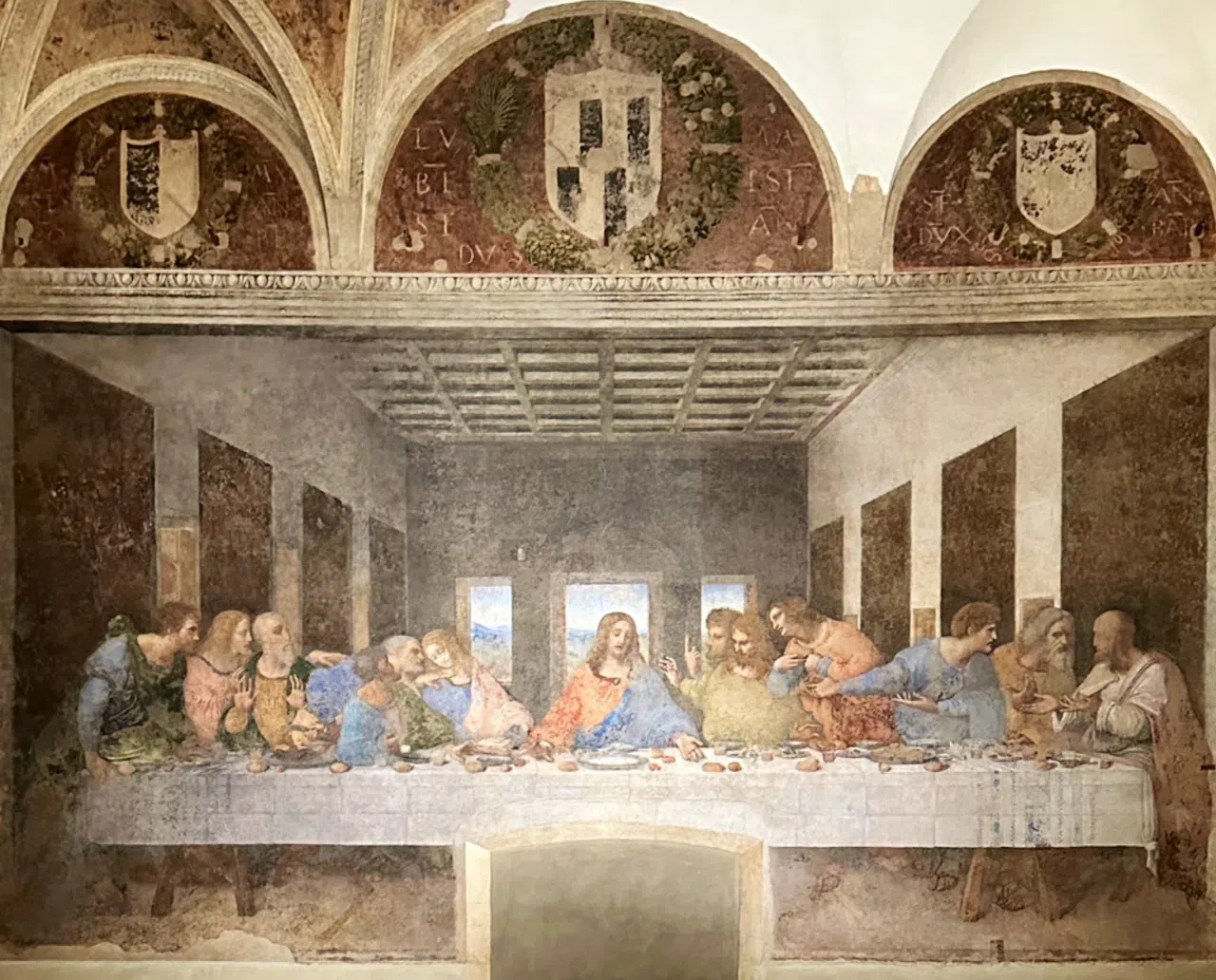
Santa Maria delle Grazie (Corso Magenta, a 10-minute walk from Cadorna station) is why most people come to Milan for Leonardo at all, and it is also the one booking mistake that ruins an itinerary if you leave it late. The Last Supper, painted onto the refectory's end wall between roughly 1495 and 1498, was commissioned by Ludovico Sforza for the Dominican friars who ate there daily — Leonardo, characteristically, painted it slowly, in an experimental tempera-on-dry-plaster technique that started degrading almost immediately, which is why the room is now climate-controlled and entry is capped to protect what's left.
The Museo del Cenacolo Vinciano releases tickets for September–December 2026 every Wednesday at noon, and they go fast — book the moment the window opens if you have specific dates. Entry is €15 for adults, €2 for ages 18–25, free under 18, plus a small booking fee, and visits run in strict 15-minute timed slots. It is not on offer on free-admission Sundays, and groups of ten or more can't book through the normal system at all — they go through a separate group desk by email ([email protected]), which needs to happen weeks ahead, not days. If you're travelling with a group and haven't done this yet, do it before anything else on this list.
Inside His Mind
A 20-minute walk east, in the historic centre near the Duomo, the Veneranda Biblioteca Ambrosiana (Piazza Pio XI) holds the single largest surviving collection of Leonardo's own pages: the Codex Atlanticus, 1,119 leaves he filled across his working life, later bound into volumes by the sculptor Pompeo Leoni and kept at the Ambrosiana since 1637, when the nobleman Galeazzo Arconati donated them. It briefly left Milan under Napoleon and came back after the 1815 Congress of Vienna — a detail worth mentioning to anyone who thinks it's always sat quietly in one room.
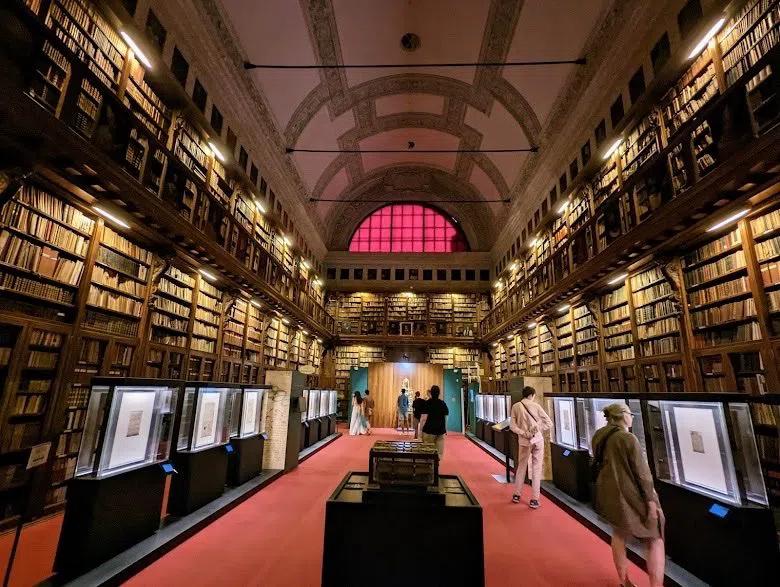
What you'll actually see depends on your visit date. Pages are rotated periodically for conservation, so this isn't a fixed exhibit you can research in advance and expect to match — treat it as a library with a changing display, not a gallery with a set collection. Entry is around €15 full price, and it takes standard museum group bookings without the friction of the Cenacolo. In July and August the Ambrosiana stays open late on Saturdays, 6–10pm, which is the better slot if you want the galleries without a midday crowd.
The Duke's Castle
From the Ambrosiana it's a 15-minute walk north to Castello Sforzesco (Castello district), the fortress of the family who employed Leonardo. The courtyards are free and open daily — worth a wander even if you skip the museums — but the reason it's on this list is the Sala delle Asse, a vaulted room Leonardo painted around 1498 with an illusionistic canopy of interlacing tree branches, one of the few surviving decorative schemes he completed in full.
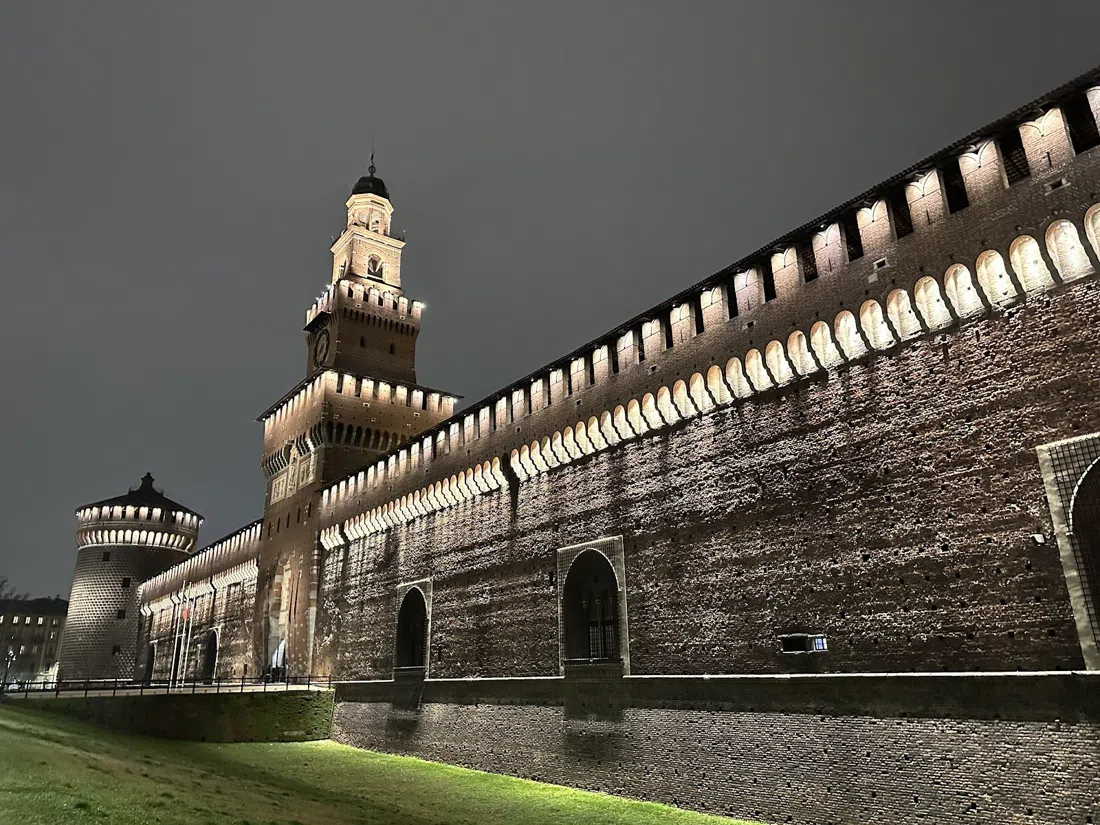
During the Milano-Cortina Winter Olympics window (7 February–14 March 2026), the castle offered timed guided visits onto the restoration scaffolding itself, capped at eight people at a time, letting visitors see the mural close enough to read individual brushwork. That access was tied to the Games and has since closed — if you're reading this after March, the Sala delle Asse is still viewable on the standard museum ticket, just from floor level rather than scaffold height. The civic museums cost €10, free on the first and third Tuesday afternoon of the month and the first Sunday of every month — worth timing a visit around if your dates allow it, since €10 is otherwise the going rate across most of this list.
Following the Water
Less visited, and worth the detour precisely because most Leonardo itineraries skip it: the Conca dell'Incoronata, a 15-minute walk northeast of the castle near Via San Marco. This is a historic canal lock inaugurated in 1496 on Ludovico's commission, part of the network Leonardo was recruited to help engineer — Ludovico brought him in specifically to work out how boats could move between Lake Como and Milan across changing elevations, and the miter-gate lock design that came out of that work — angled doors that use the water's own pressure to seal, needing only one person to operate — is still the basic mechanism used in the locks on the Panama and Suez canals today. The Conca dell'Incoronata is currently under sponsor-funded restoration (Riva1920) but stays visible and photographable at street level, free, no booking. Five minutes, and you've stood at the one surviving piece of Leonardo's actual engineering rather than reading about it in a caption.
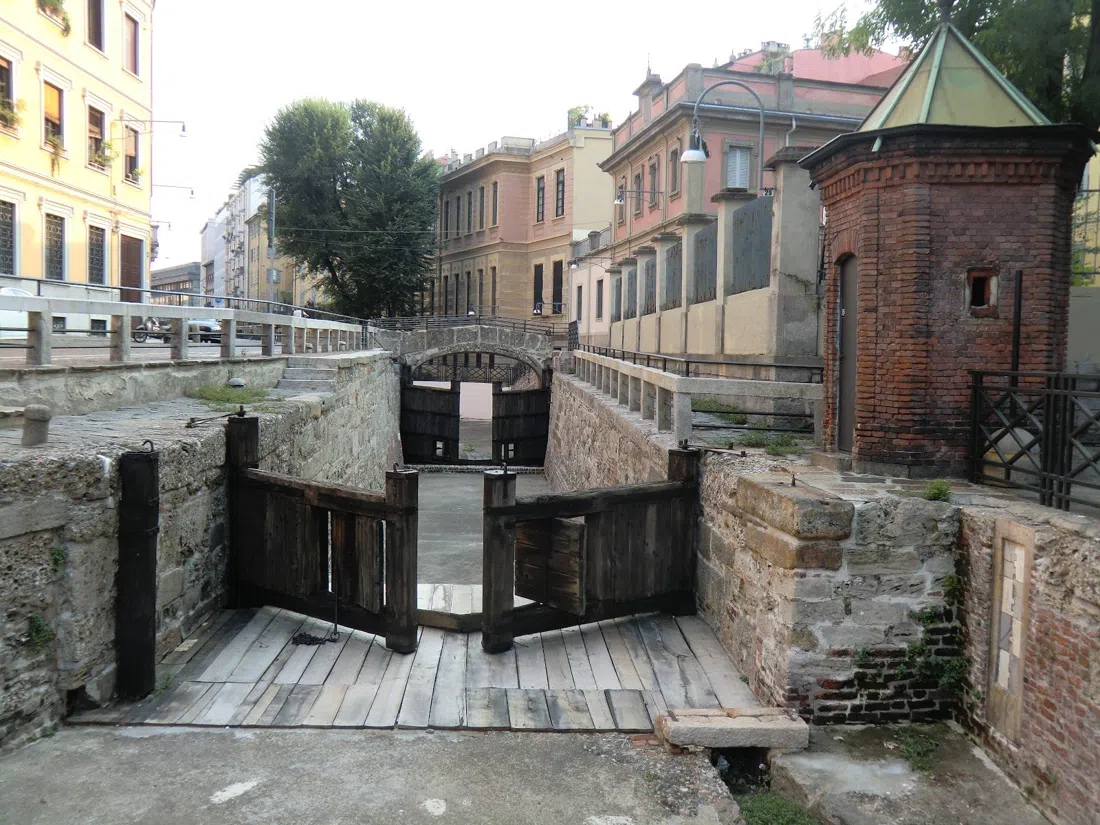
To see the system properly, take the Navigami canal boat tour, departing from Alzaia Naviglio Grande 4 in the Navigli district, a 20-minute taxi or tram ride south of the centre. Both small-group and larger charter departures run, up to about 40 people, for roughly €15–20 per person over 50–60 minutes, and the route passes the Conchetta lock — restored using Leonardo's own drawings, its gates rebuilt as depicted around 1506. It's the one stop on this list where you physically experience what he built rather than looking at a drawing of it, and it's an easy add for families or groups who'd rather sit on a boat for an hour than stand in another museum queue.
The Workshop's Afterlife
Two stops here aren't Leonardo's own work, but they're where his influence in Milan is easiest to actually see.
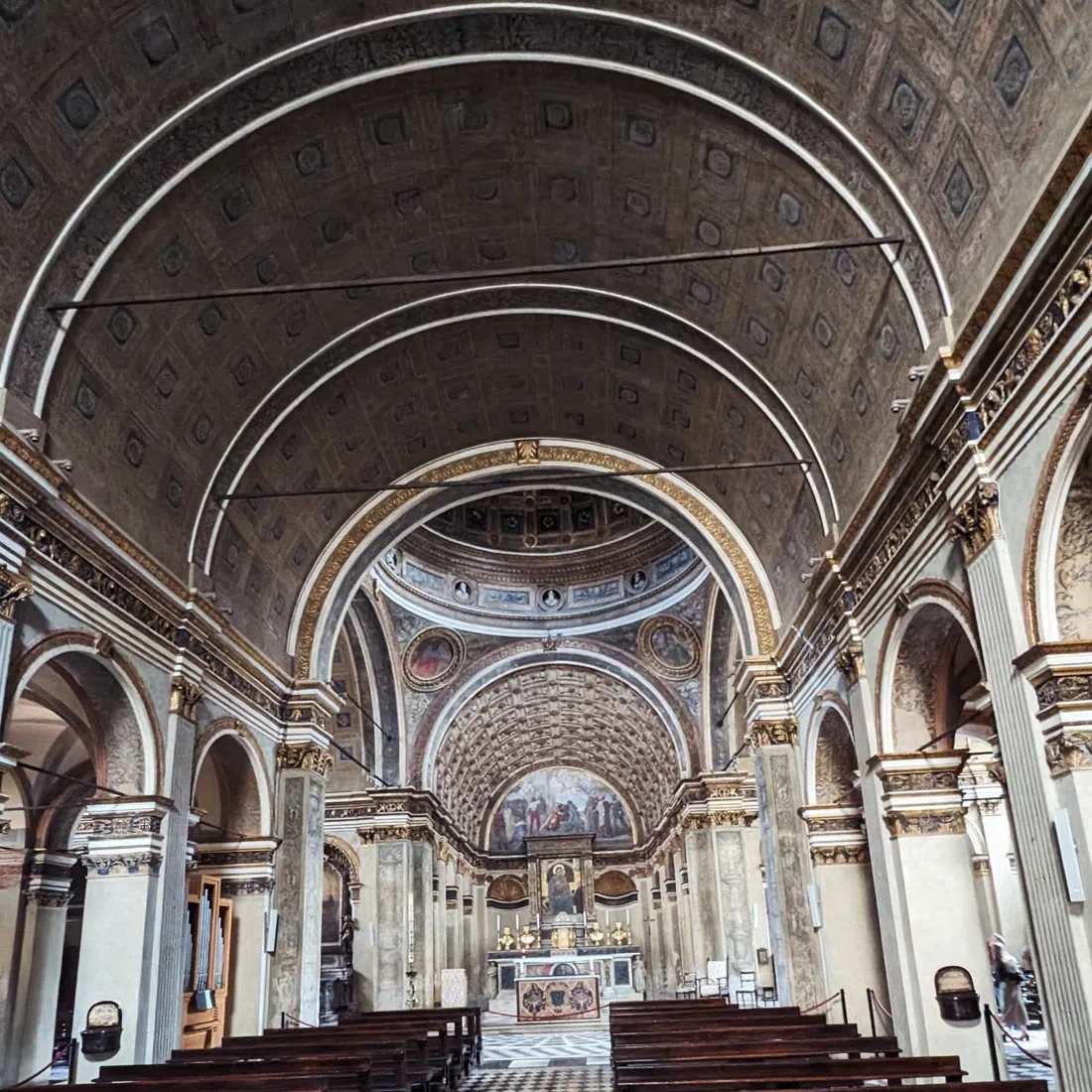
Santa Maria presso San Satiro (Via Torino, five minutes off the Duomo) is a small free church where Donato Bramante solved a real design problem — no room for a proper choir behind the altar, because a street sat directly behind the building — with a trompe-l'oeil apse just 90cm deep that reads as a full architectural space from the entrance. There's no documented Leonardo hand in the building itself, though his name appears in the confraternity's accounts from the period, and the perspective research behind Bramante's illusion runs on the same ideas Leonardo was working out in his own notebooks at the same time. It's a two-minute stop, free, easy to fold into a walk between the Duomo and the Ambrosiana.
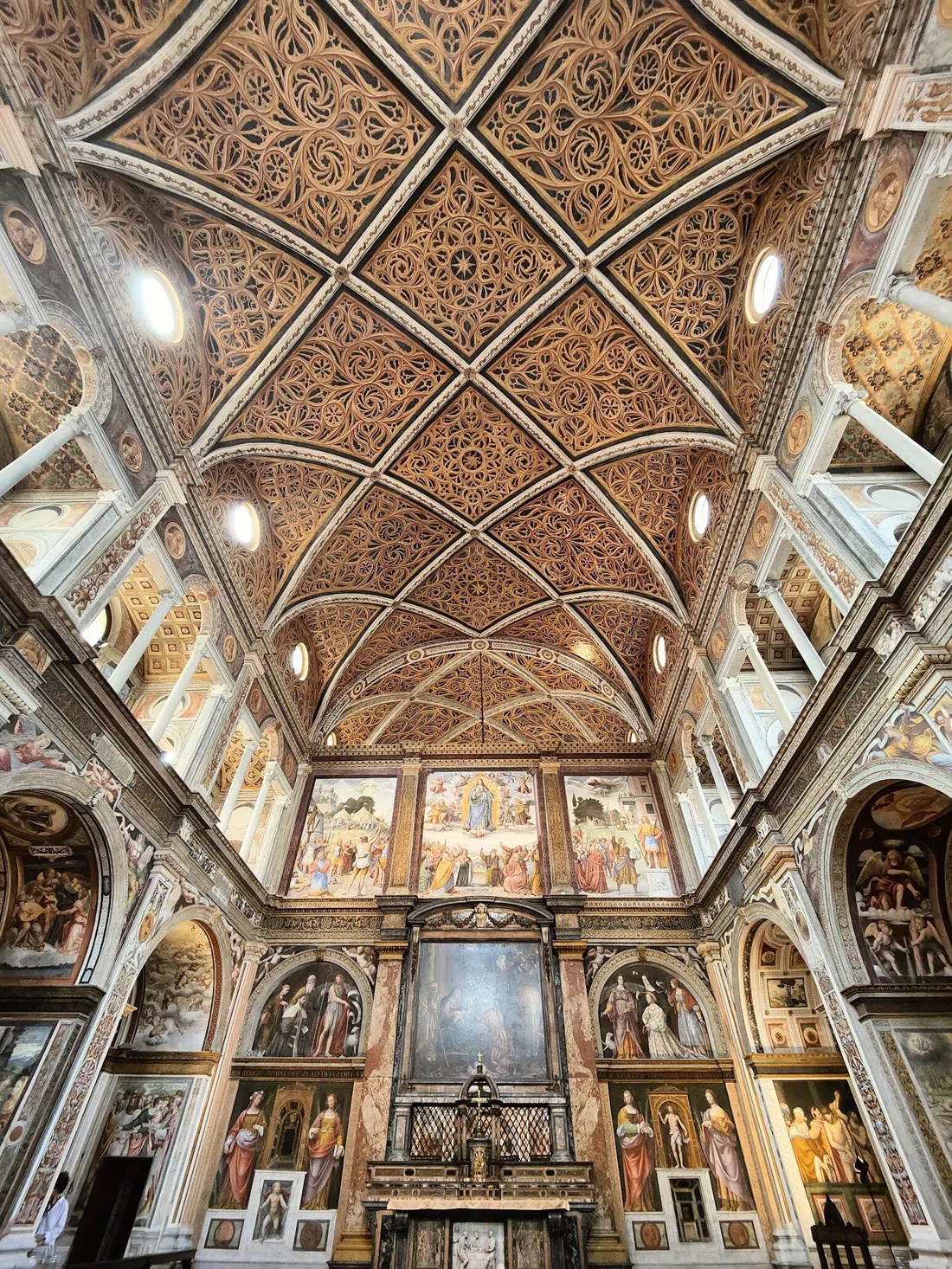
San Maurizio al Monastero Maggiore (Corso Magenta, near the castle) is the better of the two — a convent church frescoed floor to ceiling by Bernardino Luini and Giovanni Antonio Boltraffio, both of whom worked in or around Leonardo's workshop, and it's the clearest place in the city to see sfumato carried forward by his students after he'd moved on. It's free, but not a walk-in: groups need a minimum of 8 and a maximum of 30 plus a guide, reserved through Aster by the Friday before, and since January 2026 entry has run on fixed slots only — turn up without a booking and you may not get in at all. Plan this one like the Cenacolo, just with a shorter lead time.
The Engineer, Explained Simply
If you can't get a Cenacolo slot, or you're travelling with people who want the science side without the queue, two museums cover that gap.
Leonardo3 Museum, tucked into the Galleria a few steps from the Duomo, is a small, interactive space built around Leonardo's machine designs, with timed multilingual guides — good for around €10–15 and 45 minutes, and genuinely central, so it slots into a Duomo visit without extra travel.
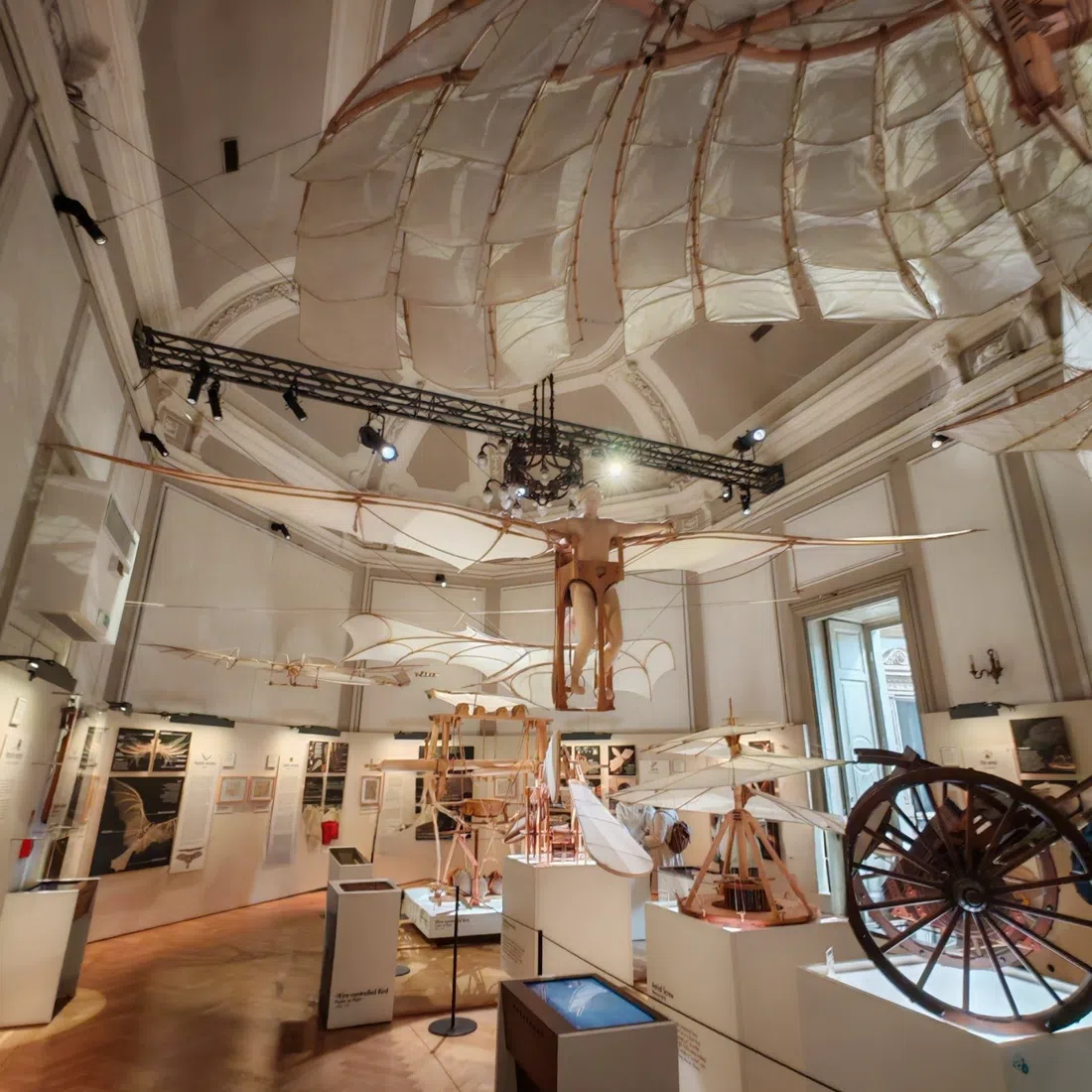
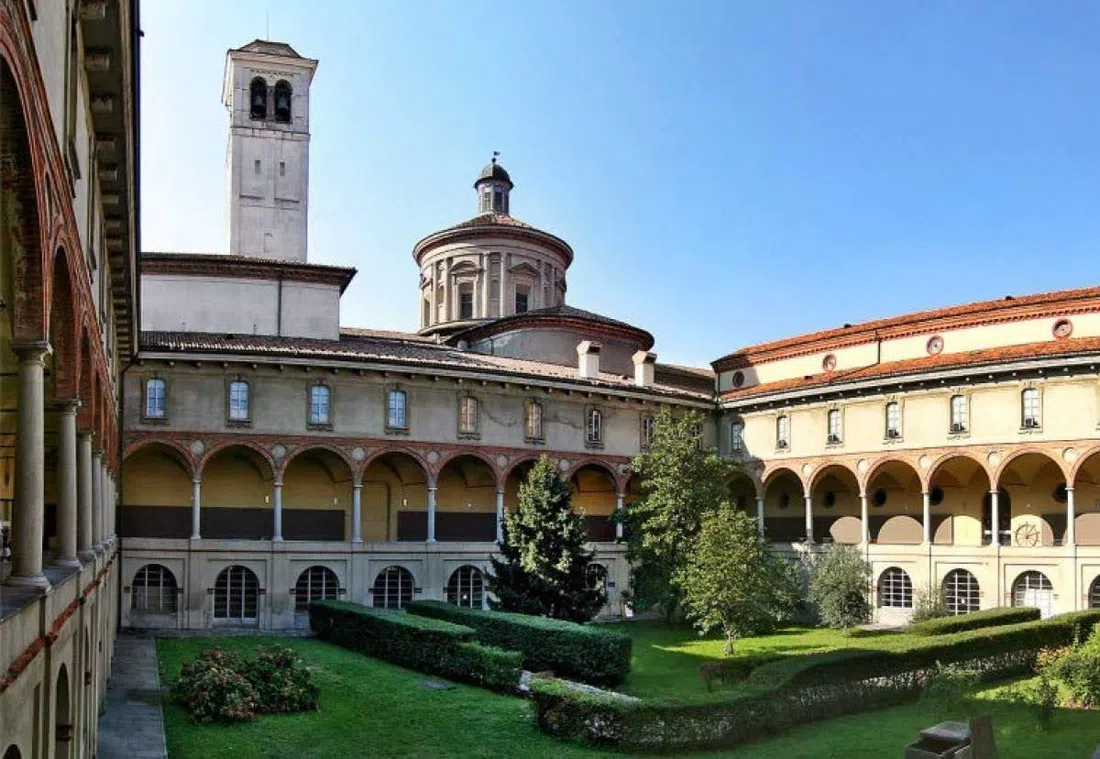
For the fuller version, the Museo Nazionale della Scienza e della Tecnologia Leonardo da Vinci, near Sant'Ambrogio, is Italy's largest science museum and the most literal way to see his engineering imagination made physical — full-scale reconstructions built from his sketches, not just facsimiles of the pages. Entry is €10, and it takes standard group and school bookings without the friction that governs the Cenacolo or San Maurizio.
One More Commission
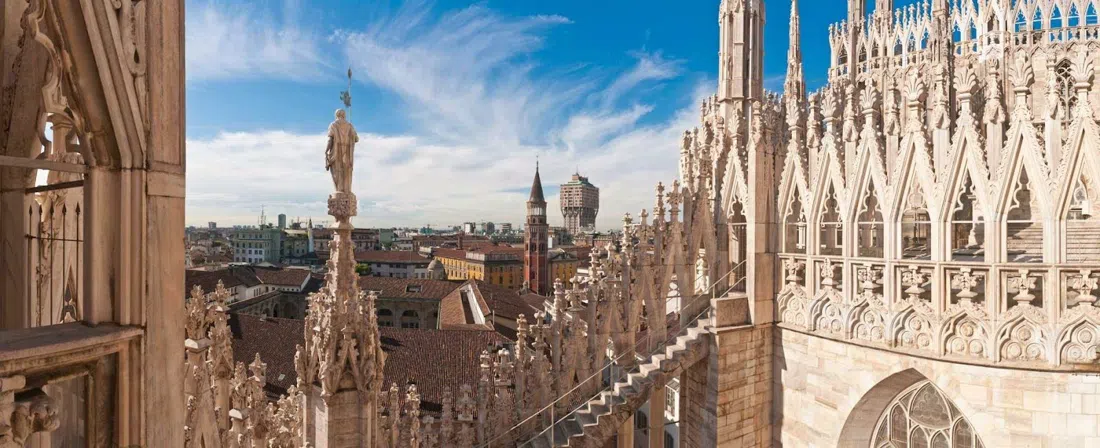
It's easy to walk past the Duomo di Milano (Piazza del Duomo) without connecting it to Leonardo, but he was paid by the cathedral works office for a model of the tiburio — the crossing tower — that has since been lost. Nothing of his design survives; the dome that was eventually built is the work of Giovanni Antonio Amadeo and Gian Giacomo Dolcebuono. It's worth one honest sentence in an itinerary rather than a claim the roof is somehow his — the value here is standing under a structure he was formally commissioned to help solve, even if his solution didn't survive to be judged. Rooftop and cathedral tickets run €10–14 depending on stairs versus lift and whether you add the terraces, and it's a high-capacity site with standard timed-slot group tickets — no booking headache here.
If You'd Rather Be Guided
For visitors who want the whole arc explained by someone else, Context Travel runs a Leonardo da Vinci in Milan walking tour built for small private or semi-private groups, English-language, capped in size, running about three hours for €100–115 per person. It includes skip-the-line access to both the Ambrosiana and Sforza Castle, which alone can be worth the price if your dates fall in a period when those queues are long. It won't cover the Navigli or the Cenacolo — book those separately either side of it.
Planning the Days
Give this two full days minimum if the Cenacolo booking works out — one day for the wall, the Ambrosiana and the castle, all within a 40-minute walking radius of each other; a second day for the Navigli boat tour, San Maurizio, and the two engineering museums, which are more spread out. If you can only manage one day, the Cenacolo, the Ambrosiana, and the castle courtyard form a tight, walkable core and skip everything requiring advance group booking.
Most of these sites are within a compact central zone reachable on foot or by the M1/M2 metro lines — the Navigli is the outlier, a short tram or taxi ride south. Carry some cash for smaller sites and church donation boxes even though card is standard at ticketed venues. Budget roughly €60–90 per person for a two-day pass through the paid sites (Cenacolo, Ambrosiana, castle museums, Duomo, one of the two engineering museums), more if you add the Navigami boat or the Context Travel tour. August and the run-up to Christmas are the tightest booking windows for the Cenacolo specifically — plan around the Wednesday-noon release if your trip falls in that stretch.
For where to stay while you work through this list, start with Milan hotel search; for the rest of the city beyond Leonardo, the Milan guide covers it.