 In this area
The Milan issue
Isola, Milan: where the towers meet the old quarter
A walk through Milan’s most human-scaled neighbourhood, where the Bosco Verticale rises above artisan streets, old osterie and some of the city’s best bars.

By Silvia BrambillaMilan by its showrooms and studios
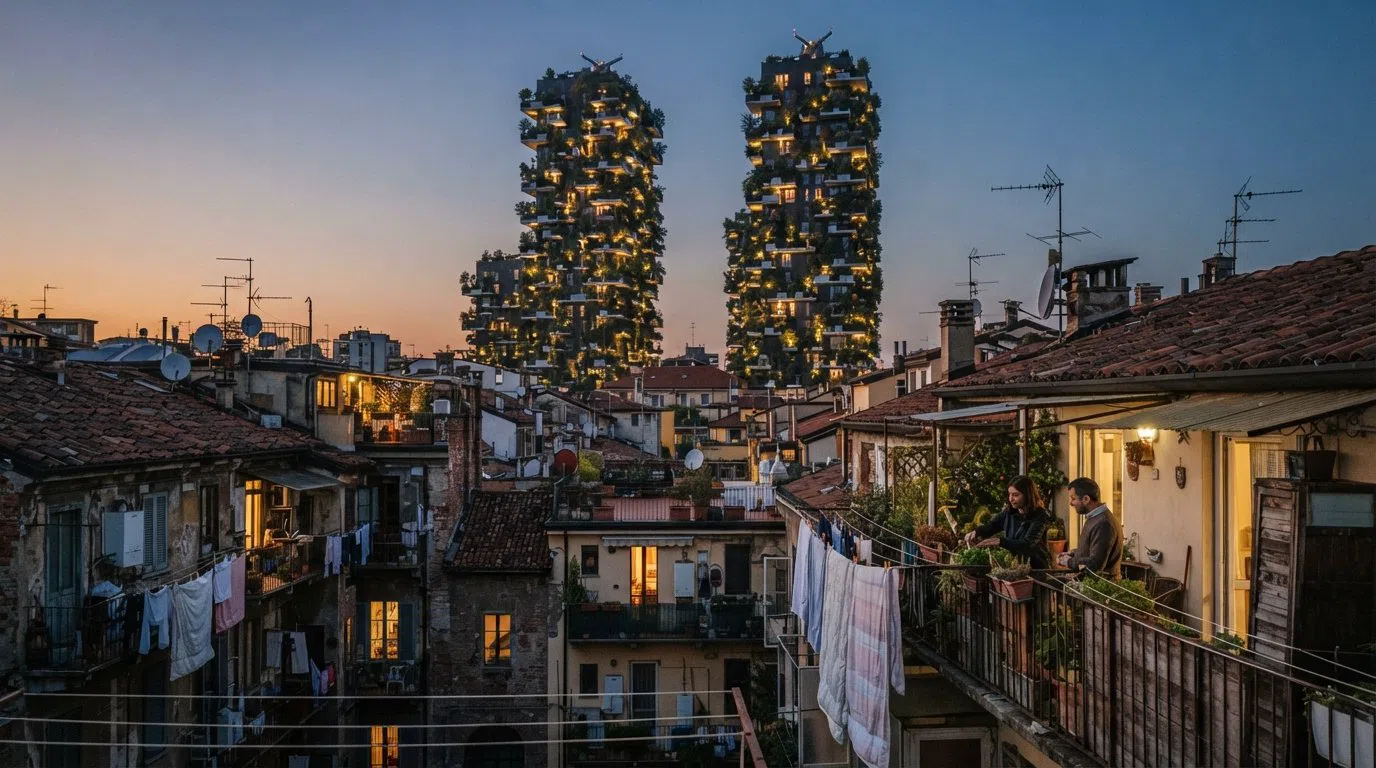
The first thing you notice in Isola is not the skyline, though it is there, looming properly above the low roofs. It is the ordinary life underneath it: a butcher opening his shutters, a cyclist weaving past a bike workshop, someone balancing a coffee in the street while the towers of the Bosco Verticale catch the morning light. This was once Milan’s island quarter, cut off by railway tracks and reached by footbridge, and the old isolation still lingers in the best way. It kept Isola working-class, artisan and slightly rough around the edges long after the rest of the city polished itself into a showroom. That tension — old osteria below, futuristic skyline above — is the whole pleasure of the place.
What Isola is known for
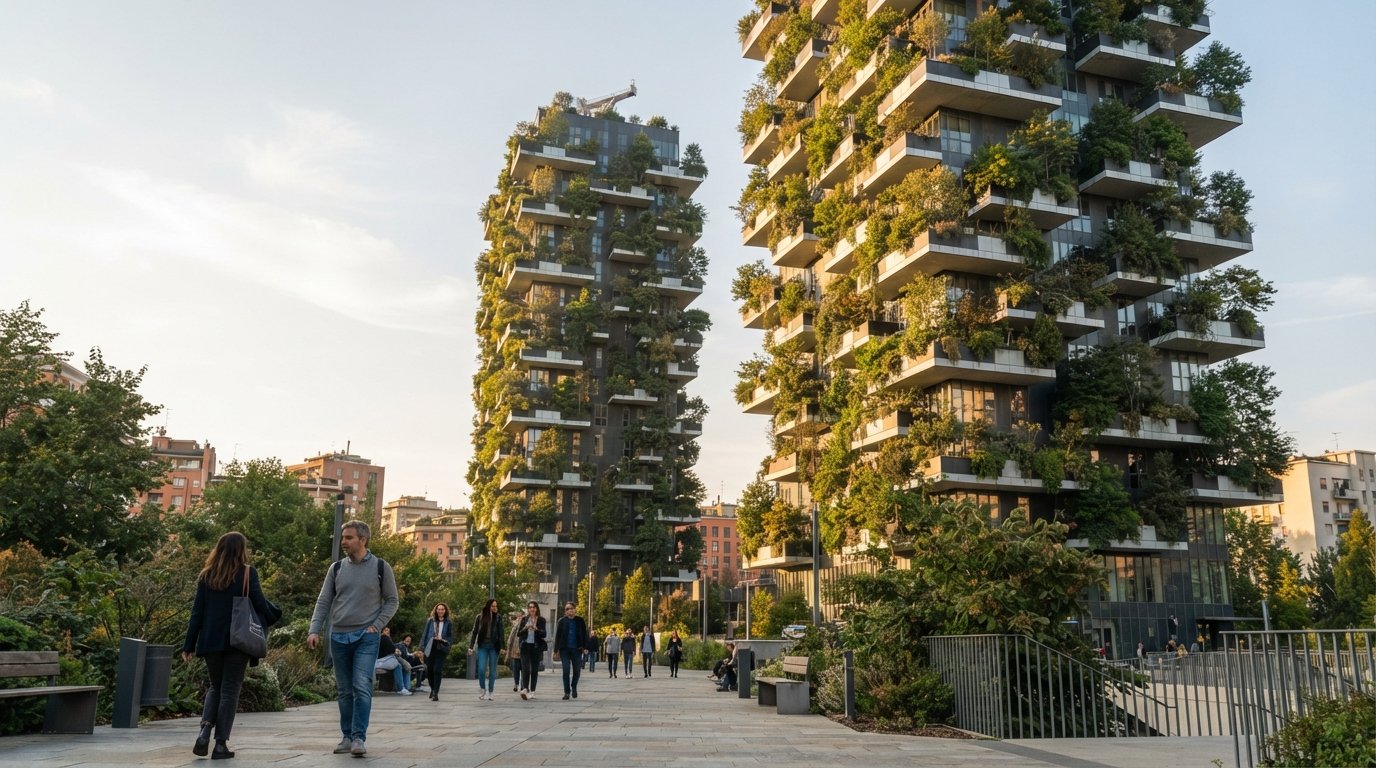
Isola is one of those Milan neighbourhoods that explains itself best by contradiction. On one side you have Stefano Boeri’s Bosco Verticale, the tree-covered towers that have become the city’s most photographed piece of new architecture. They rise 110 and 76 metres, with balconies carrying roughly 800 trees, 4,500 shrubs and 15,000 plants. You cannot go inside, and you do not need to. The point is to walk the base, look up, and watch the façade change with the season: green in one month, bronzed and spare in another.
At their feet sits BAM — Biblioteca degli Alberi, a contemporary park of more than 100 botanical species, with circular groves, a dog run, a children’s play area and a free events programme. It is the neighbourhood’s soft lung, the place where runners cut through at dusk and office workers sprawl on the grass after work. Just beyond that, Piazza Gae Aulenti turns the whole scene glassy and theatrical, ringed by the UniCredit Tower and its illuminated fountains. It is free, open around the clock, and very much part of the show.
But the real trick of Isola is that the old quarter survives in the shadow of all that. The historic heart is the Santuario di Santa Maria alla Fontana, begun in 1508 around a spring once believed to have healing powers. Its frescoed underground sanctuary is a quiet, almost stubbornly calm place a few steps from the bars. Around it, the neighbourhood still feels like a working district: workshops, market stalls, low terraces, and street art climbing walls on Via Sebenico and Via Borsieri. The old Isola and the new Isola sit almost on top of each other, and Milan, for once, does not seem embarrassed by the seam.
Plan your Milan trip
Live prices from our booking partners.
Guests & rooms
Free cancellation on many rooms. We may earn a commission when you book.
Where to eat & drink
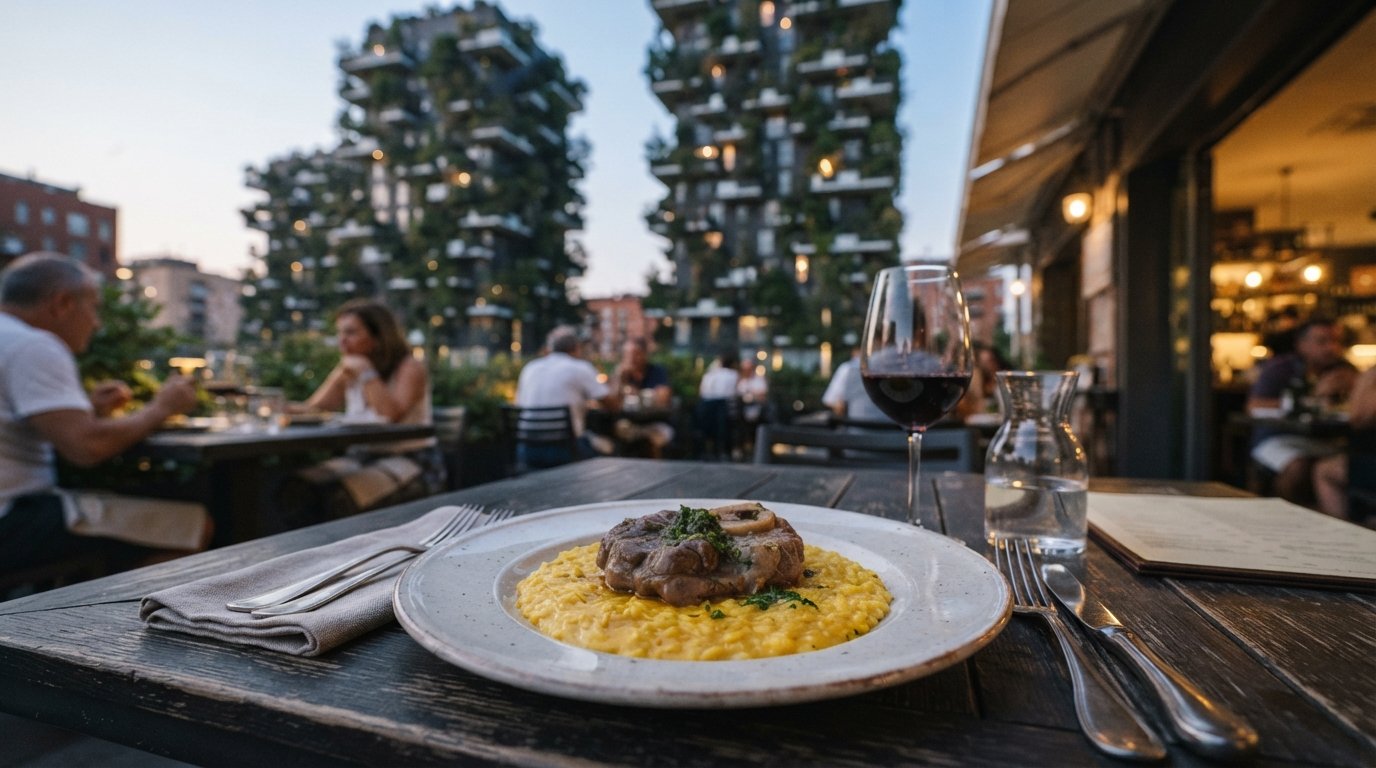
Eating in Isola is a matter of mood, not hierarchy. You can do the city’s formal memory of itself at Ratanà, the Michelin-listed modern osteria at Via Gaetano de Castillia 28, set in a former tram depot facing the Bosco Verticale. Chef Cesare Battisti cooks Milanese tradition with enough intelligence to keep it alive: risotto alla milanese with ossobuco, cartoccio of mondeghili, and a terrace looking over the park. It is the sort of place that reminds you why Milanese cuisine can be so satisfying when it is not being apologetic about itself.
For the older, more local register, Osteria dal Verme on Via Jacopo dal Verme has been doing ossobuco, brasato and polenta taragna since 1944 in a tiny brick-walled room. Nothing about it is decorative, which is exactly the point. Osteria dei Vecchi Sapori, at Via Carmagnola 3, has an original pebbled courtyard and a saffron risotto that people in the area know by reputation before they know the address. Da Berti, on Via Francesco Algarotti 2, is the grand old trattoria of the district, strong on tartare, homemade pasta and the veal cutlet.
The newer kitchens are not there to replace the classics; they are there to widen the range. Capra e Cavoli, at Via Pastrengo 18, is a lantern-lit vegetarian favourite with a garden room, vegetable sushi, mock roasts and a vegetarian carbonara that has acquired its own quiet cult. Berberè, at Via Sebenico 21, does crisp sourdough-leavened pizza with a choice of doughs and seasonal toppings, while Sorbillo Isola, at Via Pietro Borsieri 25, brings the famous Naples family’s pillowy Neapolitan rounds to the neighbourhood. If you want something less Mediterranean and more slurpable, Casaramen at Via Luigi Porro Lambertenghi 25 turns out serious tonkotsu ramen and bao. Then there is Artico, at Via Luigi Porro Lambertenghi 15, a quiet Milanese cult for chocolate and seasonal sorbets. In Isola, dessert still gets taken seriously.
Going out
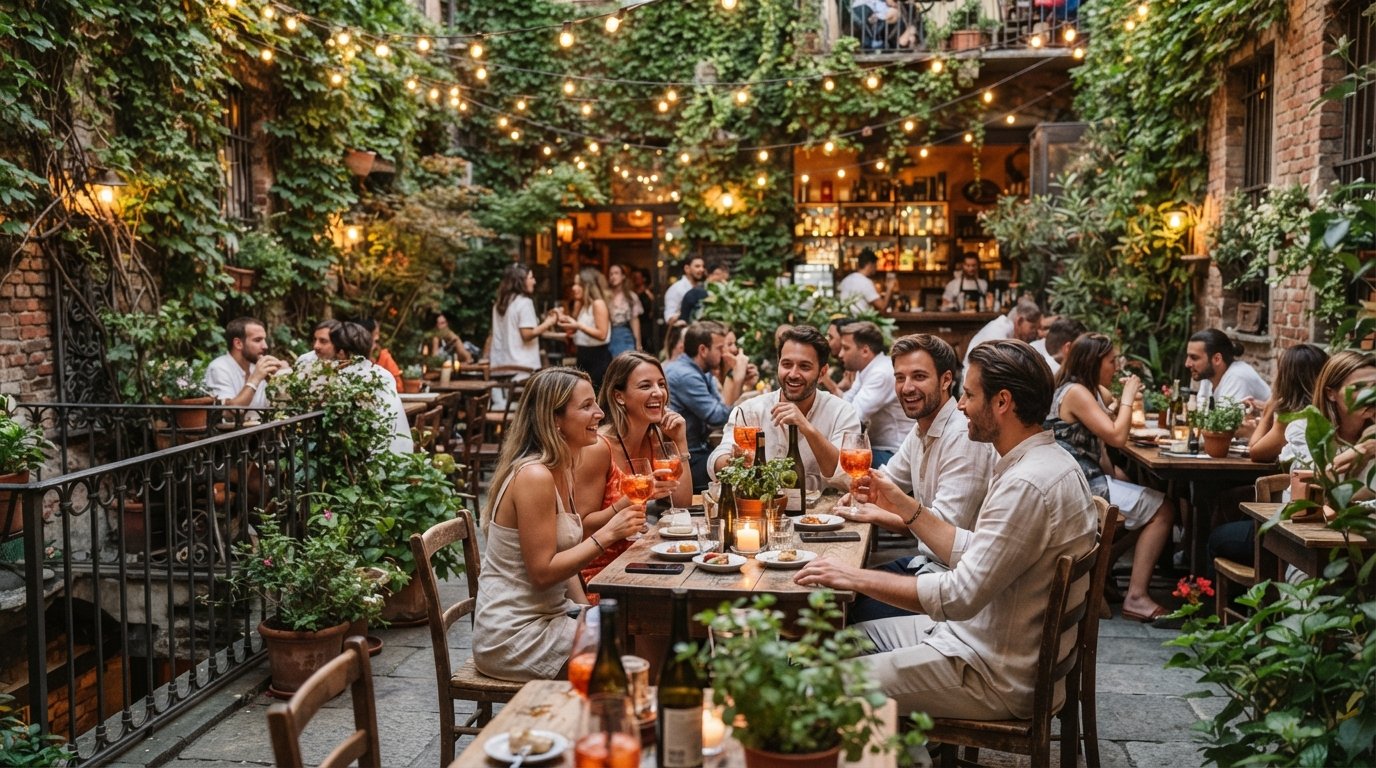
Night in Isola is not about the thump of a club queue or the theatrical misery of velvet ropes. It is about bars that know their own scale, and a neighbourhood that can absorb them without losing its manners. Frida, off Via Antonio Pollaiuolo 3, is the emblem: you reach it through an ivy-hung gate into a plant-filled courtyard that has served as the area’s living room for well over fifteen years. By day it does a cheap, cheerful kitchen; by night it becomes a heaving cocktail-and-craft-beer garden. It is the sort of place where the evening starts because everyone else has already started it.
If your evening leans botanical in the literal sense, The Botanical Club on Via Pastrengo 11 is Italy’s first micro-distillery bar, with its own Spleen & Ideal gin distilled on a copper still behind the counter. There are 100-plus gins, cocktails and a small bistro, which is a fairly Milanese way of saying the place is serious without being solemn. Bob, at Via Pietro Borsieri 30, is smaller and more design-minded, pairing craft drinks with Chinese steamed bao. Dexter Soundbites, on Via Carmagnola 15, opened in early 2025 as a listening bar with a big vinyl library, a proper hi-fi rig, natural wine, classic cocktails and travel-inspired plates. It is one of those rooms that asks you to lower your voice without ever saying so.
For live music, Blue Note Milano at Via Pietro Borsieri 37 is the proper address: the only European outpost of the New York jazz institution, open since 2003, with roughly 350 shows a year at 9pm and 11pm in a 300-seat room, plus a dinner menu. That combination — dinner, jazz, and the faint sense that Milan is behaving like a grown-up city — suits Isola perfectly. You can have a full evening here without ever stepping beyond a few blocks.
Things to do / what to see
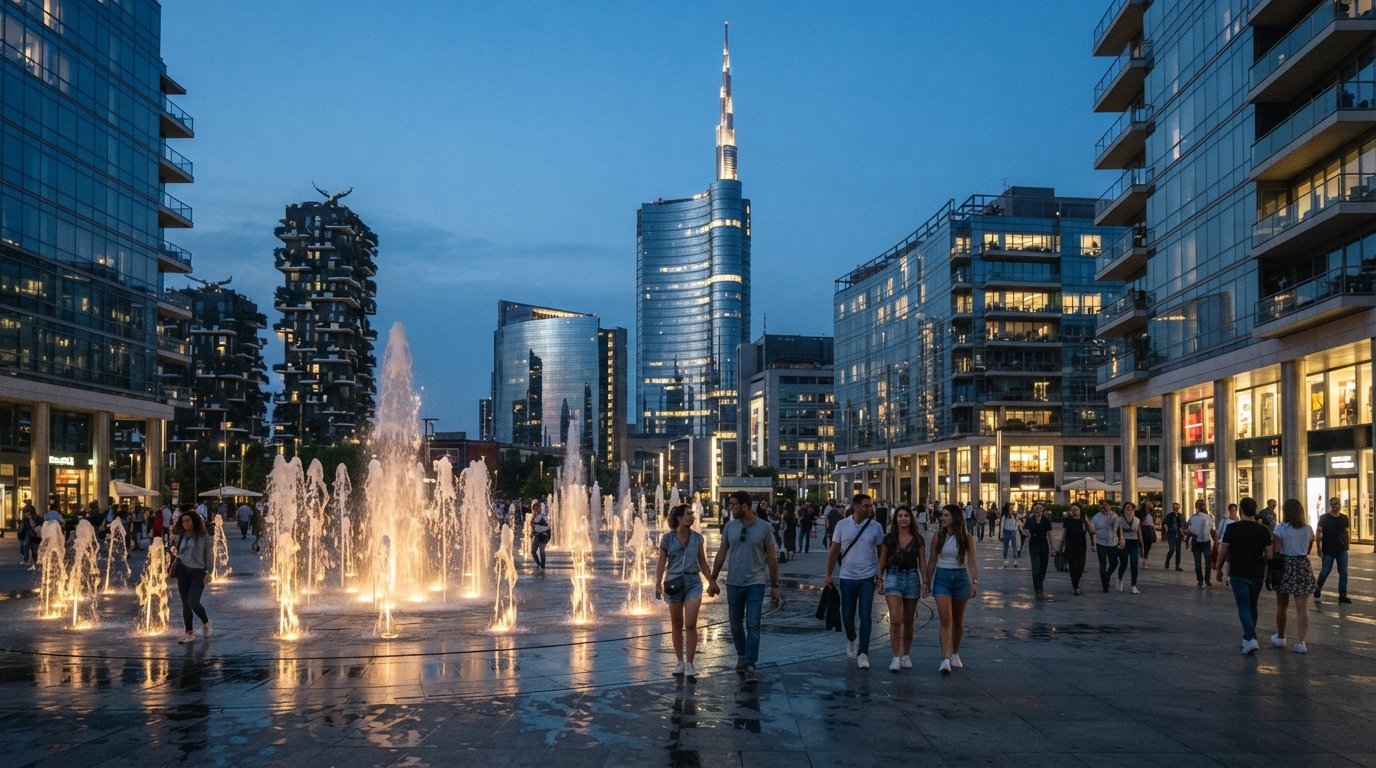
The obvious walk is the one through the new skyline, and there is no shame in taking the obvious walk when it is this good. Start at Piazza Gae Aulenti, free and open around the clock, for the illuminated fountains and the ring of glass towers. Then move south into BAM — Biblioteca degli Alberi, where the groves and lawns soften the hard edges of the surrounding towers, and circle the base of the Bosco Verticale to see the planting up close. In the warmer months, BAM runs a free calendar of yoga, workshops and open-air events, and the whole stretch becomes the local jogging and picnic ground. Best time? Golden hour, when the glass catches fire and the greenery goes soft instead of theatrical.
The other half of Isola is older and quieter, and it rewards a slower pace. Duck into the Santuario di Santa Maria alla Fontana, the 1508 church built over a spring once thought to heal. Its frescoed underground sanctuary is a genuinely calm surprise a few steps from the bars. Then just wander. Isola has one of Milan’s densest concentrations of street art, with landmark murals around the corner of Via Sebenico and Via Borsieri and painted utility boxes dotted through the grid. You can join a walking tour if you want, but the neighbourhood is generous enough to be read on foot without a guide. It is less a checklist than a drift between one century and the next.
Don’t miss in Isola
The innovative Bosco Verticale (Vertical Forest) residential towers.
The legendary Blue Note jazz club.
Frida, a neighborhood institution for drinks in a leafy courtyard.
Shopping & markets
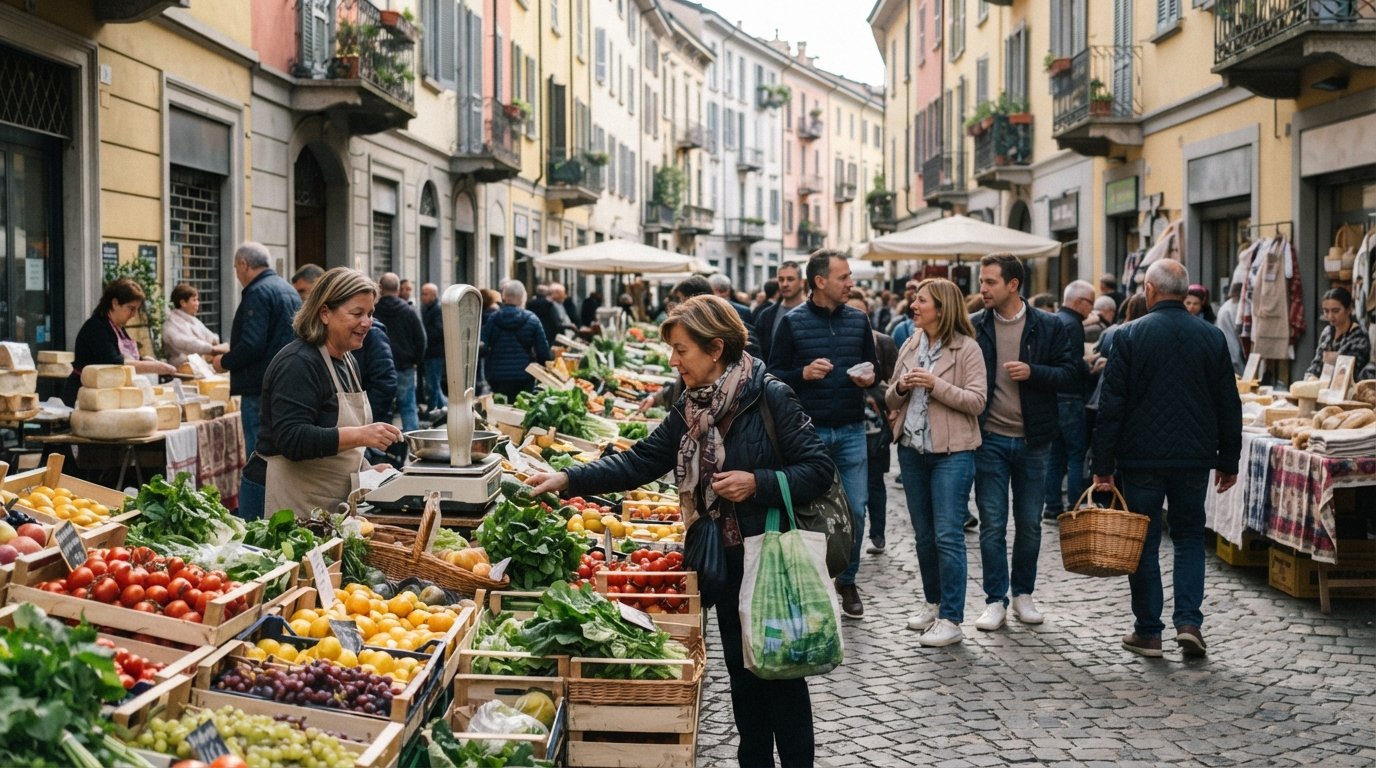
Shopping in Isola is not about polished flagships and glossy window theatre. It is small, independent and half of it edible. The neighbourhood institution is the Isola street market, which sets up along Via Volturno and Via Sebenico on Tuesday mornings until about 1pm and Saturdays until roughly 5pm. Fruit and vegetables, cheese, fabric, shoes, household bits — the sort of market that still serves the people who live here, rather than the people who have read about it elsewhere. It is one of the city’s genuinely old markets, and a good, cheap window into daily Isola life.
Beyond the stalls, the area’s retail life is really an extension of its workshop culture. Around Via Borsieri, Via Thaon di Revel and Via Pastrengo, you find carpenters, framers, bike workshops and independent boutiques tucked into the grid. The most photogenic hybrid of retail and hang-out is Deus Café at Via Thaon di Revel 3, the Italian flagship of the Australian Deus Ex Machina brand. It has a horseshoe courtyard full of custom motorcycles, surfboards and bikes, plus a café-bar and an in-house barbershop. It is as much a browse as a coffee stop, which is very Isola: function first, style second, and somehow both at once.
If you are used to Milan as a city of grand fashion addresses, Isola will feel almost mischievous. It is not the Quadrilatero, and it does not pretend to be. Its appeal lies in the mix of workshop, market stall and one-off boutique, and in the fact that most of it is run by people who actually live nearby.
Where to stay in Isola
Isola works beautifully as a base for a second visit to Milan. It is less touristy than the centre, walkable to the Porta Nuova skyline, and neatly plugged into the metro, which means the Duomo is only a few stops away. The sweet spot is the run of streets around Via Borsieri, Via Pastrengo and Via Thaon di Revel, where you are in the thick of the bars and osterie and still only a short stroll from BAM and the Bosco Verticale. That is the version of Milan that feels lived in rather than performed.
The southern edge, toward Porta Nuova and Piazza Gae Aulenti, is where the larger contemporary hotels tend to sit. They are convenient for Garibaldi station and the towers, though the mood is more corporate and glassy than the old Isola grid. For more quiet, look north toward Santa Maria alla Fontana, where the streets are calmer but still walkable to the action. Expect compact, contemporary rooms and apartment-style stays rather than grand historic palazzi; if you are a light sleeper, ask for a room away from the busiest bar streets on weekend nights.
Hotels in Isola
Our best-rated stays in this neighbourhood. Prices are approximate “from” rates — confirmed at the provider when you continue. We may earn a commission if you book through our partners — at no extra cost to you.
In this area In this area
 In this area
Isola
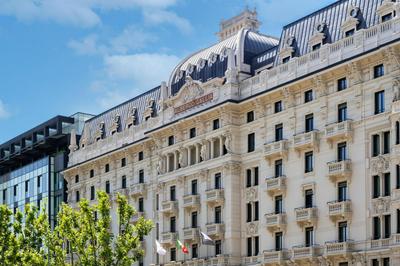
Excelsior Hotel Gallia, a Luxury Collection Hotel, Milan
9.2· 1,030 reviews
approx. from£578 / nightSee prices
 In this area
 In this area
 In this area
 In this area
 In this area
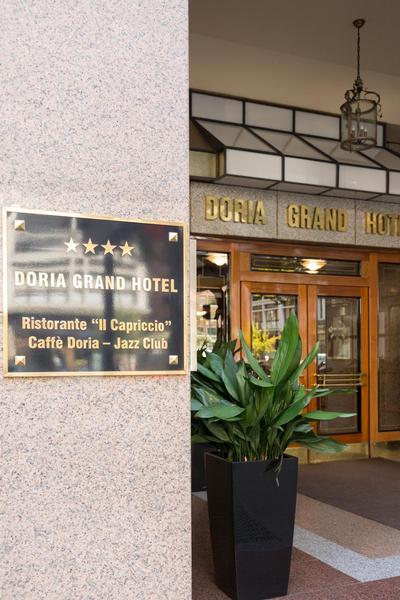 In this area
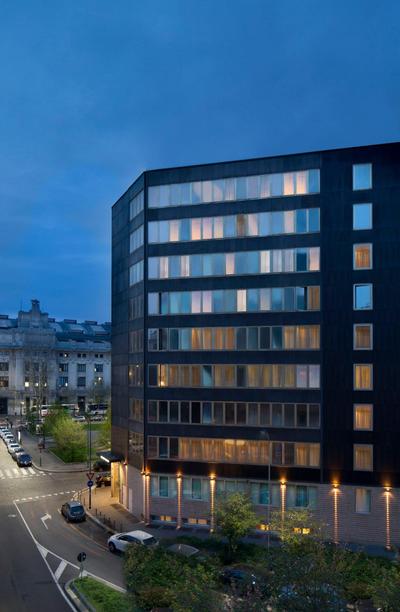 In this area
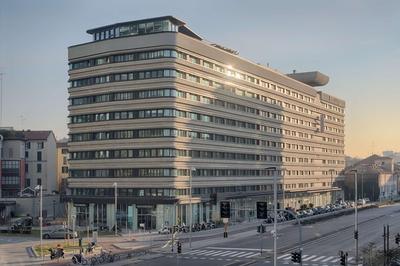 In this area
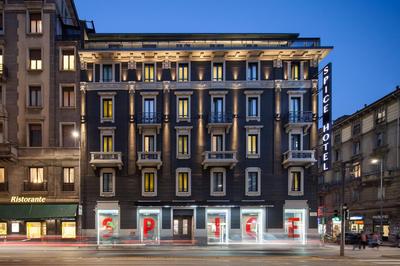 In this area
Getting around
Isola is small and flat, which is one reason it feels so easy to inhabit. You will walk most of it. The whole neighbourhood is only a few blocks across, and the best way to understand it is to let the grid do the work: a market street here, a bar courtyard there, then suddenly the open space of the new skyline.
For getting in and out, it is exceptionally well connected. The M5 lilac line has a station named Isola right in the middle of the district, and Garibaldi FS sits at the southern edge as a major interchange on the M2 green and M5 lines plus the suburban Passante railway. Zara on the M3 yellow line serves the northern end. From Garibaldi you are roughly 5–10 minutes by metro to the Duomo and the centre. Trams and buses also thread the area, but between two feet and three metro lines, you rarely need them. For airports, Milano Centrale has the direct Malpensa Express train, about 50 minutes to Malpensa, plus coaches to Linate and Bergamo; Linate itself is now reachable across the city on the M4 line via an interchange.
In practical terms, Isola is lively and safe, with the usual big-city care after dark. The modern Porta Nuova side around Gae Aulenti is about as secure as central Milan gets, while the old grid is simply a busy residential neighbourhood with a strong evening rhythm. The neighbourhood’s best quality is also its simplest: you can arrive, drop your bag, and begin walking immediately.
Gallery
Isola in pictures
Isola — your questions
Is Isola a good area to stay in Milan?
Yes, especially for a second visit or for design- and food-minded travellers. It is less touristy than the centre, right beside the Bosco Verticale and Porta Nuova skyline, and very well connected: the M5 stops in the middle of the district and Garibaldi FS is a couple of minutes away and one metro stop from the Duomo. The trade-off is that you are not walking distance from the classic sights, and it is more bars-and-dinner than nightclub territory.
What is Isola known for?
Two things at once: the futuristic Porta Nuova architecture — the Bosco Verticale, BAM and Piazza Gae Aulenti — and, underneath it, an old working-class, artisan quarter of narrow streets, family osterie, independent bars and some of Milan’s best street art. It is the local’s-choice alternative to Navigli for aperitivo, with everything from a 1944 trattoria to a listening bar.
Is Isola safe at night?
Yes. It is a busy, well-lit residential and going-out neighbourhood, and the modern Porta Nuova side around Gae Aulenti is about as secure as central Milan gets. Use the usual big-city caution with valuables in crowds and around the station, but walking between bars and back to your hotel is normal here.
What is the best way to get around Isola?
Walk. The neighbourhood is small and flat, and the key sights, bars and restaurants are only a few blocks apart. For longer hops, use the M5 Isola station in the centre, Garibaldi FS at the southern edge, and Zara on the M3 to the north.