The Milan issue
How the Bernina Express Works as a Day Trip from Milan
What the red train costs, which stops are worth getting off at, and whether thirteen hours out of Milan is time well spent.

By Ingrid VestergaardThe slow read of a fast city

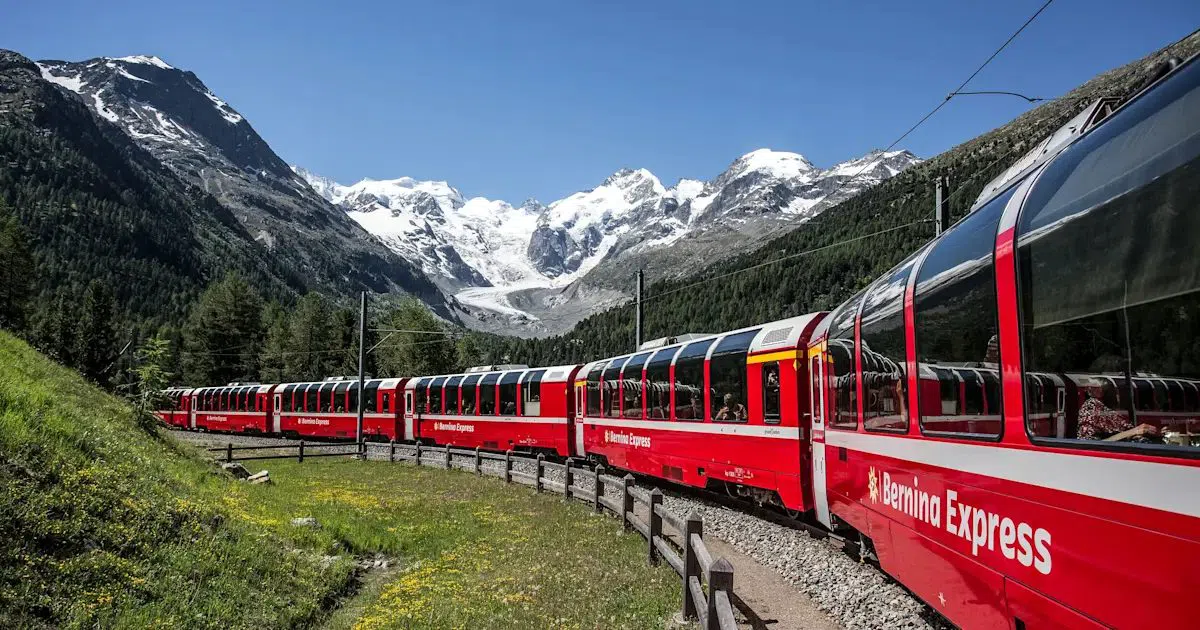
The regional train out of Milano Centrale leaves early enough that the concourse still smells of floor polish, and for two and a half hours it does nothing to prepare you: suburbs, vineyard terraces, the long grey mirror of the lake. Then you cross one small square in a Valtellina border town, step onto a metre-gauge railway that climbs without a rack rail, and watch it haul itself to 2,253 metres on friction alone. The Bernina Express (Rhaetian Railway, running Tirano to St. Moritz and on to Chur) is one of the rare famous things that is better than its photographs, provided you understand what you are actually buying.
What the red train actually is
Strip away the branding and this is a working narrow-gauge railway that happens to be UNESCO-listed: 144 kilometres end to end, 55 tunnels, 196 bridges, and a summit crossing of the Bernina Pass at 2,253 metres. The Bernina Express is the premium service on those tracks, with panoramic carriages, a fixed timetable, and a compulsory seat reservation for every passenger. The same rails carry ordinary regional trains, and that distinction is the single most useful thing to grasp before you book anything.
The branded run takes about four hours from Chur to Tirano, or roughly two hours fifteen from St. Moritz to Tirano. It operates all year, with two departures daily between 2 May and 25 October 2026 and one a day through the winter. The panoramic cars give you a curved roof window and an unbroken view, which is glorious and also sealed. The glass does not open, so on a bright day you are shooting photographs through your own reflection. Regional trains on the same line cost less, need no reservation, have windows that open, and stop at the places worth stopping at. Plenty of experienced riders do one leg on the Express for the comfort and the other on a regional for the freedom.
Plan your Milan trip
Live prices from our booking partners.
Free cancellation on many rooms. We may earn a commission when you book.
Getting to the start line from Milan
The real start line is Tirano station interchange (Stazione FS and Stazione RhB, either side of one small square in Tirano). The Trenord RE8 from Milano Centrale runs roughly hourly, takes about two and a half hours, and costs around €12.50 each way. The two stations sit a few metres apart across the same piazza, with no transfer, no bus and no taxi, and that geographical accident is what makes a self-guided day trip workable at all. The concourse is open with no door policy, and the RhB ticket window and machines handle walk-up reservations when seats remain.

Be clear-eyed about the clock. Milan to St. Moritz and back, with a usable couple of hours on the ground, is twelve to fourteen hours door to door. If you want the first train north, sleep within walking distance of Centrale. A Milan hotel search will show what sits inside that radius, and a ten-minute walk at six in the morning is worth more than a cheaper room on the other side of town.
A guided day trip out of Milan also exists, and what it sells is the removal of every connection risk: transport up, the scenic leg, time on the ground, the return. It runs seven days a week and starts from 159 USD per person. What you give up is the ability to get off anywhere, which is most of the point of this railway.
The southern ramp from Tirano to the pass
The climb out of Tirano is the showy half. Within half an hour the line reaches the Brusio Spiral Viaduct (Brusio, Val Poschiavo), a stone circle of arches the train loops through in the open air, gaining height the way a staircase does. It is the route's signature image and the one stretch genuinely worth watching from outside the train: a signposted loop of thirty to forty minutes from Brusio station, free and unrestricted and completely unequipped. No shelter, no toilets, no parking, which is why coach groups have to walk in from the station like everyone else. Aim for the middle of the day, when the sun is behind you rather than in the lens.
Further up, Poschiavo old town (Piazza Comunale and the Spanish Quarter) is the only stop on the line that is a town rather than a viewpoint. It is five minutes from the station, downhill then up, and the walk lands once you know what you are looking at: the tall, flat-fronted palazzi of the Spanish Quarter were built by Valposchiavo families who made fortunes as confectioners in Spain and came home to spend them in a valley that had never seen money like it. The streets are public, cafés on the square seat groups outdoors in season, and prices are Swiss-moderate rather than Swiss-alarming.
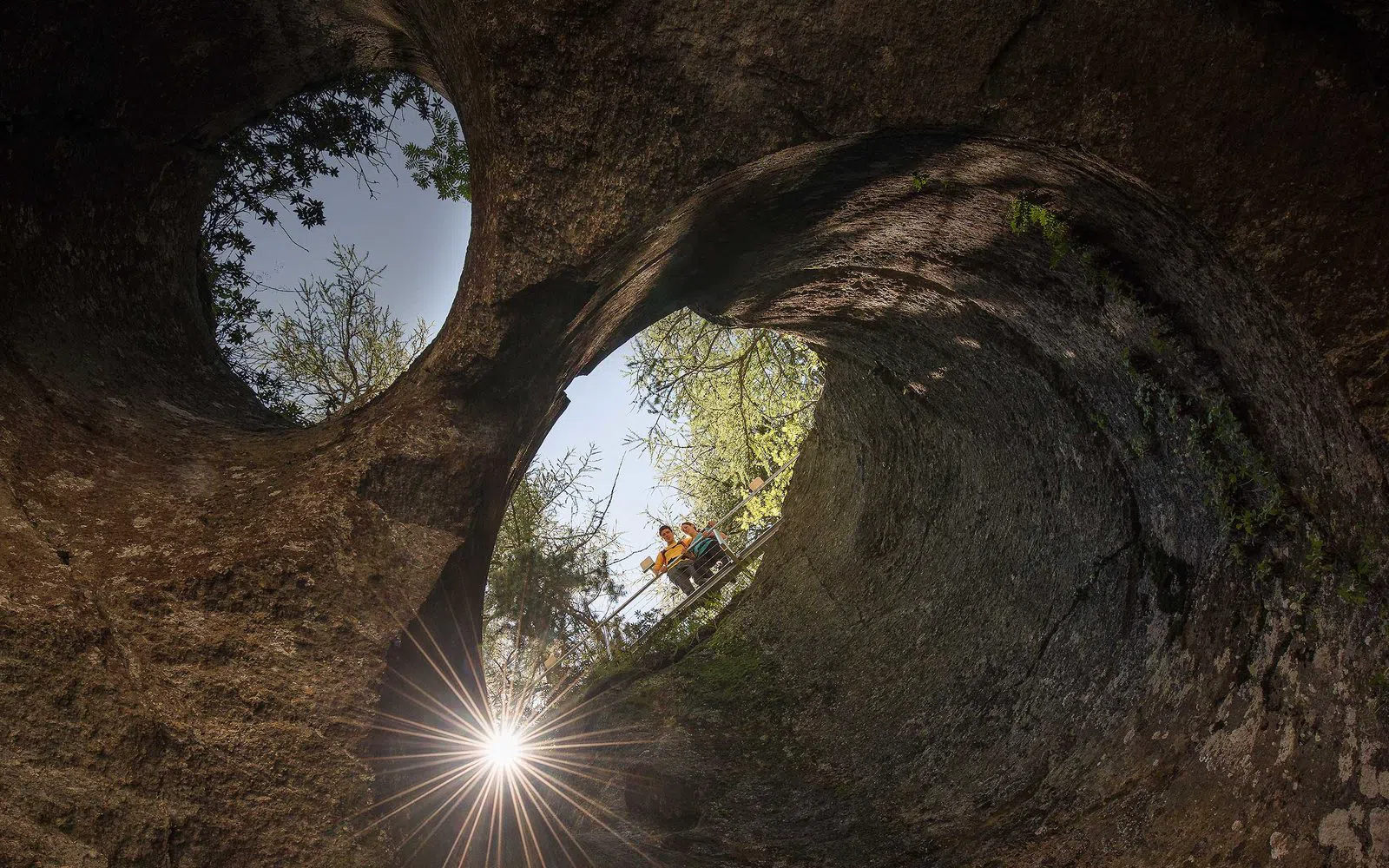
Higher again, at a halt you can only reach on foot, the Giardino dei Ghiacciai di Cavaglia (Cavaglia, above Poschiavo) is the best reason to swap the Express for a regional. Volunteers have dug out a field of glacial mills, smooth vertical shafts drilled into bedrock by meltwater under a vanished glacier. Guided visits leave Cavaglia station Tuesday, Thursday, Saturday and Sunday at 14:00 and last ninety minutes to two hours; entry is CHF 10 for adults, CHF 5 for ages 6 to 16, free under six. The 2026 season runs 19 June to 1 November, so winter riders can forget it.
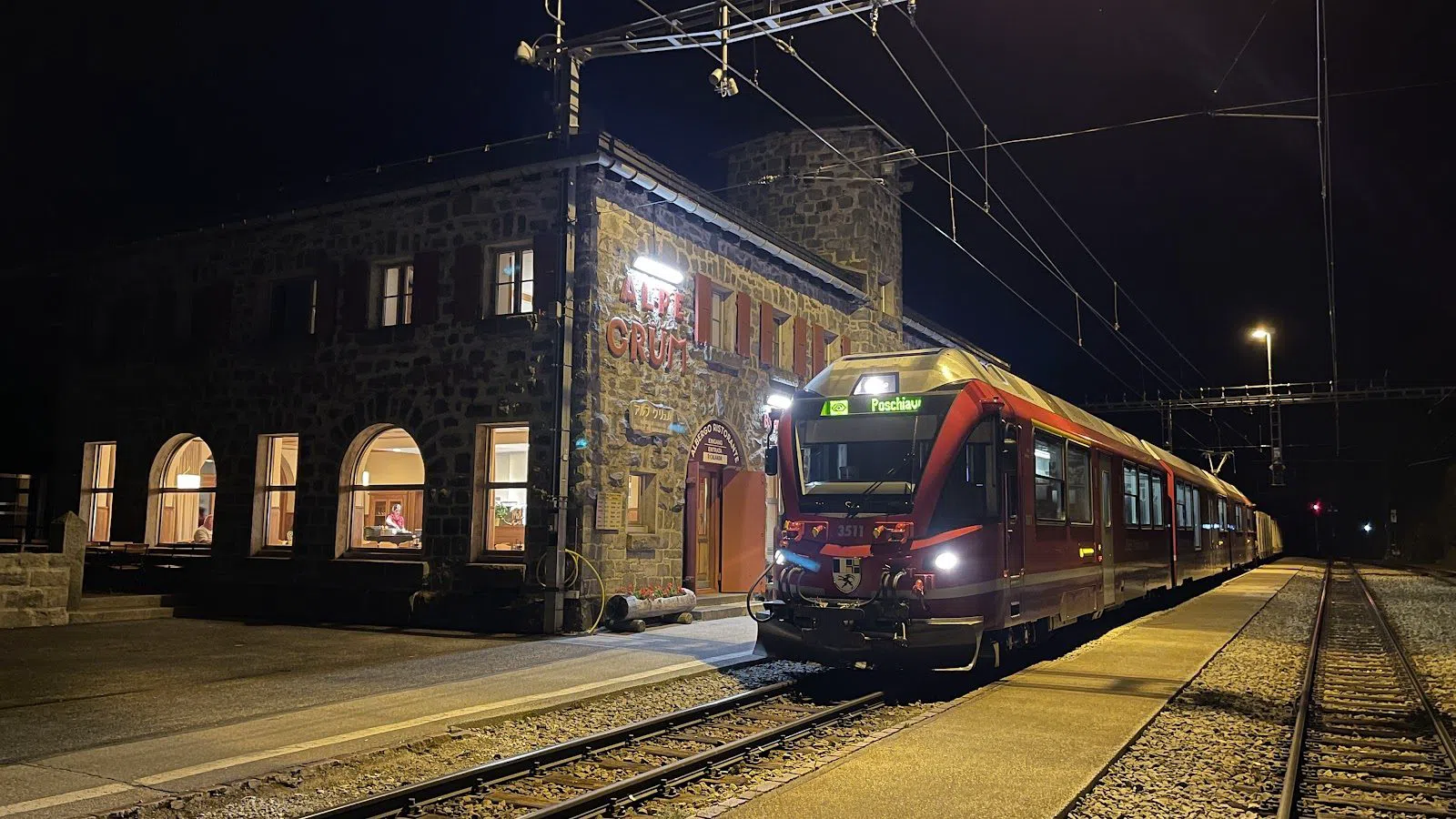
Then the line swings onto the shelf at Alp Grüm, where Ristorante Alp Grüm (Alp Grüm station, above the Palü glacier) holds the only sit-down meal with that view on the whole southern ramp. It opens 08:00 to 18:00 with hot food from 11:00, there is a group menu, and phoning ahead is strongly advised because capacity is tiny and the kitchen is timed to trains. The Bernina Express pauses at Alp Grüm for photographs, but it will not wait while you eat. Lunch here needs a regional train.
The summit is Ospizio Bernina, where Hotel Bernina Hospiz (Ospizio Bernina, on Lago Bianco) stands at the highest point of the line and on the watershed itself. It takes groups and walkers, the cooking is plain and hearty, and rooms run from dormitory to modest. Book ahead, since kitchen and rooms are both small, and note that the 2026 season ends on 2 November.
Over the watershed into the Engadine
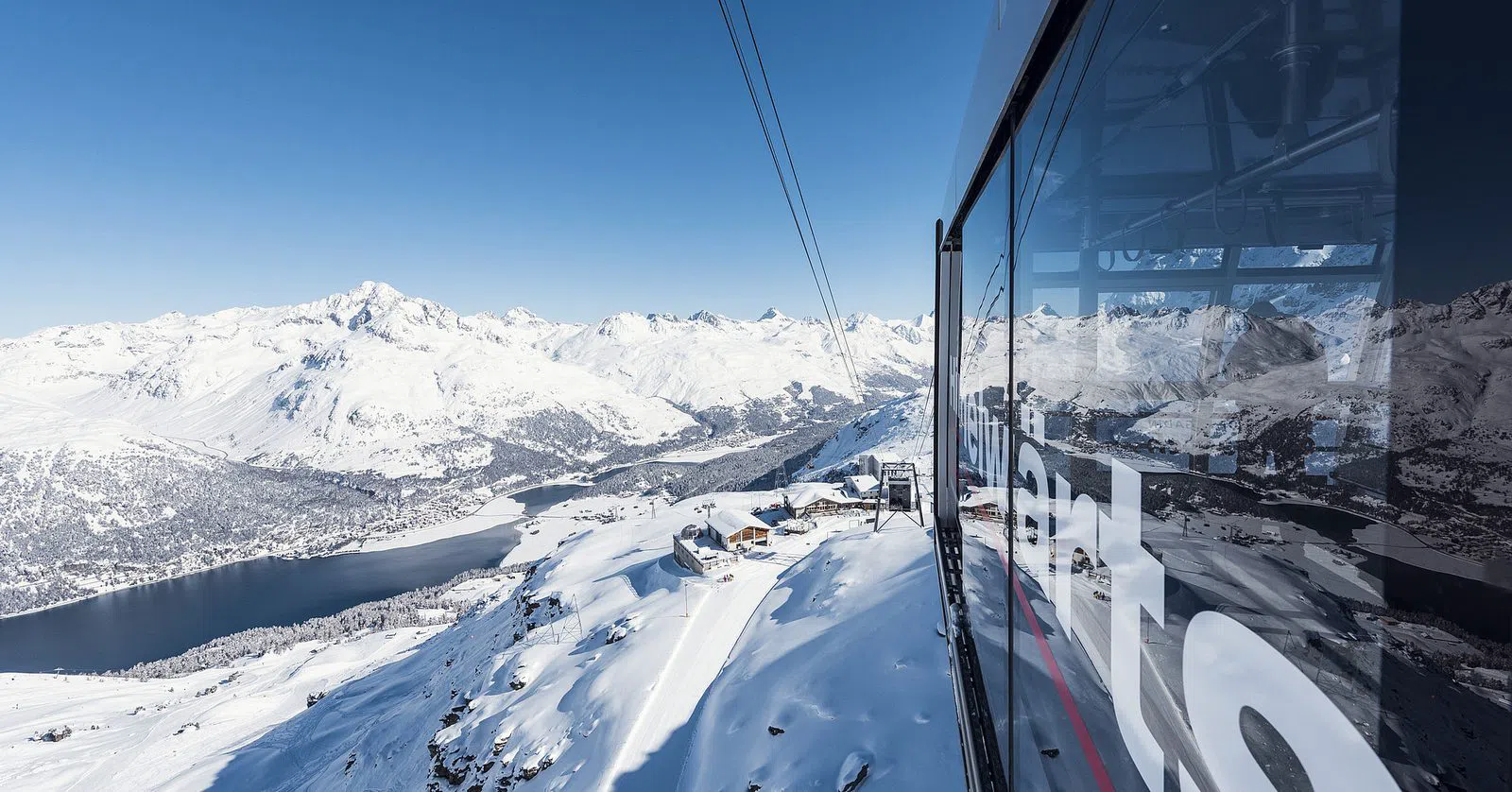
North of the pass the landscape opens out, paler and more glacial. Diavolezza cable car & Berghaus Diavolezza (Diavolezza valley station) is the strongest add-on on this half. The valley station is a request-level halt, cabins leave every twenty minutes and swallow groups without fuss, and the return fare sits somewhere in the CHF 30s or 40s, with a reduction for Swiss Travel Pass holders. Summer 2026 hours run from 08:20, with the last ascent between 16:20 and 17:20 depending on the date. It shuts for revision between seasons, so never promise yourself it will be running.

One halt on, Morteratsch Glacier Trail & Hotel Morteratsch (Morteratsch, Upper Engadine) offers the flattest and most honest look at a retreating glacier on the whole line: 2.9 kilometres each way from the station on a wide, level path that needs no guide. The hotel restaurant is the only food out there, hot dishes 11:30 to 16:00 and 18:00 to 20:30, groups with notice, closed 27 April to 3 June and again 26 October to 3 December 2026.
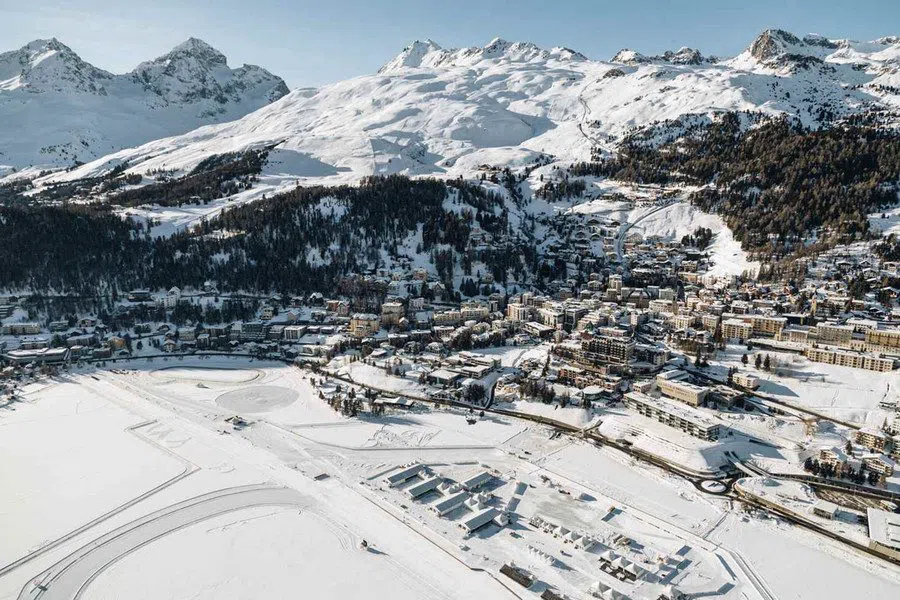
The scenic business ends at Lake St. Moritz & St. Moritz Dorf lakefront (St. Moritz Dorf), where most Milan day trips get their ground time and where honesty matters most. The promenade and lake path are entirely public and absorb any group size, the setting is genuinely handsome, and the drinks and lunches are the most expensive on the route. Out of season it is quiet in a way some people find restful and others find eerie. One 2026 caveat: the Chantarella and Corviglia funiculars are out for a full overhaul, replaced by a shuttle bus between 27 June and 18 October, so the easy lift onto the mountain is not there.
If cloud comes down, the Segantini Museum (St. Moritz Dorf) is the right indoor hour, a small domed building holding the work of the painter who spent his life on precisely these mountains. Entry is low, single figures to low teens in CHF, and groups should book ahead; guided visits are on request. The hours are narrow (20 May to 15 October 2026, Tuesday to Sunday 11:00 to 17:00, closed Mondays), so it cannot be your wet-weather fallback in winter.
The Albula half most Milan trips never see
Everything beyond St. Moritz belongs to the northern leg towards Chur, and Milan day-trippers almost never reach it. Given two days, it is the better railway.
Landwasser Viaduct Acatos viewing platform (Filisur, Albula valley) is the payoff: slim limestone piers carrying the track round a curve and straight into a tunnel mouth bored in the cliff face, the most photographed structure on the Rhaetian Railway. It is a free open platform on a forest footpath signposted from Filisur station, roughly 25 to 30 minutes to the nearest viewpoint and about 55 minutes to the Acatos platform. With something like sixty trains a day crossing, you rarely wait long for one to arrive.
Down the valley, Bahnmuseum Albula (Bergün/Bravuogn) is the museum this line deserves: over 650 objects from RhB operations, a climb-in Crocodile locomotive and a driving simulator. Open daily 10:00 to 17:00, closed 23 November to 10 December 2026. Entry is CHF 15 for adults, CHF 11 for ages 6 to 16, CHF 13 a head for groups of ten or more, school parties cheaper again, simulator CHF 10 per fifteen minutes. It only works if you break the Chur leg at Bergün.
One date to diarise if this scenery is why you came: between 29 October and 13 November 2026, trains 951/952 divert via the Vereina Tunnel for engineering work. You still arrive; you simply miss the Albula and the Landwasser altogether.
Reservations, walk-ups and who needs to book
Every Bernina Express passenger needs a seat reservation. It is mandatory and it is not included in the fare: you buy a normal rail ticket and add a compulsory reservation of roughly CHF 32 to 44 per leg, depending on season and section. Walk-up reservations are possible at the RhB counter in Tirano when seats remain, which is most of the time in a quiet February week and a gamble in August. If your day only works on one specific train, book the reservation ahead and treat the counter as a fallback rather than a plan.
Groups of ten or more cannot book online at all. They go through RhB Railservice directly and get a 30% reduction for the trouble, which is worth the phone call if you are travelling with an extended family or a club.
For the packaged trips from Milan the numbers are steady rather than frantic: 7,592 traveller reviews across the bookable options here, the top one rated 4.8 out of 5 from 3,818 reviews. This is a well-trodden route with a lot of feedback behind it.
The hour you get back in Tirano
Southbound connections rarely line up perfectly, and the resulting gap is better spent than most people spend it. Santuario della Madonna di Tirano (Madonna di Tirano, ten minutes' walk from the stations) is the finest Renaissance church in Valtellina, built where the 1504 apparition is said to have happened. Free, open to all, modest dress expected, groups welcome outside Mass times; it closes over lunch, roughly 11:45 to 14:30, outside its continuous July-to-September hours.

Palazzo Salis (central Tirano) is the best indoor hour in the town and a reminder that Tirano was a Swiss-Italian border power base as well as a railhead. Entry is €10 with an audio guide, about fifty minutes; €13 buys an extended tour with a private guide taking in the sixteenth-century cellars and the ice house. Main season is 2 May to the end of September, Monday to Saturday, 10:00 to 17:00; groups are taken by reservation in any of five languages, and winter visits are pre-booked parties of twenty or more only.
If you would rather sit, Plozza Vini (Tirano) runs a 60-minute guided cellar visit with a three-wine tasting, minimum two people, reservation required. The house was founded in 1946 and stands behind Sforzato di Valtellina, the dried-grape red that explains why every south-facing slope you passed on the way up is terraced. A far better use of a waiting hour than the station bar.
Best time to go
June to mid-October is the straightforward window. The full timetable is running, with two Express departures daily between 2 May and 25 October 2026, and every side trip above is open at once: Cavaglia, Diavolezza, Segantini, the Morteratsch hotel. It is also when you share the carriage with the most people.
Late autumn is the connoisseur's slot and the trickiest. The larches turn gold, the light is long, and the crowds thin, but the Cavaglia glacier garden shuts on 1 November, the Hospiz season ends 2 November, the Morteratsch hotel closes on 26 October, and the 29 October to 13 November diversion removes the Albula scenery entirely. Check every stop individually before you commit.
Winter is a different trip rather than a lesser one: one departure a day, deep snow on the pass, Lago Bianco frozen flat. Accept that the walking stops are closed, the museum is shut, and daylight is short. Take the earliest train north so you are over the pass in the light and not descending in the dark.
Within the day, two rules. Build around the Cavaglia guided visits if you want them, since they only run Tuesday, Thursday, Saturday and Sunday at 14:00. And if the spiral viaduct is the shot you want, be standing at Brusio around midday.
Is it worth it
Yes, with a condition. Ridden end to end in a sealed panoramic car as a round trip from Milan, it is a beautiful but passive four to five hours of glass, and a long day for it. Ridden as a hop-on railway, with one leg on the Express and the rest on regionals, with an hour in Poschiavo or a walk out to the Morteratsch ice, it is one of the great mountain journeys anywhere and worth rearranging a trip for.
It suits railway people, photographers, slow travellers and anyone who would rather look at something than queue for it. Families do well on it, since the walking is optional and the viaduct does the entertaining. Groups of ten or more get more out of it than they do from most attractions, given the 30% reduction and the open-air stops. It does not suit anyone with one day in Milan and a list of things to see there, or anyone who needs guaranteed sunshine: this is a weather-dependent view, and in cloud you are paying mountain prices for grey.
Practical notes
Transport. Milano Centrale to Tirano on the Trenord RE8, roughly hourly, about two and a half hours, around €12.50 each way; the RhB station is a few metres across the square. Leave on the first useful train and build in one spare connection on the way home.
Money. Everything north of Tirano is priced in Swiss francs, everything south in euros. Carry some cash for the small mountain stops (the glacier-garden guides, a coffee at a halt) and expect Swiss prices to be highest around the St. Moritz lakefront.
Documents. It is an international border. Carry a passport or national ID card even though the train does not stop for it.
Budget. A self-guided day is the Italian regional return, the Swiss rail ticket, and the compulsory reservation at roughly CHF 32 to 44 per leg, plus whatever you add: CHF 10 at Cavaglia, CHF 30s or 40s for the Diavolezza cable car, CHF 15 at the railway museum. A packaged day trip from Milan starts from 159 USD per person and runs seven days a week. Going self-guided for one leg and booking the Express for the other usually lands between the two.
Timing. Twelve to fourteen hours door to door for a St. Moritz round trip. If that sounds like too much of a short break, it probably is. See the Milan guide for what else that day could hold, and save the railway for a trip where you can give it an overnight at the top.
Before you go
Can I do the Bernina Express from Milan on my own, without a guided trip?
Yes, and it is straightforward. The Trenord RE8 from Milano Centrale to Tirano runs roughly hourly, takes about two and a half hours and costs around €12.50 each way. The Rhaetian Railway station is a few metres across the square from the Italian one. Add your Swiss ticket plus the compulsory Bernina Express seat reservation, roughly CHF 32 to 44 per leg. Allow twelve to fourteen hours door to door for a St. Moritz round trip.
Do I need to reserve a seat in advance, or can I turn up at Tirano?
A seat reservation is mandatory for every Bernina Express passenger and is charged on top of the rail ticket, roughly CHF 32 to 44 per leg depending on season and section. The RhB ticket window and machines in Tirano do handle walk-up reservations, but only while seats remain: fine in a quiet winter week, a gamble in high summer. Groups of ten or more cannot book online at all and must go through RhB Railservice, which also gets them a 30% reduction.
Is the panoramic Bernina Express better than a regular regional train on the same line?
They use the same track. The Express has curved panoramic windows and a guaranteed seat, but the glass does not open, so photographs fight reflections, and it pauses only briefly at viewpoints. Regional trains cost less, need no reservation, have windows that open, and will let you off at Brusio, Cavaglia, Alp Grüm or Morteratsch. One leg on the Express and the rest on regionals works well.
Where should I get off if I only have time for one stop?
Brusio, for the spiral viaduct. The loop walk from the station takes thirty to forty minutes, costs nothing, is open at all hours, and at midday the sun is behind you. There is no shelter, no toilets and no parking. If you would rather have a town than a viewpoint, Poschiavo is five minutes from its station, and its Spanish Quarter palazzi are the most interesting architecture on the line.
Is the trip worth doing in winter?
In winter there is one departure a day, deep snow on the pass and Lago Bianco frozen, and it is worth doing in its own right. The walking stops, though, are closed: the Cavaglia glacier garden runs only 19 June to 1 November 2026, the Segantini Museum only 20 May to 15 October 2026, and the Diavolezza cable car shuts for revision between seasons. Take the earliest train north so you cross the pass in daylight.