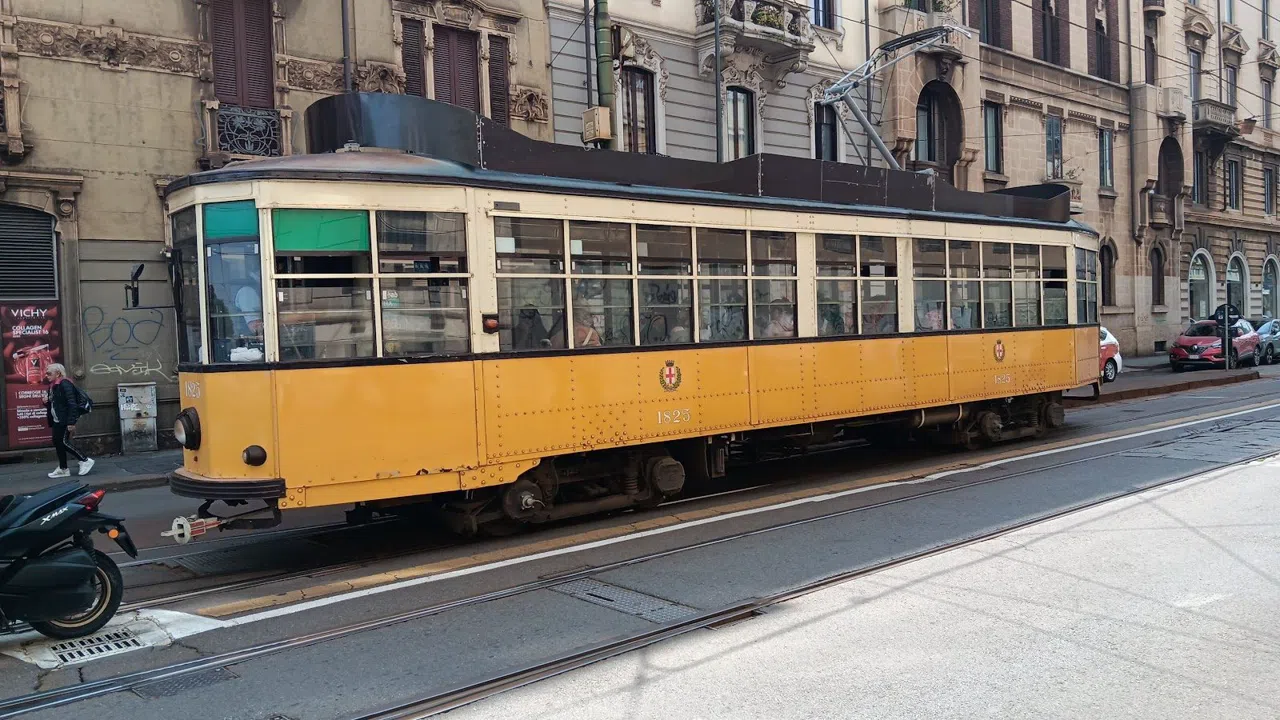

The 6:47 from the depot pulls in smelling of varnish and warm dust, its wooden slats creaking as it takes the curve past the Duomo's scaffolding. Somewhere behind you a commuter checks their phone, entirely unbothered that the seat under them predates the Second World War. This is the ordinary miracle of Milan: a city that never got around to throwing away its trams, and so, almost by accident, still runs a moving museum through its own streets every single day of 2026.
Line 1: The Flagship Route Through the Historic Centre
Start here, because everything else in this guide is a variation on the same idea. Tram Line 1 is Milan's flagship historic route, looping through the old centre past the Duomo, La Scala, Castello Sforzesco and out toward Parco Sempione — and it is the line most likely to actually put you on a genuine 1928 carriage rather than a modern Sirio low-floor tram, which run the same routes but carry none of the romance.
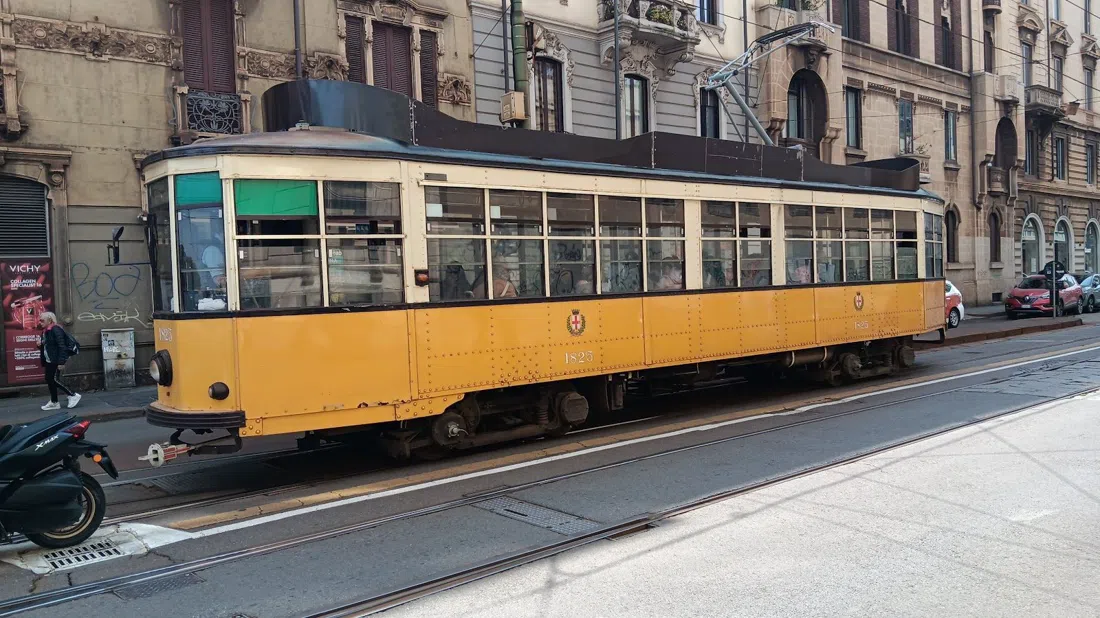
There's no booking, no group limit, and no special ticket: you tap a RicaricaMi card or contactless bank card or use the ATM app, same as any Milanese commuter, and ride the €2.20 single fare, valid 90 minutes with unlimited transfers. Paper tickets are no longer sold as of 2026, so arrive with a card or your phone loaded — there's no fallback at the tram stop itself. The trick with Line 1, and it's a real one, is timing: ride it during the working day and you'll be standing, hemmed in by shopping bags and school backpacks, seeing the wooden cabin only in glimpses between shoulders. Ride it before 8am or after 7pm and the carriage empties out enough that you can actually sit by a window, watch the light come through the etched glass partitions, and hear the wheels properly on the rails. Fifteen or twenty minutes of doing nothing else — no stop, no photo, just riding — is the whole point.
Why Milan Never Tore Up Its Trams
Most European and North American cities spent the 1950s and 60s ripping out their tram networks in favour of buses and cars, treating rails as clutter and old rolling stock as an embarrassment to modernise away. Milan mostly didn't. The network stayed, the depots kept maintaining what they had rather than scrapping it wholesale, and the result is that the city's Class 1500 cars — the "Carrelli," named for their bogie undercarriages — have simply kept working, generation after generation of Milanese commuters riding the same wooden benches their grandparents did.
It helps that the cars were built to be repaired rather than replaced: riveted steel frames, wooden slatted seating that can be re-caned rather than binned, brass fittings that get polished rather than swapped for plastic. The result, whether by foresight or by simple institutional stubbornness, is a working transit fleet that also happens to be a rolling piece of interwar Italian industrial design — ochre-yellow livery, rounded roofline, the particular clatter of a trolley pole finding the overhead wire. You don't need to seek out a museum for this. You need to find a stop.
There's a design lesson buried in that, too, if you're the sort of traveller who notices these things. The Carrelli weren't preserved as heritage pieces — nobody decided in 1928 to build a museum piece. They were simply built solidly, maintained continuously, and never became inconvenient enough to justify the expense of wholesale replacement. Milan's trams survived the same way its courtyards and covered arcades did: not through nostalgia, but through a civic habit of repairing rather than discarding. That habit is exactly what makes riding one today feel different from visiting a heritage attraction elsewhere — you're not watching a re-enactment, you're standing in a piece of everyday infrastructure that simply never stopped being useful.
Eating and Riding With a Guide: The Two Bookable Experiences
Line 1 is the everyday version. For readers who want the tram experience itself to be the event, there are two proper bookings worth making — and they suit very different travellers.
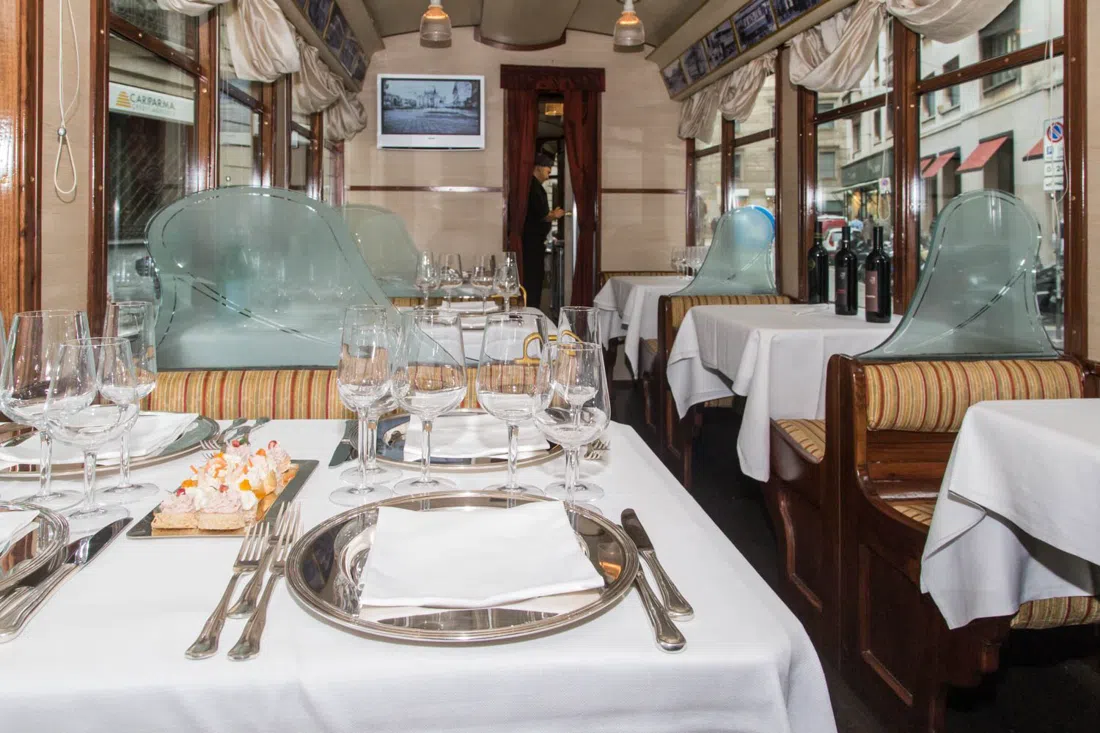
ATMosfera (Piazza Castello) is the one unmissable pairing with the whole theme: ATM converted two genuine 1928 carriages into a dinner-on-rails experience, and it is, by design, pricey and unapologetically touristy. It departs from Piazza Castello 2 at 20:00 or 20:30 for dinner (€90 per person, wine included) or as a Sunday lunch service (€75pp). Booking is essential and should happen weeks ahead rather than days — this is not a walk-up experience. It books in pairs or multiples of two, up to eight per table, which makes it a genuinely good fit for a couple's anniversary night or a small group celebration, but a poor fit for solo travellers or odd-numbered parties trying to book last minute. Go in accepting the trade-off: you're paying tourist-experience prices for the privilege of eating inside the history rather than merely riding past it, and on those terms it delivers.
Tram Turistico (also departing Piazza Castello) is the more democratic option — a guided, headset-narrated loop past the Duomo, La Scala, the Navigli and the San Lorenzo columns aboard a historic tram, running as scheduled public departures roughly at 9:00, 11:00 and 13:00, at €20–25pp for about 75 minutes. It's also bookable privately with a certified guide for groups, priced on request. This is the easiest single booking in the whole city for a reader who wants the story narrated alongside the ride rather than working it out from a guidebook on their lap — well suited to families, first-time visitors, or anyone short on time who wants the greatest-hits version of both the tram and the centre in one sitting.
Where the Lines Actually Take You
The real pleasure of Milan's trams isn't just riding them in a loop — it's letting a line carry you somewhere and then getting off. A loop tells you what the centre looks like; a one-way ride to an endpoint tells you how the city actually functions, because it forces you through residential blocks and workaday streets between the postcard stops. Four destinations reward this particularly well, each reached by a different route.
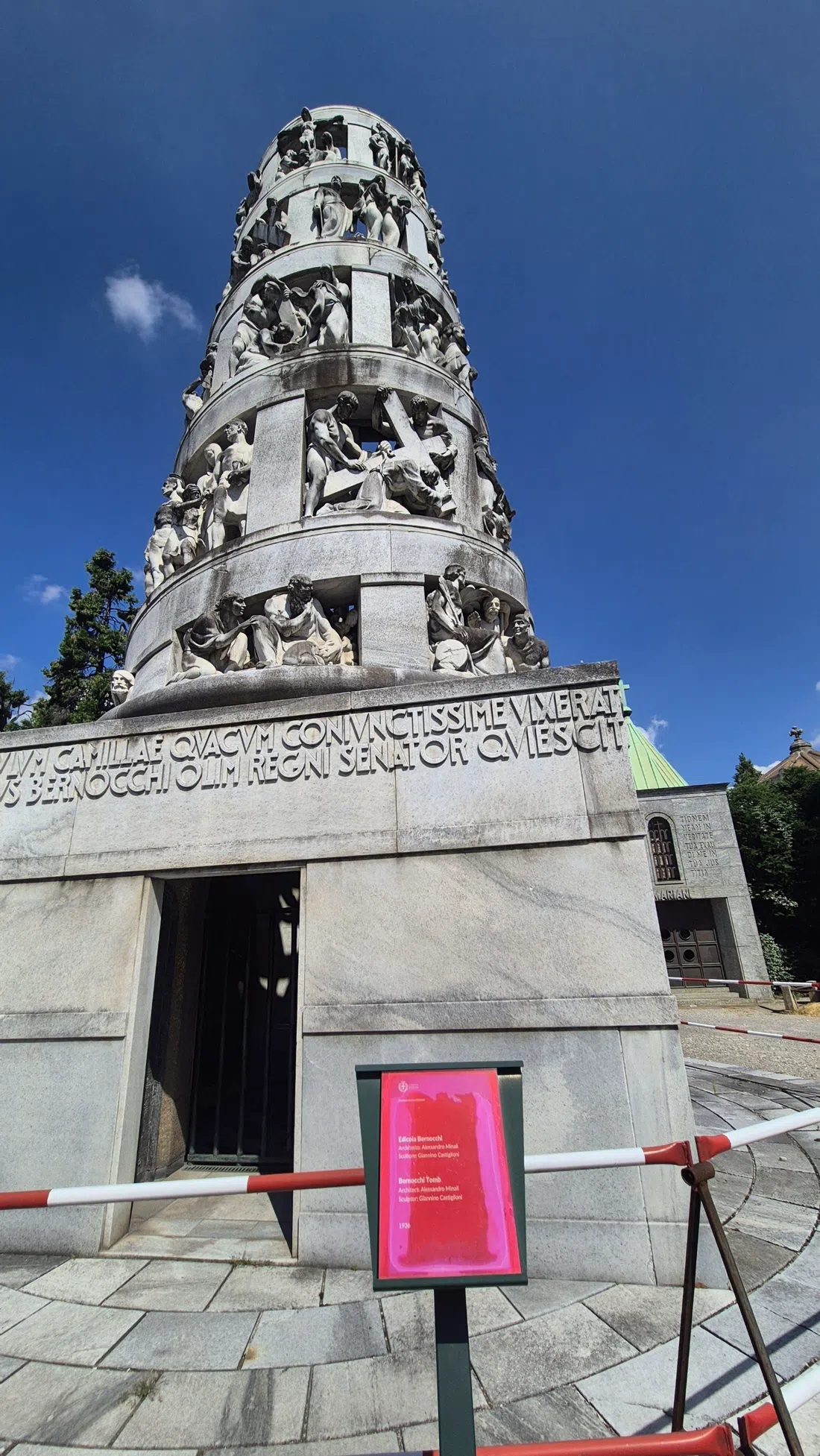
Tram 10 (with 12 and 14 also serving it) runs directly to the Cimitero Monumentale di Milano, and it's one of the city's stranger, more rewarding stop-offs — a free, open-air public monument functioning as a sculpture gallery of Milanese Liberty-style funerary art, laid out with the same civic seriousness as any gallery in the centre. It welcomes groups and regularly runs guided visits, and unlike the tram experiences above, there's no booking friction at all: you simply arrive. Give it forty-five minutes to an hour if sculpture and architectural ornament interest you; it's not a place to rush.
Ride Line 1 (or Line 19) out to its western anchor and you reach Arco della Pace and Parco Sempione, the Napoleonic-era arch and Milan's largest central park. Both are free and entirely unrestricted — no door, no group limit, nothing to book. The logic here is architectural as much as scenic: the arch was conceived as a grand western gateway to the city, and riding the tram corridor out toward it, then walking back through the park toward Castello Sforzesco, gives you the same axial approach the city's 19th-century planners intended, just with a wooden tram seat instead of a carriage.
At the opposite end, Line 5 carries you to Porta Venezia and the gates of the Giardini Pubblici Indro Montanelli and GAM — Milan's oldest public park, laid out in 1784, with the Galleria d'Arte Moderna and the Natural History Museum sitting inside its gates. The park itself is free and unrestricted; GAM entry runs roughly €5–10. It's an easy, ungated stop for anyone, solo travellers and groups alike, and a natural place to break up a day of tram-riding with something static and shaded.
And Line 10's southern endpoint delivers you to the Navigli and Darsena, Milan's old canal port and now its evening social hub. Walking here is free; bar and restaurant prices along the water vary widely, from a €5 spritz at a standing bar to considerably more at a sit-down canalside table. This is the natural reward for riding the tram all the way to the end of the line rather than turning back early — arrive as the light drops, in time for aperitivo, and the district does the rest of the work for you. It also makes a natural close to a tram day that started at Piazza Castello: centre out along Line 1 or the guided loop in the morning, lunch and a park stop midday, then south to the water as the crowds along the canal start to thicken toward evening.
Seeing a 1928 Carrello Stand Still
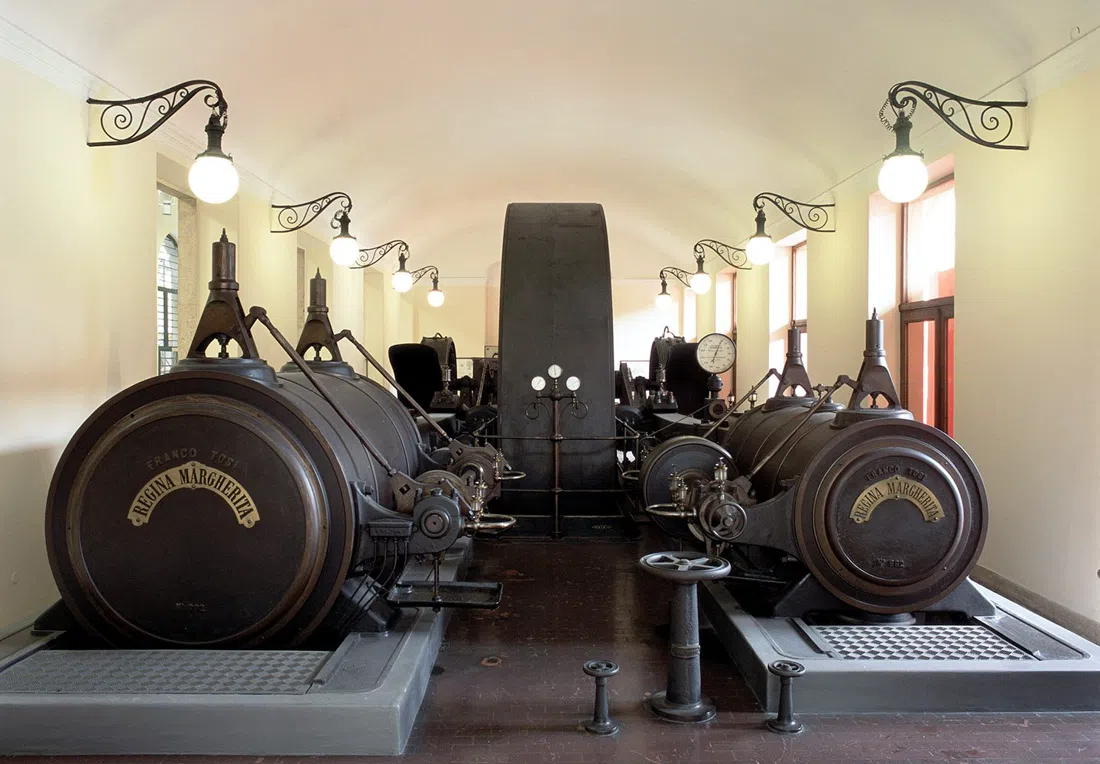
If the weather turns, or you simply want to understand the engineering rather than just feel it rattling under your feet, the Museo Nazionale della Scienza e della Tecnologia Leonardo da Vinci is the natural complement. It's Italy's largest science museum, well set up for school and tour groups with advance group-rate booking, and standard adult admission is around €10. A genuine 1928 carriage sits preserved indoors here — stationary, lit properly, close enough to see the joinery and the brass fittings in a way you never quite can while it's moving and you're holding onto a strap. It's not a substitute for riding the real thing outside; it's the rainy-day footnote that explains what you were looking at.
The Practical Bit
Transport and tickets: buy a RicaricaMi card at any ATM point (metro stations, tobacconists) or use contactless/the ATM app directly on board — paper single tickets are no longer sold as of 2026, so don't count on finding one at the stop. A single fare is €2.20, valid 90 minutes with unlimited transfers, which comfortably covers hopping between two or three of the stop-offs above in one outing. If you're planning a full day of tram-hopping alongside other transit, ATM's day passes are worth pricing against a handful of single fares.
Timing: the historic Class 1500 cars aren't guaranteed on every departure of every line — modern Sirio trams share the same routes — so if riding a genuine 1928 carriage specifically matters to you, build in some flexibility rather than pinning your whole day to one departure. For comfort and visibility on Line 1, ride before 8am or after 7pm; midday and early evening get crowded with commuters and shoppers.
Cash: most of what's in this guide needs a card, not cash — RicaricaMi top-ups, ATMosfera and Tram Turistico bookings, GAM's entry fee. Navigli's bars are the exception where carrying a little cash smooths things along at standing-room aperitivo counters.
Budget: a rider who does nothing but hop trams and walk free parks can spend a full day out for under €10 in fares. Add the Tram Turistico for the narrated version (€20–25pp) or ATMosfera for the full dinner-on-rails evening (€75–90pp) and the day scales up considerably — book ATMosfera weeks ahead regardless of season, since tables sell out well in advance.
For a base near the tram network's densest cluster of routes, start with a Milan hotel search; and for the rest of what the city offers beyond its rolling stock, the full Milan guide is the place to keep exploring.