
Milan invented the aperitivo, and it has spent the better part of a century refusing to let anyone else claim it. Between roughly six and nine each evening the city undergoes a quiet, ferociously competitive transformation: counters fill three-deep, spritzes and negronis go up like signal flares, and a plate of something salty arrives whether you asked for it or not. What follows is not a pub crawl but a route worth walking — grouped by neighbourhood so you can plan the stroll between sights, not just the drink at the end of it.
Start at the source: the Duomo classics
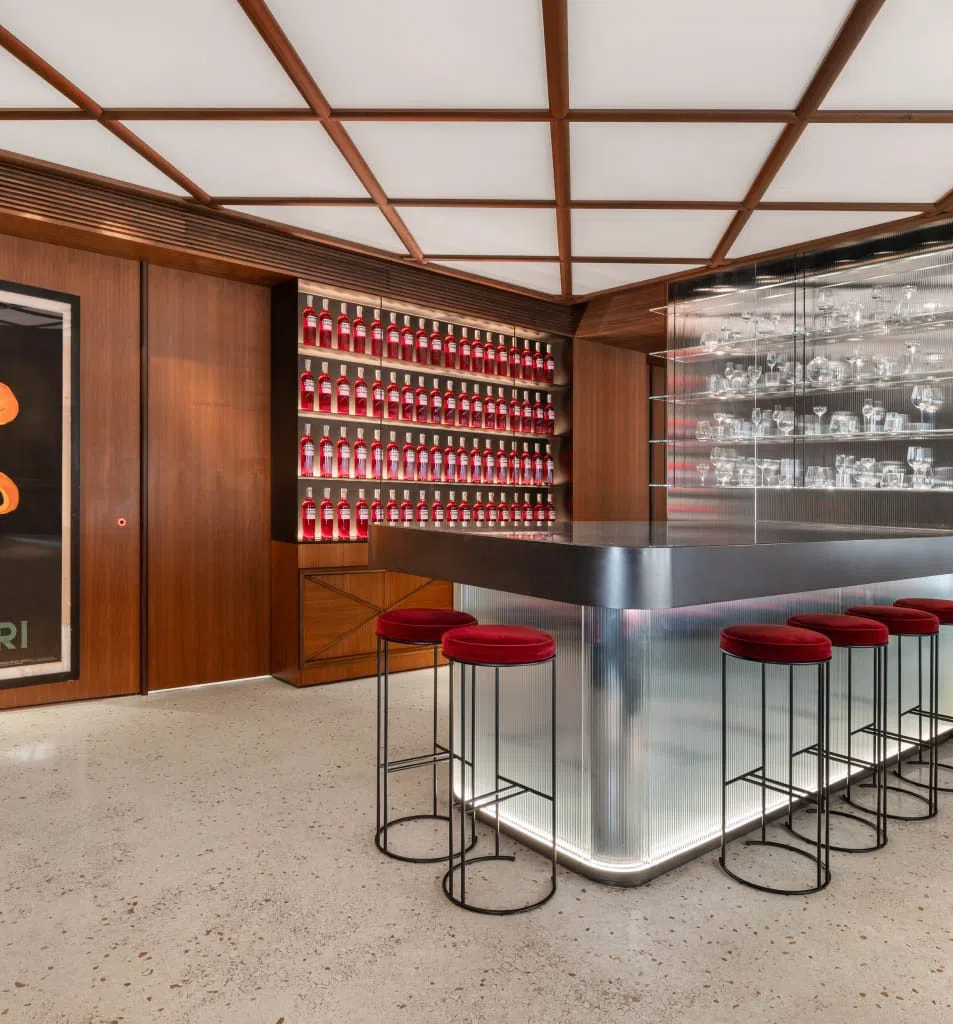
There is no honest way to write about Milanese aperitivo without beginning under the iron-and-glass vault of the Galleria Vittorio Emanuele II, and no better address than Camparino in Galleria (Duomo). This is the birthplace of the Milano ritual itself, a bar trading on the same spot since 1915, its Liberty-era mosaics and mirrored bottle-wall restored to a gleam. The ground-floor standing bar is built for exactly the kind of drop-in you want at the start of an evening: order a Campari-based classic, stand at the marble, and watch the Galleria do its evening promenade. Drinks run €12–18. If you want to sit, the upstairs room is a different, more formal proposition and needs booking — but for the opening act, stay downstairs on your feet where the ritual actually lives.
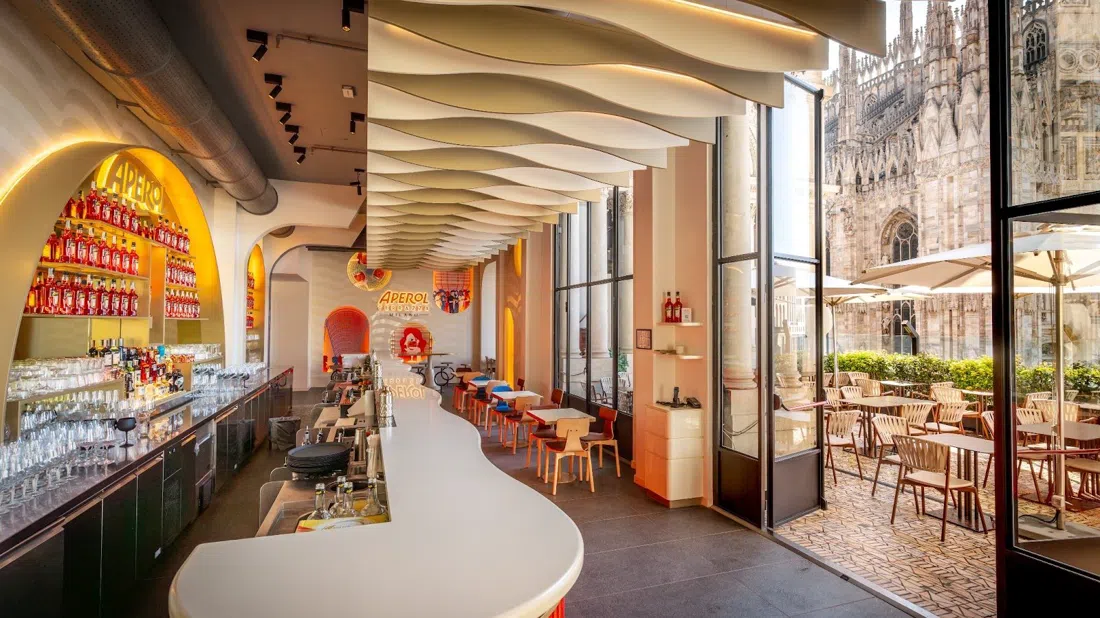
Step out of the Galleria's southern mouth and you are on Piazza del Duomo, perhaps a two-minute walk to Terrazza Aperol (Duomo), the orange-hued rooftop that trades almost entirely on one thing: an unbeatable, straight-on view of the cathedral's pinnacles. Be clear-eyed about it. At €18–20 a spritz it is pricey, it is tourist-heavy, and at aperitivo hour you should expect a queue at the door — it takes walk-ins and groups are fine, but nobody is holding your place. Include it for the photograph and the once-in-a-visit thrill of drinking level with the Duomo's marble spires; do not mistake it for a connoisseur's bar. One round here, then move on.
The pilgrimage east: Porta Venezia
A fifteen-minute walk east of the Duomo, past the neat 1930s rationalist facades of the Porta Venezia district, sits the single most important room on this list. Bar Basso (Porta Venezia) is where, in 1972, a mis-poured Negroni — prosecco where the gin should have gone — became the Negroni Sbagliato, the 'mistaken' cocktail the whole world now orders. It remains a genuine Milanese institution: walk-in only, no reservations, cheerfully willing to absorb a small group, and utterly unbothered by its own fame. Drinks are €10–15 and arrive in the house's absurdly oversized goblets. The one caveat worth planning around: during Salone del Mobile, the April design week, Bar Basso is mobbed to the point of gridlock, and the crowd spills across the pavement. Come on an ordinary evening and you get the real thing — an unhurried, deeply local temple to the drink it accidentally invented.
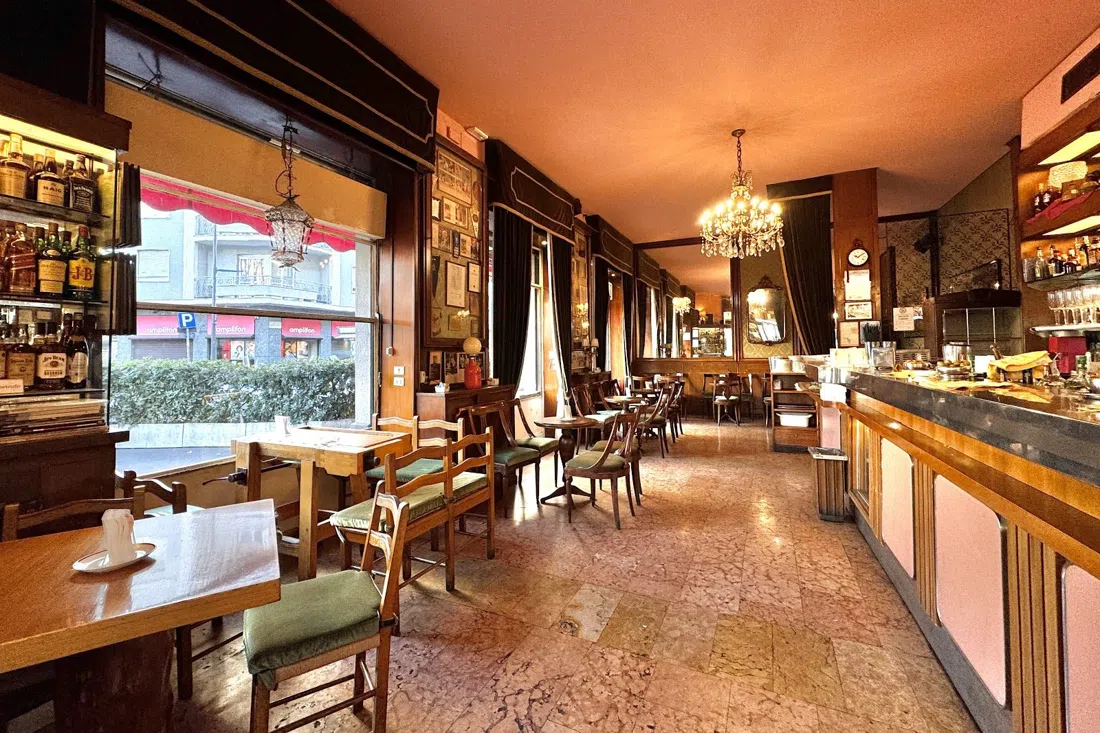
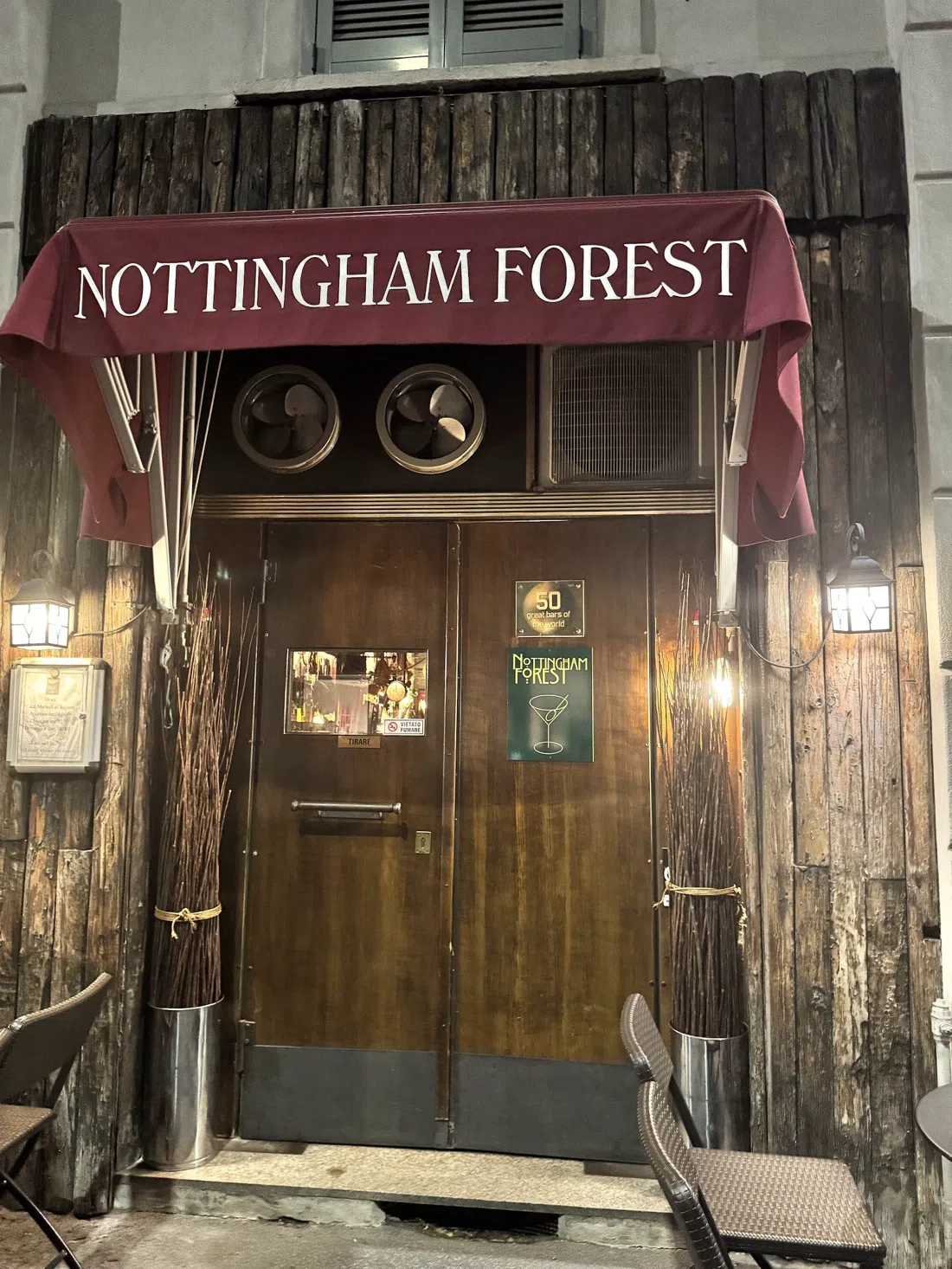
A short walk away, the mood sharpens at Nottingham Forest (Porta Venezia), where veteran bartender Dario Comini has been building theatrical, laboratory-grade cocktails for decades — the kind of programme that lands a tiny neighbourhood bar on the World's 50 Best list. This is a destination for people who take their mixology seriously, and the catch is inseparable from the appeal: the room is minuscule, there are no reservations, and you will queue on the pavement first-come. Cocktails run €13–18. Bring a partner or, at most, a trio; a big group simply will not fit, and shepherding six people through that door is a recipe for standing outside watching everyone else drink. For pairs, though, it is one of the most interesting counters in the city.
Rooftops, from icon to splurge
Milan's skyline has changed more in the last fifteen years than in the previous hundred, and its rooftop bars are the best seats for reading that change. If your evening is a special one — and if you have somewhere to stay nearby, the Milan hotel search is worth a look before you book the table — three rooftops earn the splurge.
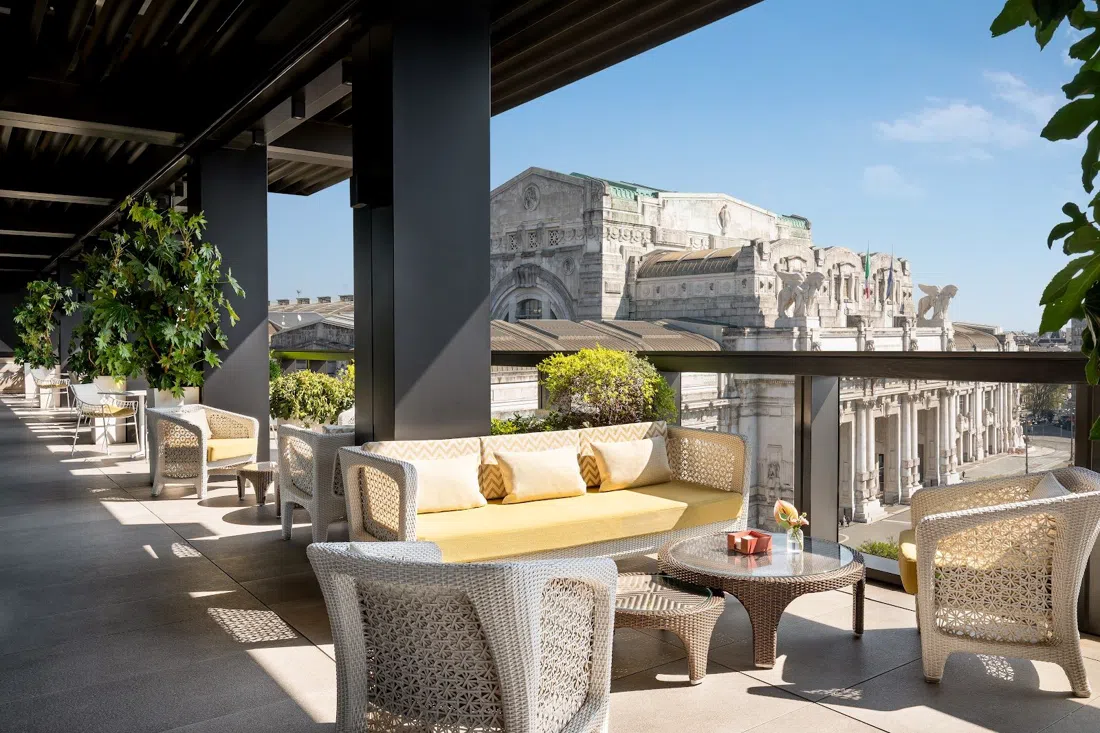
Terrazza Gallia (Centrale) is the polished upper-end choice, a hotel terrace looking straight at the glass-and-steel cluster of the Porta Nuova district: the textbook modern-Milan skyline, the one that photographs beautifully at blue hour. Reservations are recommended, the terrace comfortably seats larger groups, and it is priced accordingly — cocktails are €22–28, and a full evening with a few rounds and a bite lands around €70–90 a head. It is a considered, grown-up splurge rather than a party.
For something glossier and more fashion-forward, Ceresio 7 (Porta Volta) is the address, a rooftop with twin swimming pools set atop a restored 1930s Enel building near the Monumentale cemetery. Booking is essential and the door is smart-casual; groups are welcome at the bar and along the pool terrace, and cocktails run €20–26. It is reliably impressive — design-led, self-aware, and exactly the sort of place that makes an occasion feel like one. The newest entry in this bracket is Etereo (Brera), the rooftop of the Casa Brera hotel, where a Patricia Urquiola-styled pool and a kitchen overseen by Andrea Berton give the whole thing a fresh, considered polish. Reservations are advised, the door is smart-casual, groups are welcome, and cocktails sit at €20–26. Of the upmarket rooftops it feels the most current, and the design pedigree is genuine rather than decorative.
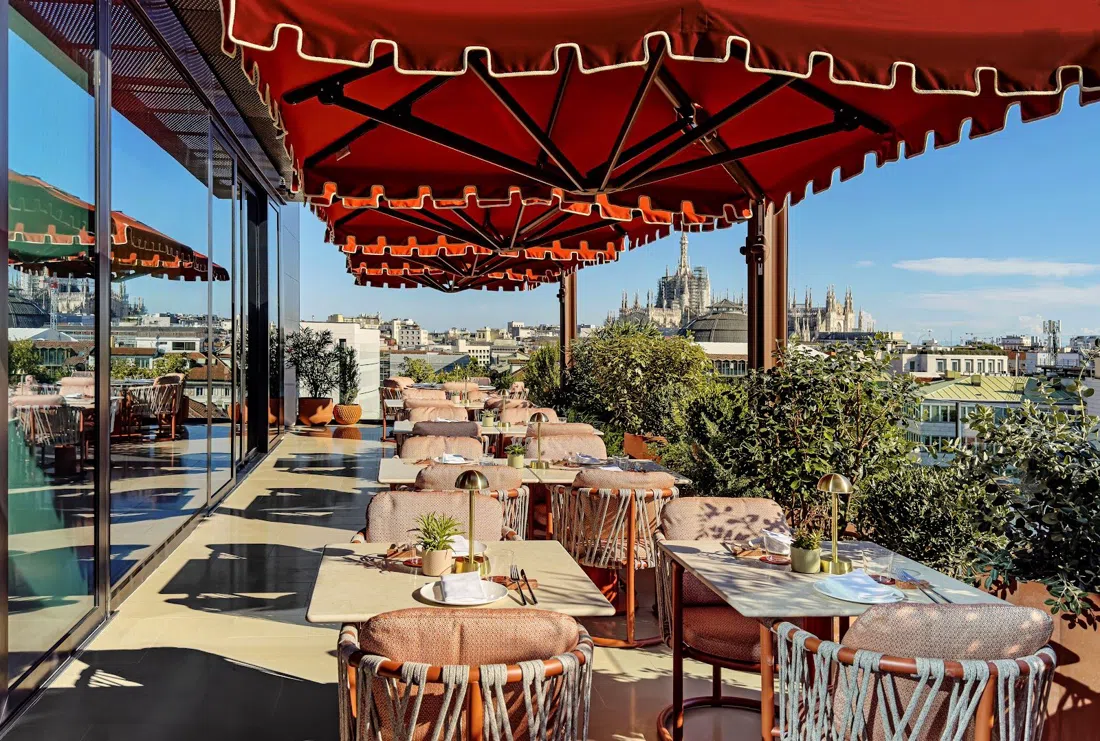
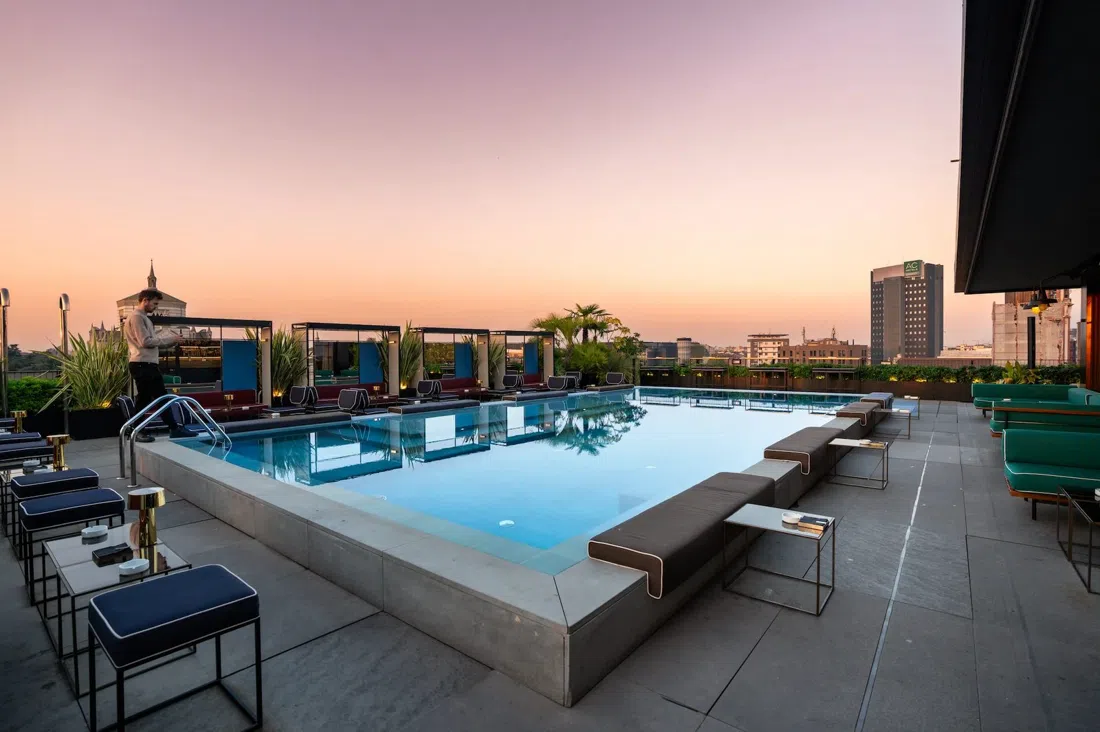
A planning note that will save you money and dignity: rooftops are for one deliberate stop, not a crawl. Pick the one that suits your evening — the view (Terrazza Aperol), the skyline splurge (Terrazza Gallia), the fashion-set gloss (Ceresio 7), or the design-led newcomer (Etereo) — and build the rest of the night around it at ground level.
Brera and the northern stroll
Brera is Milan at its most cinematic: cobbled lanes, the great Pinacoteca, art students, and a density of good bars that rewards wandering on foot. The anchor here is Dry Milano (Brera), the bar that made a name pairing serious cocktails with excellent pizza — an aperitivo that slides, almost without your noticing, straight into dinner. The outdoor tables are good for groups, but if you want to eat on the table side, book ahead; drinks run €12–16. It is one of the easiest places in the city to turn a 7pm spritz into a two-hour evening without moving.
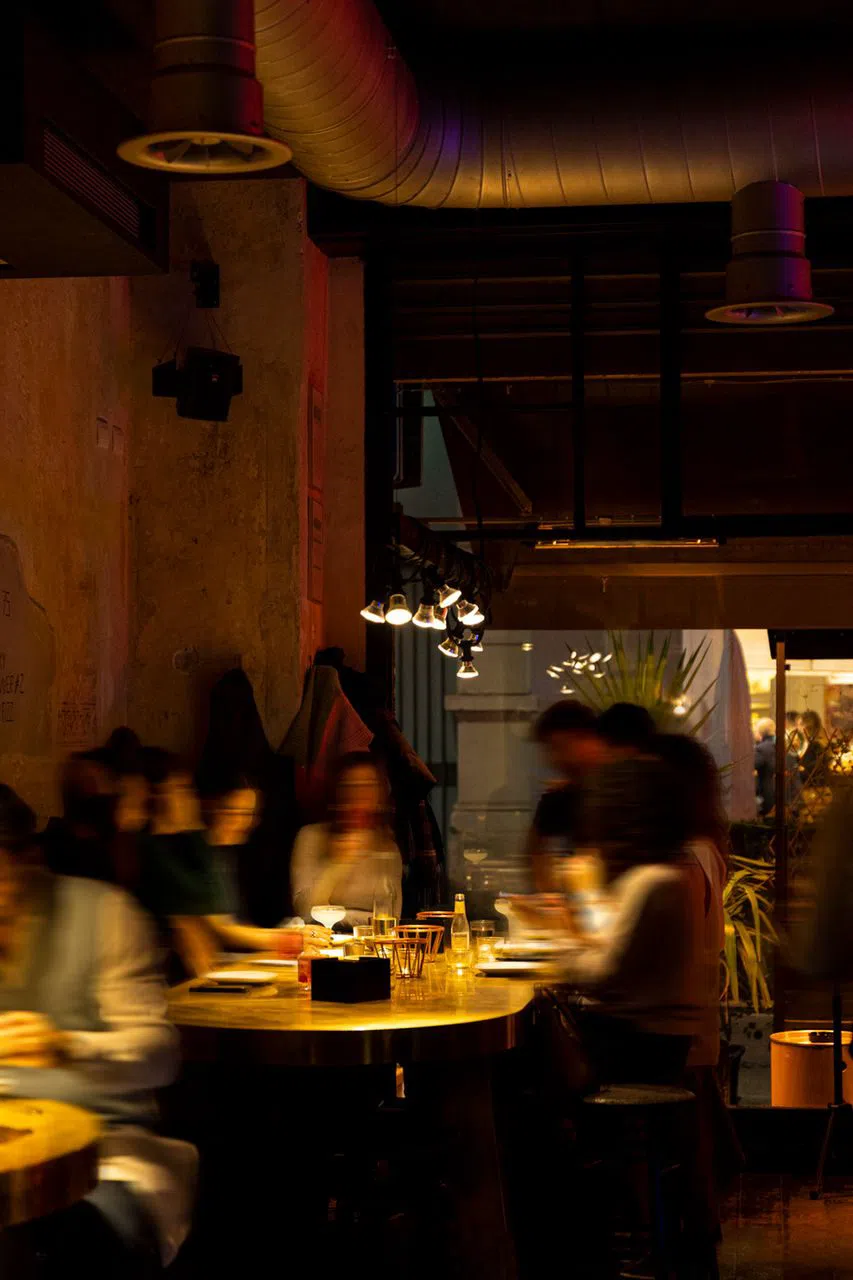
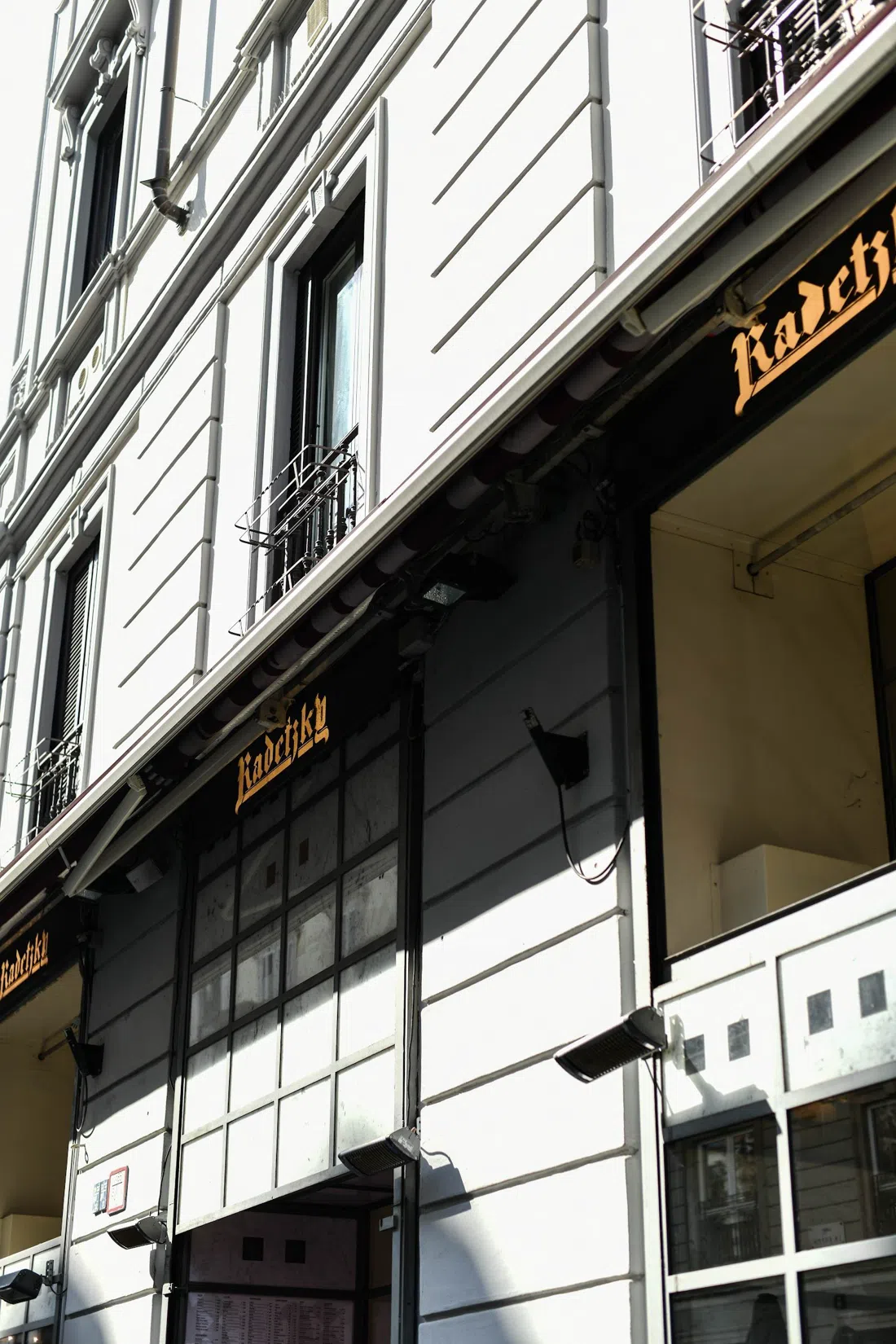
From Brera it is a pleasant ten-minute walk north along Corso Garibaldi to Radetzky Café (Corso Garibaldi), a buzzy café-terrace sitting on the seam between Brera and the Isola district. This is the dependable group option: a large terrace, walk-in, comfortably absorbing bigger parties, with drinks at €9–13. Nobody will tell you Radetzky is the most inventive bar in Milan, and that is rather the point — it is a long, unhurried, people-watching aperitivo on one of the city's best strolling corridors, and for a group of mixed appetites it simply works.
Down to the water: the Navigli
End your evening, as many Milanese do, along the Navigli — the surviving canals that Leonardo da Vinci once helped engineer, now a nightlife strip that can tip toward the touristy along the water's edge. The trick is knowing which doors to choose. Start with Rita (Navigli), a canal-side original trading since 2002: unpretentious, genuinely local, and a deliberate antidote to the crush on the towpath. Small groups are fine if you arrive early, but it fills fast; cocktails are a fair €9–13. It is the neighbourhood bar the neighbourhood actually drinks in.
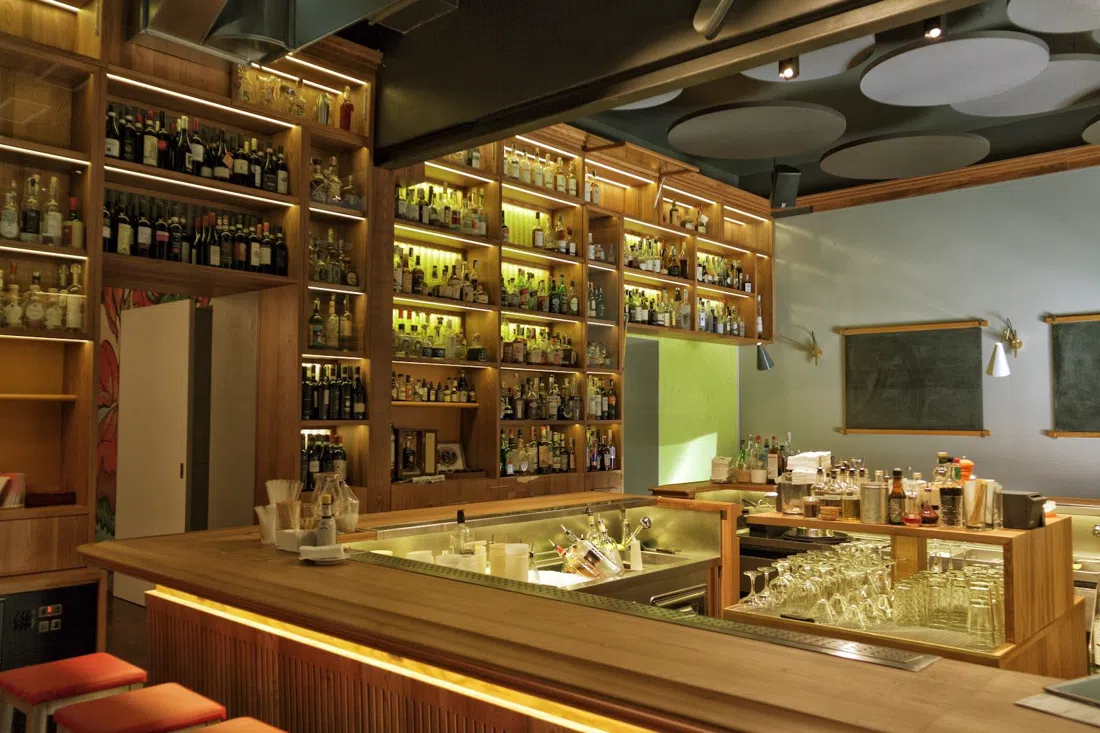
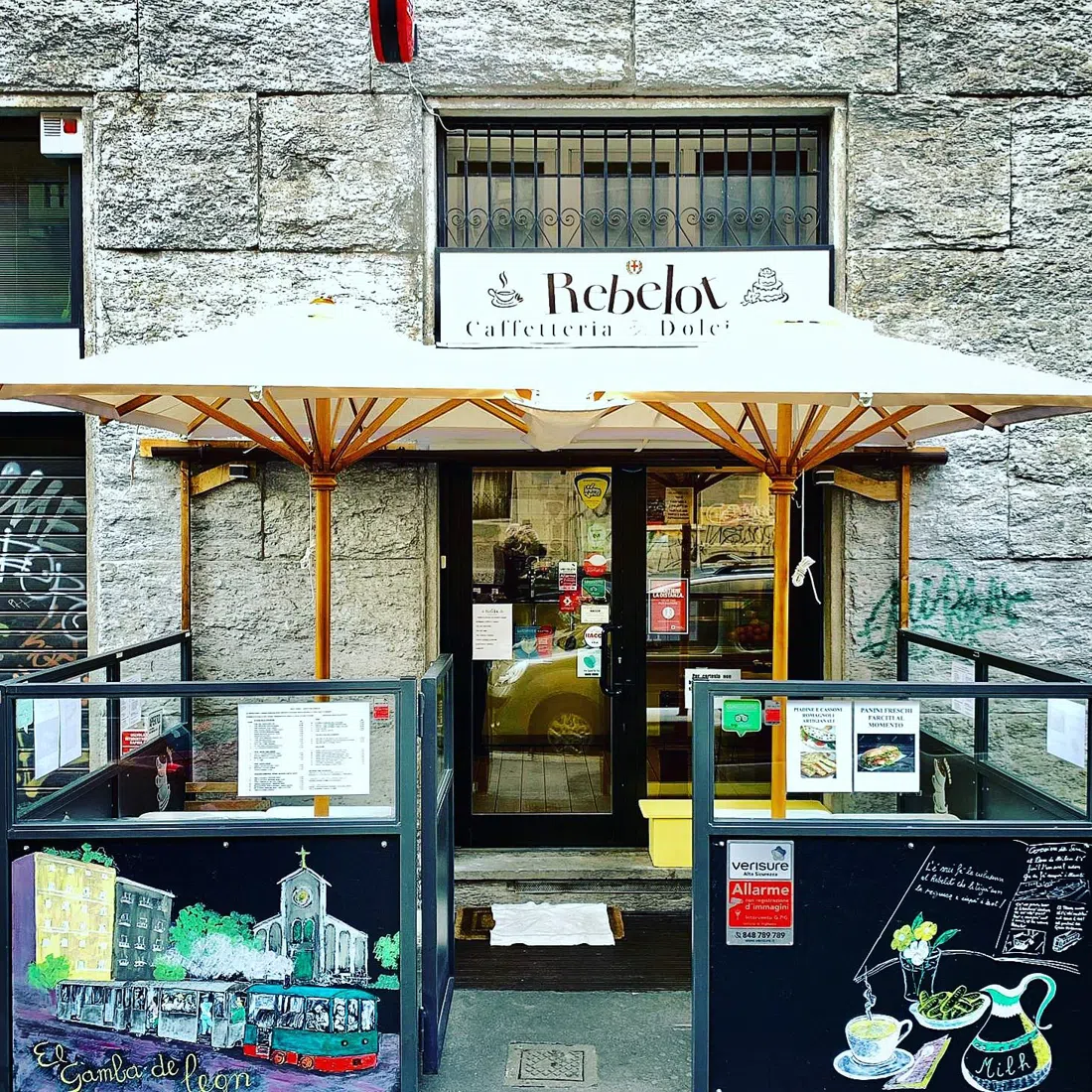
A short walk along the Ripa di Porta Ticinese brings you to Mag Cafè (Navigli), the cosy flagship of the Farmily group — the operator whose bars, Iter and Backdoor 43 among them, did as much as anyone to reshape modern Milanese cocktails. It is walk-in and warm, suits small groups, and gets tight at peak; drinks run €10–14. A few doors on, Rebelot (Navigli) raises the sophistication: Oscar Quagliarini's scent-driven cocktails paired with a serious kitchen. The room is small — better for pairs and small groups — and you should book if you want the food, which is worth the booking; cocktails are €11–15.
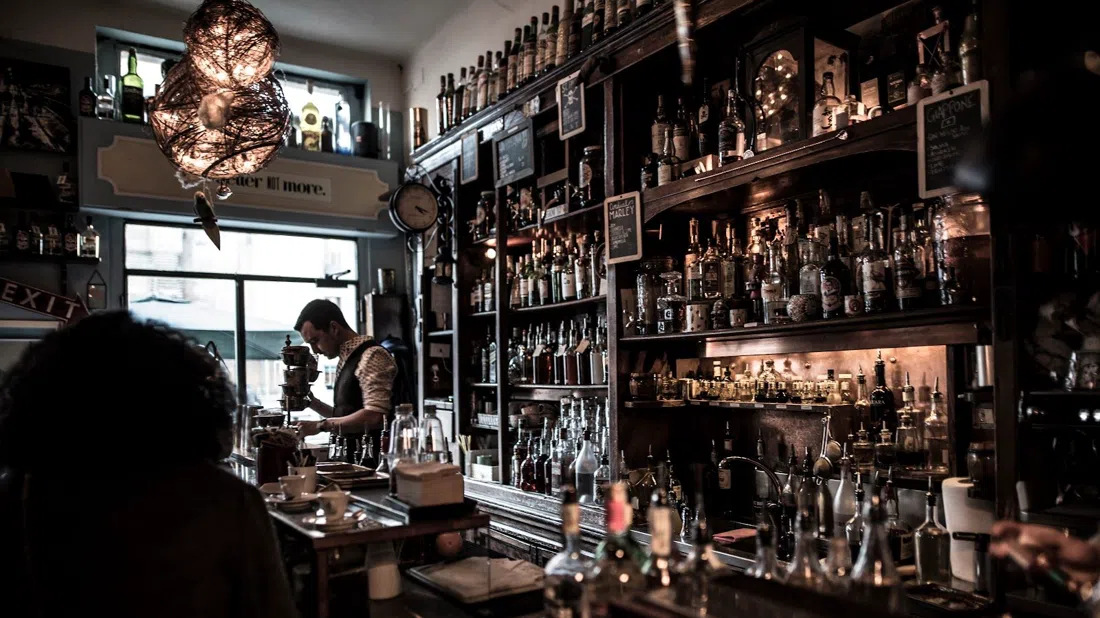
If your group is larger or hungrier, steer slightly off the water to Ugo (Navigli), open since 2013 and built for the food-heavy apericena — the version of the ritual where the buffet or shared plates do the heavy lifting. It is relaxed, group-friendly, spills onto the pavement, and kind to a budget at €8–12 a drink. For a crowd that wants to eat as much as drink, away from the canal-front squeeze, it is the sensible call to close the night.
The practical corner
Timing. Aperitivo runs roughly 6pm to 9pm; arrive by 6.30 if you want a counter spot at the walk-in institutions, earlier still at Bar Basso or Nottingham Forest, where there is no reservation to fall back on. Salone del Mobile in April distorts everything — expect longer waits city-wide and impossible crowds at the famous names.
Getting around. Milan is compact and the metro is quick and cheap: a single urban ticket is €2.20 and covers 90 minutes, and the M1 (red), M2 (green) and M3 (yellow) lines connect every neighbourhood here — Duomo, Porta Venezia, Brera (Lanza/Montenapoleone), and Porta Genova for the Navigli. Most of the routes above, though, are best walked; the distances are short and the streetscape is half the pleasure.
Cash and cards. Cards are accepted almost everywhere, but the smaller neighbourhood bars appreciate cash, and the standing-bar classics move faster if you are not fumbling with a terminal. A modest cover or table service charge is normal at sit-down spots — read it as part of the ritual, not a surprise.
Budget. You can pace this well at either end. A neighbourhood evening — Rita, Ugo, Radetzky — runs €10–15 a round and, at an apericena, half your dinner comes with it. The rooftops and destination cocktail bars are a different tier: budget €20–28 a drink, and closer to €70–90 for a full evening at Terrazza Gallia. Mix the two and you get the real texture of the city.
For more on what to see between drinks, the Milan guide maps the rest of the day. But the aperitivo is the part Milan competes at hardest — so choose your doors, plan the walk, and let the city show you how it is done.